



Mexico joins global movement to ban octopus farming amid mortality rate revelations

Key takeaways
- Mexican Senate bill proposes nationwide prohibition on all cephalopod farming, citing high mortality rates and cannibalism at the Western Hemisphere’s only operational octopus farm.
- The legislation argues industrial farming would undermine artisanal fishing communities that supply all of Mexico’s octopus consumption and raise antimicrobial resistance risks.
- Mexico joins Chile and multiple US states in a growing global legislative wave against octopus aquaculture, while Europe’s proposed Nueva Pescanova farm remains blocked in Spain.
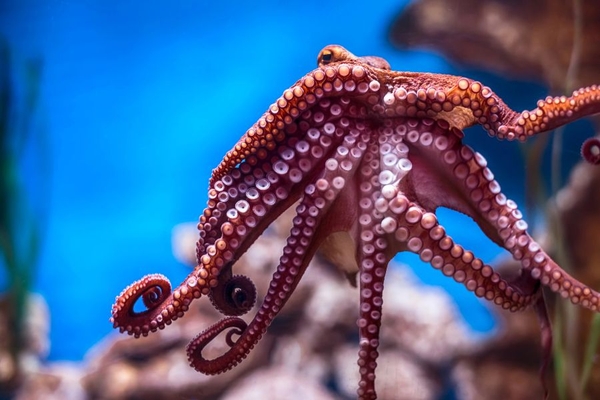
Mexico has introduced legislation to ban all cephalopod (octopus) farming nationwide, making it the second Latin American country to propose such a prohibition after Chile’s federal bill last year. The bill, presented by Mexico’s Green Party, proposes reforms to the General Law of Sustainable Fisheries and Aquaculture that would prohibit breeding or growth of any cephalopod species in Mexican territory.
The bill is intended to protect small-scale farmers and prevent human health risks associated with industrial farming, but also follows animal welfare concerns that have been reflected in a wave of similar legislative efforts across the Americas and Europe.
The bill now moves to the Mexican Senate commissions for discussion.

A decade of data from Yucatán
Unlike most jurisdictions legislating preemptively, Mexico is home to the only operational octopus farm in the Western Hemisphere. The Sisal facility in Yucatán, run in collaboration with the Universidad Nacional Autónoma de México, has reported mortality rates exceeding 50% over its 12 years of operation, with 30% of deaths attributed to cannibalism — a behavior driven by stress, aggression, and the confinement of these naturally solitary animals in close quarters.
The facility continues to capture wild reproductive specimens, including gravid females, from natural populations.
“Octopuses are physiologically and behaviorally too complex to be exploited in intensive settings, and the evidence from Mexico’s own Sisal farm speaks for itself,” says Catalina López, certified aquatic veterinarian and director of the Aquatic Animal Alliance. “Octopus farming is not a feasible industry.”
Artisanal livelihoods and public health
The legislation argues that 100% of the octopus currently consumed in Mexico comes from artisanal fishing and that industrial farming would undermine these communities. Octopuses are active carnivores requiring large volumes of wild-caught fish as feed — a 3:1 food conversion ratio that critics have long argued makes the industry fundamentally unsustainable.
The bill also raises public health concerns under the One Health framework (which links human, animal, and environmental health risks), including antimicrobial resistance from aquaculture operations and documented cases of paragonimosis — a zoonotic parasitic disease associated with cephalopod consumption in Yucatán.
“The reform initiative I introduced seeks to establish a comprehensive measure for environmental, public health, and social justice protection, aimed at safeguarding marine ecosystems, people’s health, and the livelihoods of artisanal fishing communities,” says Senator Ortiz Domínguez, who serves as president of the Senate’s Committee on Environment, Natural Resources, and Climate Change.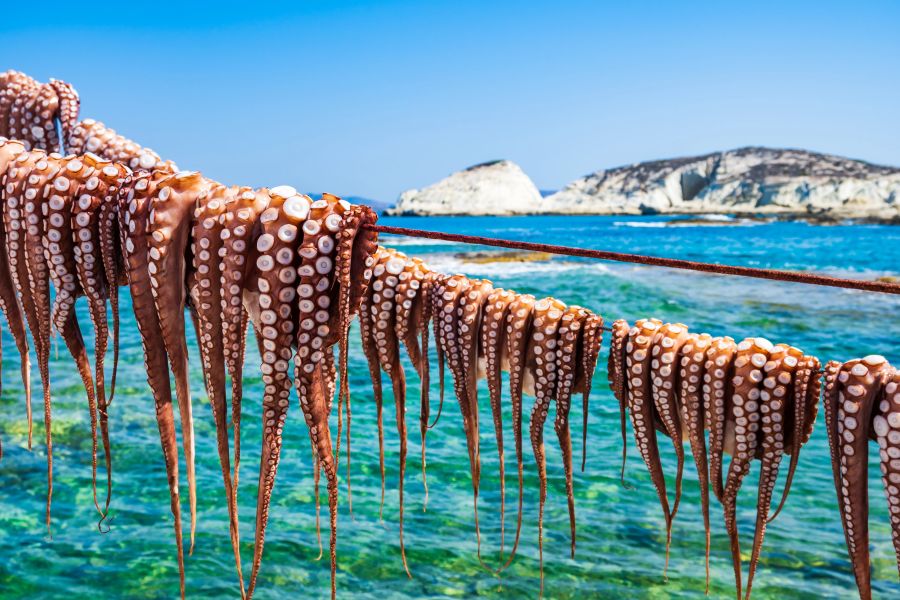 Octopus farming faces rising legislative opposition across the Americas and Europe amid welfare, environmental, and public health concerns.
Growing momentum across the Americas
In October 2025, Chile introduced Bill 17913-12, the first octopus farming ban legislation in Latin America. Both the Chilean and Mexican efforts were introduced by Fundación Veg with technical and scientific input from the Aquatic Life Institute, part of the Aquatic Animal Alliance, a global coalition of over 180 organizations working to improve the welfare of aquatic animals in the food system.
The Mexican bill also cites US precedents. Washington became the first jurisdiction in the world to ban octopus farming in March 2024, followed by California. Bills are underway in New York, Hawaii, North Carolina, New Jersey, Oregon, Massachusetts, and Connecticut. At the federal level, a bill to ban octopus farming was first introduced in 2024 and reintroduced as the OCTOPUS Act in June 2025 by Senators Sheldon Whitehouse and Lisa Murkowski, which would prohibit commercial octopus aquaculture and ban imports of farmed octopus.
European standoff continues
In Europe, Nueva Pescanova’s proposed octopus farm in the Canary Islands was rejected by the regional government in April 2024 after authorities concluded the project posed a “significantly high” environmental risk. A separate legislative proposal submitted to the Spanish Congress in May 2024 is awaiting debate. The EU currently provides no welfare protections for octopuses in farming conditions, though the European Commission is expected to revise its animal welfare legislation to include cephalopods.
Eurogroup for Animals has previously argued that US bans should send a strong signal to the EU, and the growing roster of national prohibitions now extends that pressure. The debate over the Nueva Pescanova proposal was first drawn in 2022, when the company’s plans sparked outrage from scientists and environmental groups. Three years on, no commercial-scale octopus farm operates anywhere else in the Western Hemisphere (besides Mexico), and the legislative barriers are mounting.