

Mango innovation accelerates as ingredient variability tests suppliers


Key takeaways
- Mango is increasingly repositioned beyond juice into functional drinks, frozen desserts, pastries, and adventurous pairings.
- Mango innovation is being driven by functional claims, premiumization, and combinations, such as spicy mango.
- Suppliers must balance authentic fruit appeal with seasonal supply, price volatility, and inconsistent processing performance.
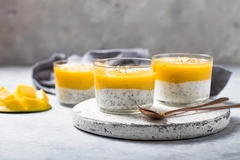
Mango is moving beyond its traditional role as a familiar tropical flavor. Manufacturers are repositioning it across functional beverages, frozen desserts, pastries, and globally inspired flavor combinations. However, as demand expands into more technical applications, suppliers are challenged with delivering authentic mango character with the consistency industrial production requires.
Innova Market Insights data suggests that global F&B launches featuring mango flavor recorded a 10% CAGR from July 2021 to June 2026. Juices and Nectars remain mango’s largest launch subcategory. However, some of the fastest growth is occurring elsewhere, including Frozen Desserts, Cakes and Pastries, Water-based Ice Lollies, Pops & Sorbets, and Iced Tea.
“Mango spent years as a steady performer, and then 2025 happened,” Akhil Aiyar, senior consultant at Innova, tells Food Ingredients First. “Launch activity accelerated sharply, and crucially, mango grew faster than the overall market. This is a flavor gaining ground, not just riding a rising tide.”
For ingredient suppliers, the opportunity is increasingly about more than selling a well-known tropical profile. Mango is becoming a platform for functionality, premiumization, refreshment, and culinary experimentation.
A familiar flavor in new contexts
Aiyar argues that mango’s current momentum is inseparable from how brands are repositioning it.
“The repositioning is what’s driving the momentum,” he says. “Mango isn’t a new discovery. What’s changed is how it’s being used: new formats, new pairings, new claims. This is an established flavor being recontextualized, not a novelty spike.”.webp) Heywell’s orange-mango sparkling water combines tropical flavor with energy, adaptogens, and low-sugar positioning (Image credit: Innova Database).
Heywell’s orange-mango sparkling water combines tropical flavor with energy, adaptogens, and low-sugar positioning (Image credit: Innova Database).
That repositioning is especially visible in health-oriented products. Innova data shows hydration support as the fastest-growing positioning among mango-flavored launches, rising at a 32% CAGR from July 2021 to June 2026. Digestive and gut health, skin health, and prebiotic claims are also expanding quickly.
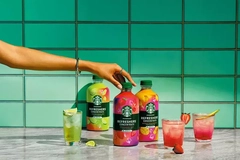
The trend is visible in products such as Heywell Energy Lift Orange Mango Caffeinated Sparkling Water in the US, which combines mango with adaptogens, herbs, antioxidants, 9% juice, 25 calories, and 1 gram of sugar. The launch illustrates how mango can make an energy or functional proposition feel flavorful and fruit-forward.
“The claims tell the repositioning story clearly: natural and functional positioning on mango launches is rising, while sugar-focused claims are fading,” Aiyar says. “Mango is moving from a tropical treat to a permissible, better-for-you flavor.”
However, indulgence is not disappearing. Innova data shows that Frozen Desserts were the fastest-growing mango-flavored subcategory, with a 33% CAGR over the five-year period. Recent launches include Van Leeuwen Mango Sticky Rice French Ice Cream Bonbons in the US and Grande Mango Tango Protein Ice Cream in New Zealand.
Refreshment, indulgence and versatility
For suppliers, mango’s strength lies in its ability to stretch across multiple consumption occasions.
“Mango is trending in food and beverage innovation because it combines broad consumer appeal with strong versatility across categories,” says Antonia Krüger, market segment manager for dairy and ice cream at Döhler. “It delivers a naturally sweet, juicy, exotic profile that feels both refreshing and premium.”
Krüger says mango also benefits from a health halo, growing interest in globally inspired flavors, strong visual appeal, and its ability to pair with chili, lime, coconut, passion fruit, peach, and ginger.
“It offers both familiarity and a more exotic, premium twist,” she tells Food Ingredients First..webp) Van Leeuwen’s mango sticky rice bonbons bring real-fruit cues to a premium frozen dessert format (Image credit: Innova Database).
Van Leeuwen’s mango sticky rice bonbons bring real-fruit cues to a premium frozen dessert format (Image credit: Innova Database).
Innova’s 2026 consumer research reinforces that dual role. Thirty-six percent of consumers say they prefer mango in juices and smoothies, while the flavor also attracts meaningful interest in dairy and non-dairy ice cream. Mango can therefore anchor both lighter refreshment concepts and creamy, premium formats.
Amos Peelerz Mango gummies take mango into playful confectionery through a peelable exterior and soft gel center. Albert Heijn’s Dutch listing cites 60% fruit juice and 6.2% mango puree, pairing novelty with real-fruit cues and underscoring mango’s cross-category versatility. The product is sold across North America, Europe, and Australia.
Its role as a “team player” is also becoming more important. Innova’s data suggests spicy mango was the fastest-growing mango flavor combination from July 2021 to June 2026, rising at a 79% CAGR. Watermelon, dragon fruit, and lychee are also gaining ground as mango partners.
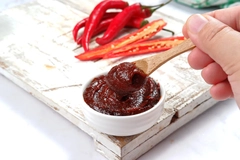
“Passion fruit remains mango’s most prominent flavor combination, but the emerging story is heat,” Aiyar says. “Mango-chili combinations are growing fast, plugging mango straight into the sweet-heat trend.”
That trend has moved into mainstream retail through launches such as Good & Gather’s limited-edition Spicy Chili Mango Gummy Candy in the US. The product combines sweet heat with multicultural positioning, a chef collaboration, and no-artificial-ingredient cues.
The consistency challenge
However, the qualities that make mango attractive also make it difficult to standardize.
“Mango is not a single standardized raw material,” says Elton Antonio do Rosario Carvalho, global product manager for fruit and vegetables at Döhler.
Major processing origins include India, Mexico, and Colombia, but regional preferences remain important. Carvalho points to local Chinese varieties used in foodservice applications in China, and Egyptian mango preferred in the Middle East and North Africa..webp) Good & Gather’s spicy chili mango gummies tap into the fast-growing sweet-heat trend (Image credit: Innova Database).
Good & Gather’s spicy chili mango gummies tap into the fast-growing sweet-heat trend (Image credit: Innova Database).
Unlike apple juice concentrate, which he describes as relatively consistent and primarily differentiated by acidity, mango ingredients can vary widely in sweetness, acidity, color, aroma, fiber content, and viscosity.
“Mango is highly seasonal and dependent on weather, harvest timing, and regional crop conditions,” Carvalho says. “Raw material prices can fluctuate strongly due to seasonality.”
Varietal diversity adds another layer. Totapuri and Alphonso mangoes, for example, differ significantly in flavor, acidity, pulp yield, and functional behavior. Those differences can affect procurement, formulation, and finished-product consistency.
The challenge becomes more pronounced as mango enters carbonated drinks, functional beverages, dairy alternatives, frozen desserts, and pastry applications, all of which may require different levels of acidity, viscosity, fiber, color stability, and aroma retention.
For ingredient companies, the next phase of mango growth may therefore depend less on supplying volume and more on managing variability. Suppliers able to combine sourcing expertise, application-specific formats, sensory standardization, and year-round consistency will be better positioned to capture demand.