
Inside Kerry’s multi-technology approach to lactose-free, reduced sugar dairy

Key takeaways
- Rising lactose intolerance awareness and sugar scrutiny — amplified by regulation — mean manufacturers need to deliver lactose-free, lower-sugar dairy.
- Solutions help manufacturers meet HFSS and global sugar guidelines while addressing digestive health demand and clean label expectations.
- Lactose-free flavored milk, cultured dairy, and performance nutrition shakes present strong opportunities for innovation.

The dairy market is rapidly evolving, driven by consumer demand for lactose-free and reduced sugar products. Increased awareness of lactose intolerance, alongside regulatory and cost pressures, is pushing manufacturers to innovate — without compromising taste, texture, or processing performance.
For F&B manufacturers, this shift raises a critical question: how can brands effectively reduce added sugar and develop lactose-free versions of popular dairy products, like flavored milks and yogurts, while preserving the enjoyment and functionality consumers expect?
Kerry Group is addressing this challenge head-on, supported by its advanced biotechnology and fermentation capabilities. As part of Kerry’s broader biotechnology portfolio, its dairy enzymes act as powerful catalysts in production, helping manufacturers unlock efficiency, consistency, and consumer-relevant benefits at scale.

We speak with Katy McCall, senior product manager on Lactase at Kerry, who talks us through the combined use of the Lactase and Tastesense technologies and how they enable brands to deliver on nutrition, taste, and mouthfeel.
How are lactose-free and reduced-sugar trends shaping consumer expectations in dairy?
McCall: Consumer demand for healthier, better-for-you products, with no taste compromise, is at an all-time high, fueling shifting expectations and market growth. This transformation is driven by two key areas. Digestive health is a primary functional need. In fact, Kerry’s Dairy Decode research reveals that 58% of European consumers find “lactose-free” claims make a product more appealing. The “Digestive Driven” consumer persona (11% of the market) actively seeks these products to avoid discomfort, making lactose-free options a necessity rather than a luxury.
Sugar content influences 53% of consumer purchasing decisions. Currently, 35% of consumers are actively concerned about sugar in dairy (rising to 39% in the UK), and 46% instinctively believe dairy products are high in sugar. Despite these priorities, taste, and indulgence remain non-negotiable. Consumers want the rich, creamy experience and mouthfeel they associate with dairy, even when choosing products that are easier to digest or lower in sugar.
This means manufacturers must deliver products that are not only functional, addressing digestive comfort and reducing added sugar, but also maintain authentic taste and texture. Kerry’s multi-technology approach, combining Lactase enzymes with Tastesense Sweetness and Mouthfeel solutions, helps meet these expectations by unlocking natural sweetness, improving digestibility, and rebuilding indulgent textures.
How do regulatory guidelines on sugar intake influence product reformulation strategies?
McCall: Regulatory guidelines on sugar intake are a key driver for reformulating dairy products. Consumers are increasingly aware of recommendations to limit added sugar, reflected in policies like the UK’s HFSS (High in Fat, Salt, or Sugar) regulations, front-of-pack labeling systems for sugar content in Europe, Canada, and Latin America, and the newly released 2025-2030 Dietary Guidelines in the US.
These regulations create clear incentives for manufacturers to reduce sugar in their products while maintaining overall product appeal. However, The Dairy Decode highlights a critical consumer trust issue: while “no added sugar” claims strongly drive purchase intent, over 30% of consumers are concerned that these products contain artificial sweeteners, and only 23% instinctively associate “no added sugar” with being healthier.
For dairy brands, reformulation strategies must balance health-driven mandates with clean label expectations. Solutions like Kerry’s Lactase enzymes and Tastesense Sweetness allow manufacturers to reduce added sugar by enhancing natural sweetness, ensuring that reformulated products meet both regulatory standards and consumer expectations for indulgent taste without any artificial sweeteners.
How do Kerry’s lactase enzymes, like NOLA Fit and Ha-Lactase, create lactose-free dairy while enhancing natural sweetness?
McCall: Kerry’s lactase enzymes, including NOLA Fit and Ha-Lactase, enable dairy manufacturers to create lactose-free products by breaking down lactose into its simpler sugars, glucose and galactose. This removes lactose to support easy digestibility, which is the main purchase driver for 37% of consumers who prefer lactose-free products, making dairy accessible to a broader consumer base and allowing for a lower glycaemic load. Crucially, lactase also delivers a valuable sweetness advantage. Because glucose and galactose are naturally perceived to be sweeter than lactose, this enzymatic conversion unlocks dairy’s inherent sweetness without adding calories or altering total sugar content.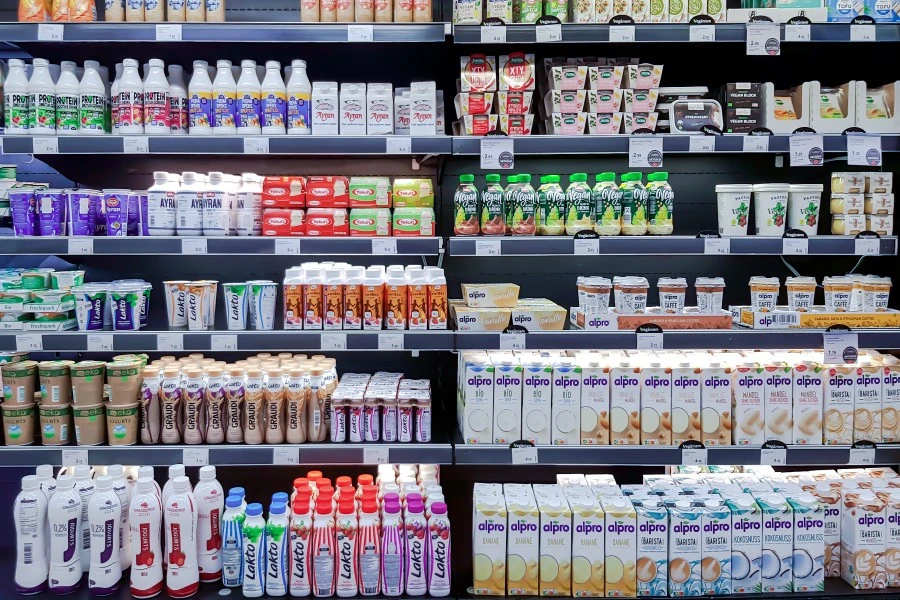 Consumer expectations are changing in the dairy market as demand for lactose-free products rises while gut health and better-for-you positioning gains traction.
How does combining lactase with Tastesense Sweet technology enable up to 70% added sugar reduction?
McCall: Effective sugar reduction in dairy is rarely a one-size-fits-all approach — it typically requires a multi-technology approach. While 73% of global consumers are actively trying to lower their sugar intake, taste remains the non-negotiable driver of repeat purchase. According to The Dairy Decode, taste sits at a 100% index in the primary value equation for dairy, followed closely by naturalness. By leveraging the natural sweetness unlocked by lactase enzymes and combining it with Tastesense Sweetness, manufacturers can optimize this perception to enable up to 70% added sugar reduction while preserving flavor intensity. This combination is highly lucrative, with 45% of consumers reporting a willingness to pay more for a “sugar-free option that tastes great,” and 44% for a “low-sugar option that tastes great.”
Lactase enzymes break down lactose into its simpler components: glucose and galactose. Since these simple sugars are naturally sweeter than lactose, the enzyme “unlocks” the milk’s intrinsic sweetness. This provides a significantly sweeter baseline without adding external sugar. Once the natural sweetness is unlocked, Tastesense Sweet technology is used to amplify that perception. It works by optimizing the way sweetness receptors on the tongue interact with the remaining sugars. This allows manufacturers to drastically cut added sugar (like sucrose) while maintaining the flavor intensity consumers expect. To prevent products from becoming thin or watery, Tastesense Mouthfeel is used to rebuild authentic, indulgent textures across dairy and beverage applications.
What role do biotechnology and fermentation play in ensuring scalability and consistency for these innovations?
McCall: Biotechnology and fermentation play a critical role in ensuring scalability and consistency in dairy innovation. These advanced capabilities allow manufacturers to reliably produce lactose-free and reduced-sugar products at commercial scale, while maintaining the authentic taste, texture, and functional benefits consumers expect. This biological approach directly answers consumer demands. The Dairy Decode found that European consumers strongly associate “natural dairy” with being additive-free and minimally processed. By leveraging fermentation and enzyme technology, such as highly purified lactase enzymes, producers can standardize complex biochemical reactions. This ensures predictable outcomes in flavor and texture.
What are the main challenges when reformulating popular dairy products like flavored milk or yogurt to be lactose-free and lower in sugar?
McCall: The key difficulty lies in balancing taste, texture, and functionality. When sugar is removed, reformulators must carefully manage sweetness perception, viscosity, and creaminess to ensure the product remains appealing. Another significant challenge is verifiable consistency and clean label appeal. The Dairy Decode research confirms that 36% of consumers sometimes do not trust “lactose-free” labeling to be genuine. To overcome this, tools like LactoSens provide precise, on-site verification of lactose-free claims in under three minutes, helping brands ensure trusted, high-quality products that meet both regulatory requirements and consumer expectations.
How can brands maintain authentic dairy flavor, texture, and mouthfeel while reducing sugar and removing lactose?
McCall: Brands can achieve this through an integrated, multi-technology approach. For example, Kerry’s Lactase enzymes break down lactose into glucose and galactose, naturally enhancing sweetness without added sugar, while Tastesense Sweet optimizes this perception of sweetness. At the same time, Tastesense Mouthfeel helps rebuild creaminess and indulgent texture, ensuring products remain full-bodied and satisfying. This approach ensures that taste, texture, and sensory enjoyment remain central to product experience, even as formulations become healthier and more accessible.
Which dairy applications present the greatest opportunity for enzyme-driven innovation?
McCall: The greatest opportunities for enzyme-driven innovation are emerging in high-growth, multi-claim dairy categories that sit at the intersection of digestive health, sugar reduction, and performance nutrition. Consumers are increasingly looking for functional staples that provide measurable health benefits without sacrificing taste or the sensory experience. While the total global market for flavored milk drinks is valued at approximately €27.5 billion (US$32.5 billion), the real innovation story is in the lactose-free segment. In Europe, lactose-free flavored milk is seeing 14.2% sales growth, while globally, lactose-free categories across the board are hitting double-digit growth.
Particularly in North America, we are seeing a surge in cultured dairy. Cottage cheese is trending at +19% sales growth, while Icelandic (+28.1%) and Greek (+18.7%) yogurts are outperforming almost every other dairy category worldwide.
In the North American market, Performance Nutrition Shakes have grown by 20.3%. Traditional milk, yogurt, and cultured products are increasingly adopting lactose-free and reduced-sugar claims as a standard rather than a niche offering. With lactose-free milk growing at 15.2% in North America and sour milk products growing at 12.8% globally, enzyme-driven solutions are becoming the industry standard to meet the demand for “better-for-you” versions of household essentials.