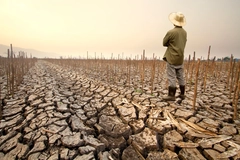



UK harvest 2026: Dry weather pushes wheat and barley yields below average


Key takeaways
- This year’s cereal yields remained below historical averages, with wheat, spring barley, and oats all affected by prolonged dry conditions across much of the UK.
- Harvest results varied significantly between regions and farms, with soil type, rainfall, and moisture availability influencing crop performance.
- Oilseed rape was the standout crop, with average yields around 19% above the UK five-year average despite significant variation between farms.
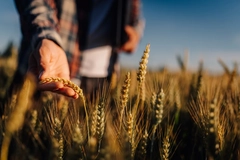
The UK’s 2026 cereal harvest has drawn to a close with yields for several major crops well below recent averages, underlining the impact of a prolonged period of dry weather on arable farming.
The final harvest assessment from the Agriculture and Horticulture Development Board (AHDB) has now been published and shows that winter wheat averaged 6.9 metric tons per hectare across its survey sample — around 11% below the UK five-year average.
Spring barley fared worse, at 4.8t/ha, approximately 17% below its five-year benchmark, while oats averaged 4.6t/ha, about 14% below average.
Wheat and barley bear the brunt
The figures provide a final snapshot of a season that has been characterized by considerable variation between regions and individual farms. While harvest moved rapidly through much of England and Wales, progress slowed as it moved north, with crops in northern England and Scotland generally performing better and helping to lift the eventual national averages.
Winter barley was one of the more stable crops, with an average yield of 6.9t/ha broadly in line with its five-year average. Oilseed rape was the clear exception to the wider picture, producing an average yield of 4.0t/ha — around 19% above the UK five-year average.
Those headline figures, however, mask some striking differences between farms.
For winter wheat, reported yields ranged from just 3.9t/ha to 11.5t/ha. AHDB says differences in soil type, drilling date, previous cropping, local weather, and moisture availability all appear to have played a part in determining how crops performed.
Lack of rain
Rainfall, or the lack of it, was particularly significant. Conditions from spring onwards were generally dry, with lighter soils tending to be more severely affected because they had less capacity to retain moisture. In some areas, crops were able to maintain reasonable yields, while farms experiencing prolonged moisture stress saw much larger reductions.
The result has been a harvest that is difficult to describe through national averages alone.
For growers in parts of northern England and Scotland, later harvesting appears to have brought some improvement in yields, particularly for wheat, oats, and spring barley. But those gains were not sufficient to offset poorer results elsewhere, leaving the UK averages for those crops significantly below recent and longer-term levels.
AHDB says crop quality has been highly variable, particularly in areas where yields have suffered most. That could create further complications for growers beyond the field, as grain is sampled, stored, and marketed in the months ahead.
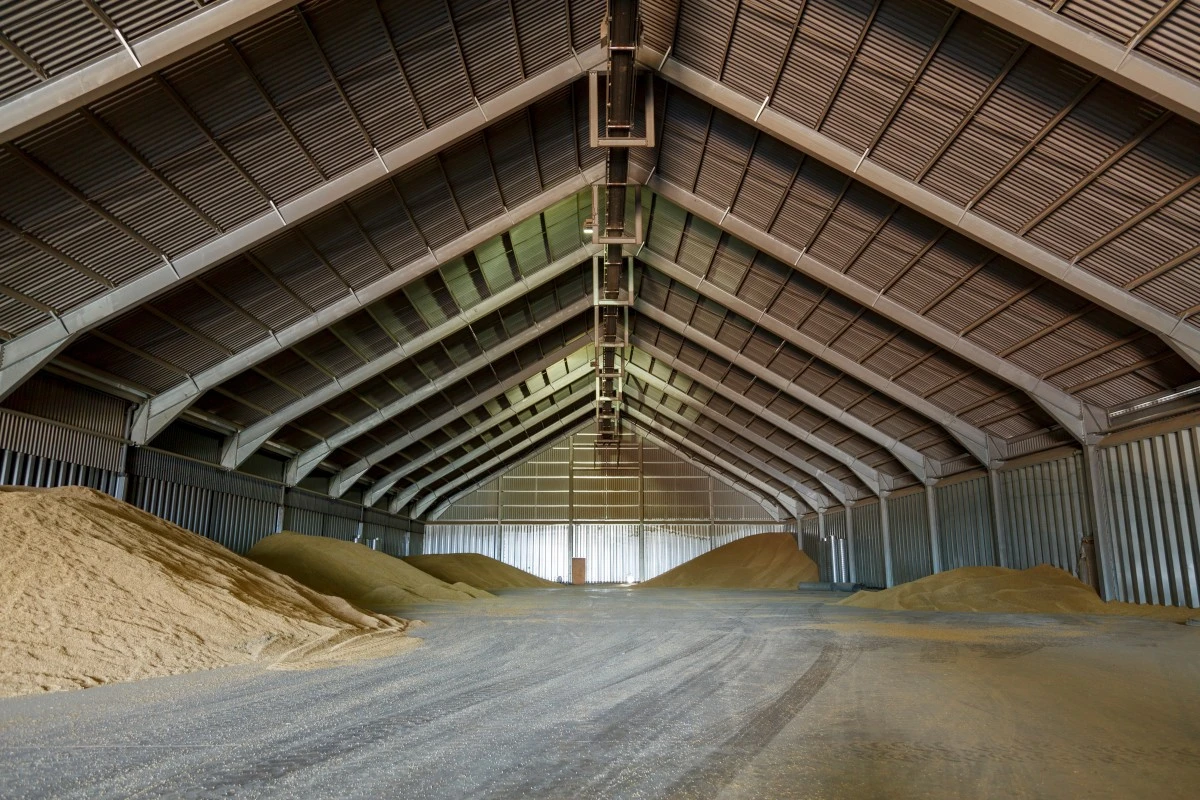 With harvest complete, growers now face the challenge of maintaining grain quality and managing storage through the months ahead.
Poor yields and quality
For farmers, the significance of the harvest figures goes beyond metric tons per hectare. Lower yields mean less produce to sell at a time when many businesses are already dealing with high input costs. Where poor yields are accompanied by quality issues, the financial impact can become more complicated still, depending on how grain can be marketed and what adjustments are required for storage or contracts.
AHDB says this is the second, and in some cases the third, successive challenging harvest for arable farmers in some areas.
The cumulative effect could be particularly significant for businesses that have experienced below-average production across more than one season.
At the same time, the results demonstrate why broad national statistics need to be treated with some caution when assessing individual farms. The AHDB report is based on a survey of 60 farms across the UK, with yields calculated using farmer-reported figures and comparisons with regional five-year averages.
The organization stresses that individual results can differ substantially from the wider regional or national picture.
The geographical pattern of the harvest also illustrates the extent to which weather has shaped this year’s results. As harvesting progressed northward, the inclusion of later crops moderated some of the earlier reductions in the national averages. That improvement, however, should not obscure the severity of the season in areas where dry conditions had already affected crop development.
Oilseed rape bucks the trend
Oilseed rape provides a notable contrast. Its average yield of 4.0t/ha was around a fifth above the five-year average, making it the strongest performer among the crops covered by the final assessment. Even here, however, AHDB reports significant variation between farms.
With harvesting now essentially complete, attention will turn to what the results mean for the months ahead. Grain quality, storage requirements, and marketing decisions will become increasingly important as growers work out the value of what they have produced.
AHDB has produced a Harvest Toolkit covering areas including grain sampling, storage, and contract considerations, reflecting the fact that the challenges of this year’s harvest do not necessarily end when the combine leaves the field.




Upcoming webinars

Oat-Standing Ingredients - Showcasing Irish Grain Through Innovation
Tirlán Ingredients

2027 Food Safety Risks for Quality & Compliance Leaders
FoodChain ID

Formulating for function: Developing benefit-led beverages with natural colours, botanicals, and flavours
Givaudan Sense Colour