

Ingredion VP talks sustainability priorities amid climate and consumer shifts

Key takeaways
- Ingredion is driving sustainability through crop innovation, upcycling, and novel ingredients.
- The company supports a circular economy by reducing food waste with upcycled ingredients.
- Ingredion helps manufacturers reformulate products sustainably while maintaining taste and performance.
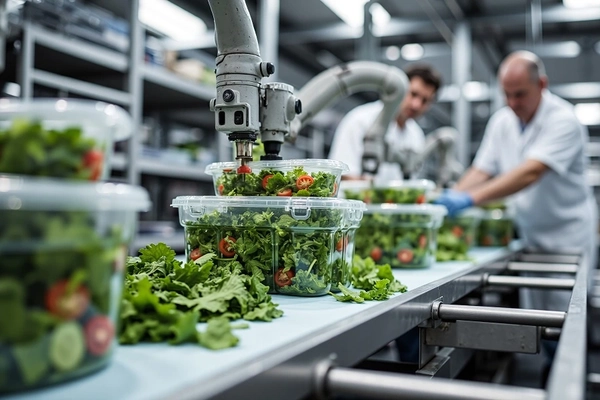
F&B companies face mounting pressure to ramp up their sustainability practices as the industry continues to grapple with climate change-related issues while consumers increasingly prefer brands promoting responsible products. These demands are amplifying the focus on sustainable innovation, which Ingredion is advancing through crop innovation, upcycled ingredients, and novel ingredients.
With nearly one-third of all food produced each year being lost or wasted, sustainability is increasingly becoming a priority for innovation, R&D, and industry practices worldwide. This focus is reflected in Innova Market Insights’ data, which shows that F&B launches featuring sustainable and ethical claims increased by 5% between July 2020 and June 2025.

Food Ingredients First dives into the F&B sector’s sustainability priorities and the impact of consumer choices on sustainability-driven innovation with Larry Fernandes, senior VP and chief commercial & sustainability officer at Ingredion.
“Our customers — many of the major players in the food and beverage industry — feel continued pressure from consumers and their shareholders to promote sustainability,” says Fernandes.
“While each company has unique goals, the common priorities we hear include addressing climate change, promoting regenerative agriculture, sustainable innovation in product formulation, protecting human rights, and scaling up their use of renewable energy.”
Through co-creation and collaboration, the US-headquartered firm helps F&B manufacturers and producers develop “shared priorities for sustainable innovation across several different facets of food production.”
Balancing innovation and sustainability demands
Fernandes says Ingredion does not view sustainability and innovation as a “zero-sum game,” and expects innovation to be a key enabler for sustainability in the future, with manufacturers and consumers.
“Ingredion recently launched a sustainable innovation program to help remake future food and packaging supply chains with sustainable innovation at the core,” he tells us.
The program focuses on crop innovation, using agricultural technologies to improve crop functionality, nutrition, and sustainability. It also emphasizes upcycled ingredients to reduce food waste and environmental impact through whole-crop utilization while supporting affordability and a circular economy.
The initiative uses end-to-end process optimization by “incorporating sustainable design from the get-go,” and novel ingredients to innovate with new and existing technologies that will “help feed growing world populations faced with climate change,” says Fernandes.
The program also supports manufacturers through market shifts, delivering high-value and improved sustainability, with a focus on customer reformulation and sustainable packaging.
Fernandes views packaging design as an “opportunity for improving agriculture sustainability from regenerative crop growing practices to compostable materials.”
“Ingredion is committed to working at the nexus of sustainability and innovation for the long-term, and this work will grow in importance,” he adds.
 Upcycling ingredients can play a key role in advancing a more circular economy, says Fernandes.
Circular economy focus
Facing continued supply chain pressure, F&B companies are adopting circular economy approaches to reduce waste. The European Parliament defines the method as a model of production and consumption that involves “sharing, leasing, reusing, repairing, refurbishing, and recycling existing materials and products as long as possible,” thereby extending the life cycle of products and reducing waste to a minimum.
“Promoting a more circular economy will be key to meeting our industry’s collective objectives in the ESG space. Upcycling ingredients can play a key role in advancing a more circular economy,” says Fernandes.
“Recent market data demonstrates that 71% of global consumers find upcycled ingredients appealing, and 65% of consumers are willing to pay more for products focused on solving food waste.”
Ingredion aims to offer minimally processed ingredients from side streams that can be upcycled to deliver functionality and affordability, such as multi-benefit citrus fibers.
“Ingredion has developed a trademarked way to upcycle citrus peels into citrus fibers. Diverting citrus peels from the waste stream maintains or improves clean label products’ performance and recipe costs while also reducing CO2 impact,” Fernandes adds.
Reformulating for sustainability
As consumers shift toward healthier, more sustainable options, Fernandes asserts that F&B companies should never have to compromise on taste or quality while improving the sustainability profile of their products.
“To best meet the needs of our customers, retailers, and end consumers, Ingredion offers the deepest and broadest range of ingredient solutions. Depending on the customer’s needs, Ingredion can craft exceptional eating experiences through industry-leading scientific and process expertise.”
He highlights protein and fat replacement as examples of the company’s reformulation efforts.
“Ingredion can replace animal-based meat proteins using our plant-based and functional starches. This reformulation helps deliver on consumers’ desire for plant-based protein while also reducing costs and helping our customers reduce their Scope 3 emissions,” he explains.
Pointing to fat replacement ingredients, he says Ingredion can “replace high-fat dairy and tropical oils using our modified and clean label starches.”
“In addition to providing health benefits, this reformulation reduces costs and helps our customers achieve emissions reductions.”
 Reformulation is under focus as a pathway to improve sustainability while meeting consumer expectations.
Need for accountability
Over the past few years, the F&B sector has seen a growing willingness for collaboration on sustainability — a trend that Fernandes welcomes.
“A key theme coming out of Climate Week NYC in fall 2025 was the need for more accountability and partnership up and down supply chains. In the coming five to ten years, there will be more pressure on F&B companies to show the progress they’ve made in reducing the impact of climate change and promoting regenerative agriculture.”
“It is no longer sufficient to announce big, bold commitments without substance behind them. Ingredion’s role in the value chain will continue to increase in importance as F&B companies seek strategic partners to work with to demonstrate measurable progress against their 2030 sustainability goals.”