

Trump threatens 200% tariff on French wine over Macron’s peace board rejection

Key takeaways
- Trump threatens 200% tariff on French wine and champagne to pressure Macron into joining the US-led Gaza peace initiative.
- French wine exports to the US, worth an estimated €1.96 billion (US$2.2 billion), face potential market shutdown.
- Threat marks second use of wine as diplomatic leverage in under a week, following Greenland tariff warnings.
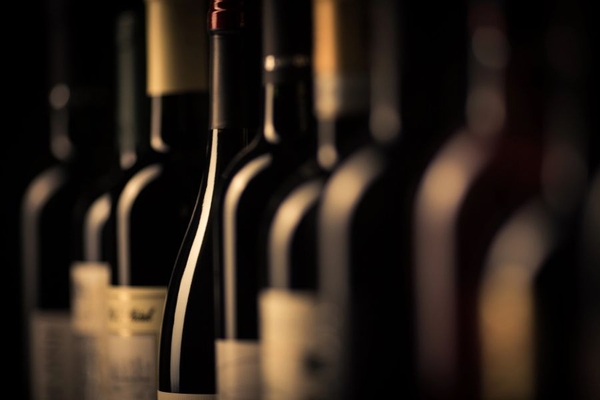
US President Donald Trump has threatened to impose a 200% tariff on French wines and champagne, using the country’s flagship agricultural export as leverage to pressure President Emmanuel Macron into joining the “Board of Peace” — a US-led diplomatic initiative overseeing the control of Gaza.
The threat marks the second time in less than a week that European wine has been caught in the crossfire of unrelated geopolitical disputes, following Trump’s tariff warnings over Greenland. It comes as the sector already contends with a 15% US tariff implemented in August 2025.
“I’ll put a 200% tariff on his wines and champagnes, and he’ll join, but he doesn’t have to join,” Trump told reporters in Miami on Monday. He also dismissed Macron’s influence by noting the French president will leave office in 2027.

The US is the single largest destination for EU alcoholic beverages, importing €8.9 billion (US$9.8 billion) worth in 2024, of which €4.9 billion (US$5.4 billion) was wine, according to Eurostat. France accounts for almost 40% of EU wine exports to the US, a European Parliament analysis notes — meaning roughly €1.96 billion (US$2.2 billion) in French wine trade is directly implicated.
The US is also the largest export market for French champagne, receiving 27.41 million bottles in 2024, according to the Comité Champagne. The sector generated €3.75 billion (US$4.1 billion) in export revenue last year.
In a statement to Food Ingredients First, EU wine association CEEV says it will not yet comment directly on Trump’s threats, saying the discussions remain geopolitical in nature and cannot currently be assessed on a sector-by-sector basis.
“Tariffs are never good news and are not an effective solution for resolving international tensions. Even when presented as comments, statements by the US President must be taken seriously, but they should also be approached with restraint and a sense of proportion,” the spokesperson adds.
Alcohol in the crossfire
The wine sector has repeatedly expressed frustration at being drawn into disputes it cannot influence. When Trump first threatened 200% tariffs in March 2025 — in response to planned EU counter-tariffs on American whisky — CEEV warned it would “effectively shut down the US market for EU wines.”
At the time, CEEV told us that the US accounts for 27% of total EU wine exports by value, a market “no alternative could compensate for.”
The current 15% tariff, combined with a weakened dollar, has already imposed a significant burden on European producers. CEEV previously estimated the combined financial impact on the sector could reach 30%, with investments halted and export volumes declining.
The latest threat further complicates an already fragile trade relationship. The European Parliament last week postponed a vote to ratify the EU-US trade agreement in solidarity with member states targeted by Trump’s Greenland-related tariffs, which include France, Germany, and the Netherlands.
What is the Board of Peace?
The Board of Peace is an international body proposed by Trump last September as part of his plan to end the war in Gaza. Endorsed by the UN Security Council in November 2025, it is intended to help oversee and sustain the ceasefire between Israel and Hamas.
Trump has invited various world leaders to join, including Russian President Vladimir Putin and UK Prime Minister Keir Starmer.