

ICO economist on Hormuz risks for coffee: Cost pressures loom, but shortages unlikely

Key takeaways
- The International Coffee Organization says that Hormuz instability is unlikely to cause a direct coffee shortage, but could raise coffee supply chain costs through higher fuel and fertilizer prices.
- Gulf coffee demand is growing quickly, but regional trade routes are more exposed to Red Sea and Bab el-Mandeb disruption than the Strait of Hormuz itself.
- Consumers may see modest price increases and simpler product ranges, while traders could rely more on rerouting and stock buffers.
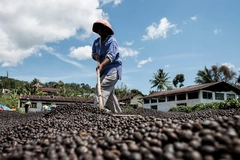
The Strait of Hormuz crisis could produce ripple effects through the global coffee sector, even though most coffee-producing countries do not rely on the route for their main export flows, the International Coffee Organization (ICO) warns. The concerns point to a secondary cost shock from higher energy prices, fertilizer costs, insurance premiums, and freight disruption — not an immediate shortage of beans.
The Hormuz crisis matters for the coffee sector because the strait is a major global energy chokepoint. Around one-fifth of the world’s oil supply passes through it, according to the US Energy Information Administration. Any disruption can raise oil and fuel prices.
For coffee, the ICO says these pressures can feed into transport costs, inland logistics, and fertilizer prices — key elements of production and export economics.

While shipping through the strait partially resumed after the US-Iran interim deal announced in June, traffic did not fully normalize. Today, US President Donald Trump said the ceasefire with Iran is “over” and warned of further military strikes, sending oil prices surging.
Food Ingredients First speaks with Laurent Pipitone, ICO’s chief economist, about the war’s impacts on the coffee sector and what consumers, exporters, and traders might expect from the Middle East instability.
Could the Middle East instability affect coffee import demand in the region, and how might this ripple to producing countries?
Pipitone: While the direct impact on global coffee demand would likely be limited, the Gulf countries have become an increasingly important growth market for coffee. Together, the Gulf countries currently account for approximately 1.7% of global coffee consumption, but demand has expanded rapidly. It has grown at a compound annual rate of 7.9% over the past decade, around five times faster than global consumption. Saudi Arabia alone represents approximately 1.1% of global coffee consumption, with demand increasing at an average 9.9% per year over the same period.
 Laurent Pipitone, chief economist at the International Coffee Organization.Saudi Arabia has been sourcing half of its coffee from Ethiopia. However, this trade is unlikely to be significantly affected by a crisis confined to the Strait of Hormuz, as they normally move by road to Djibouti and then by sea through the Red Sea to western Saudi ports, without transiting Hormuz. However, the route is more exposed to instability in the Red Sea and Bab el-Mandeb Strait.
Any deterioration in security directly affects shipments by increasing delays, freight rates, and insurance costs, or by reducing the availability of regional shipping services. The larger impact on the global coffee sector would likely continue to arise from higher shipping costs, increased trade uncertainty, and elevated energy prices rather than from weaker demand alone.
Are smallholder farmers at greater risk, and what support is available to help them cope?
Pipitone: Smallholder farmers — roughly 80% of global coffee producers — remain more vulnerable to geopolitical shocks, although for different reasons than large commercial producers. Smallholders generally use fewer purchased inputs, such as mineral fertilizers, agrochemicals, and mechanized equipment, making them somewhat less directly exposed to increases in energy-related input costs. However, they also operate with much narrower financial margins, have more limited access to credit and insurance, and possess fewer resources to absorb higher transport, processing, and living costs. Consequently, even relatively modest increases in input or logistics costs can significantly affect household incomes and reduce investment in farm maintenance, potentially lowering productivity over time.
In contrast, large commercial producers, such as those in Brazil, are often more directly exposed to rising fuel and fertilizer prices because of their greater reliance on mechanization and intensive input use. However, they generally have better access to finance, 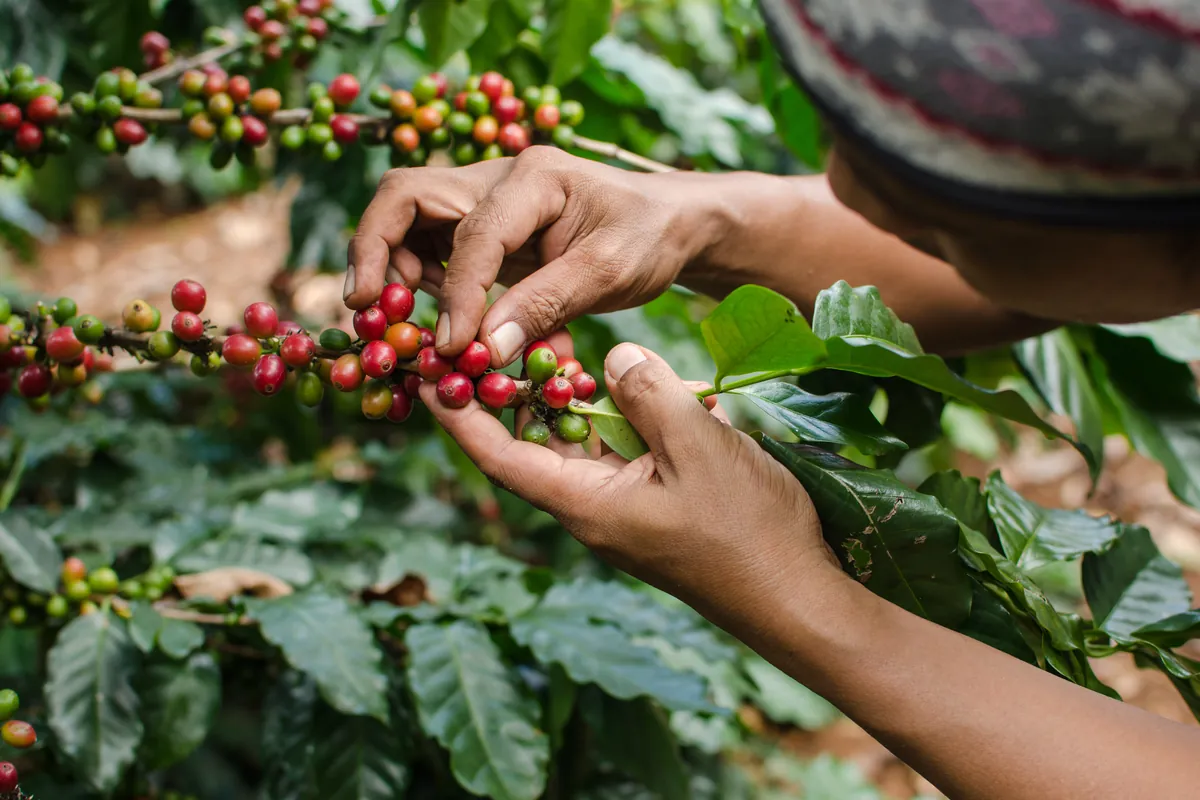 Even modest cost rises in coffee logistics can hit smallholder farmer incomes.economies of scale, and risk management tools, making them better equipped to withstand temporary cost increases.
Are consumers likely to see changes in promotions, packaging sizes, or imported brands due to supply chain disruptions?
Pipitone: Coffee prices have been historically high in the past few years. Although geopolitical tensions can raise transport, insurance, and energy costs, they have generally been a secondary driver of coffee prices compared with supply constraints in major producing countries. Consequently, consumers are more likely to experience gradual reductions in promotions and modest price increases than significant changes in product availability, unless geopolitical disruptions materially affect global coffee supply, or major shipping routes.
These historically high prices have led roasters to manage tighter margins, reducing SKU complexity, shrinking pack sizes, and pulling back on promotions. Importers are consolidating sourcing toward more logistically stable origins and favoring blends over single origins for greater supply flexibility.
What strategies can exporters, importers, and traders adopt to mitigate the impact of these disruptions on supply chains?
Pipitone: The most effective approach combines diversification and risk management: rerouting shipments away from disrupted corridors (for example, the Cape of Good Hope as an alternative to the Red Sea), building strategic stock buffers, locking in freight contracts with rate caps, and using commodity and currency hedging instruments. Investment in supply chain digitalization further improves responsiveness when disruptions emerge.
Do you expect these disruptions to drive trends such as local sourcing or alternative beverages?
 Consumers may see fewer promotions and small price rises, rather than coffee product shortages.Pipitone: Global coffee consumption has experienced a continued growth over the years, though it has been impacted recently by the historically high prices. Geopolitical disruptions alone are unlikely to drive a fundamental shift toward local sourcing or alternative beverages. Coffee production is geographically constrained, meaning most importing countries cannot substitute imported coffee with domestic production. Instead, importers and roasters are more likely to diversify their sourcing across producing countries, increase inventories, or adjust coffee blends to manage supply risks.
Are there any long-term measures being discussed to reduce the coffee sector’s exposure to global chokepoints?
Pipitone: Yes, although the focus is on improving resilience rather than avoiding global chokepoints altogether. Key discussions center on three areas — developing value-added processing capacity at origin to reduce dependence on bulk green coffee shipments; investing in multi-modal transport corridors to open alternative export routes; and strengthening market data infrastructure so disruptions can be anticipated rather than merely reacted to. The ICO is actively engaged in all three through its member dialogue and partnership frameworks.
Does the ICO anticipate long-term structural changes in the coffee supply chain if instability continues?
Pipitone: As the leading intergovernmental organization for coffee, representing governments responsible for 91% of world production and over 64% of global consumption, our role is to facilitate cooperation and identify solutions to challenges. What the current geopolitical context makes clear is the urgency of our mandate: promoting market transparency, coordinating policies between producing and consuming countries, and strengthening support for the more than 125 million people whose livelihoods depend on coffee.




Upcoming webinars

2027 Food Safety Risks for Quality & Compliance Leaders
FoodChain ID

Formulating for function: Developing benefit-led beverages with natural colours, botanicals, and flavours
Givaudan Sense Colour

Let's reveal the grain potential: Innovate
Meurens Natural