

US study finds “handmade food halo” creates food safety concerns in deli meats


Key takeaways
- Consumers often prefer hand-prepared foods, but a US study shows this “handmade food halo” can create food safety blind spots.
- Safety messaging reduced interest in hand-sliced deli meat, but did not automatically make standard prepackaged meat more appealing.
- Prepackaged deli meat gained appeal when packaging used care and authenticity cues, showing that safer options must also feel trustworthy.
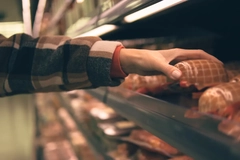
Consumers usually associate hand-prepared food with freshness, and authenticity — but human handling can actually create a food safety blind spot, a US-based study highlights. The findings show that safer F&B options must feel as authentic and cared for as handmade foods to win consumer trust, and targeted messaging can significantly change purchase intentions.
In two online randomized experiments, the scientists examined what they describe as a “handmade food halo.” The consumer perception effect makes them opt for products like sliced deli meat over prepackaged options at the supermarket, since they associate human involvement with positive product attributes that don’t necessarily exist, the authors note.
“We noticed that consumers generally prefer handmade food or hand-sliced deli meat and automatically assume that it is more cared for, more authentic, and has better quality,” says Lavi Peng, assistant professor of hospitality and tourism management in the Isenberg School of Management at UMass Amherst, which co-authored the study.
“But from a food safety perspective, hand preparation doesn’t always mean the food is better.”
How safety messaging impacts deli meat purchase intent
The study, published in the International Journal of Hospitality Management, focused on deli meat, a ready-to-eat food category associated with food safety concerns, especially around Listeria risk. These bacteria are resilient at cold temperatures and contaminate such highly susceptible foods.
For the survey, 344 US consumers evaluated hand-sliced deli meat from a grocery store deli counter versus factory-sliced, prepackaged deli meat. They rated how appealing they found the products and how likely they were to purchase them.
 The study highlights that food safety information needs to be visible at the point of sale.At first, consumers clearly preferred the hand-sliced option, rating it as more appealing and showing more keenness to buy it. This supported the researchers’ idea that human involvement creates positive assumptions about a product, even when those assumptions may not be justified by safety evidence.
The first experiment introduced participants to food safety information explaining that deli-counter sliced meat can carry substantially higher listeriosis risk than prepackaged deli meat. The authors underscore that while participants became less enthusiastic about the hand-sliced meat after receiving this information, their interest in the standard prepackaged option did not rise.
“We thought that once we told participants that the hand-sliced deli meat might be risky, they would automatically perceive the safer option as more attractive,” Peng explains. “But that’s not the case. The appeal of the prepackaged option didn’t increase.”
Consumers’ response to care and authenticity cues on packaging
The second experiment tested this by redesigning the prepackaged meat with “human care” cues — such as a farmer’s image and messaging that emphasized careful preparation, which changed the outcome, notes the study.
“After receiving the food safety information, participants rated the redesigned prepackaged product as significantly more appealing and reported greater purchase intentions than for either the standard-packaged or hand-sliced deli meat,” the authors note.
The findings suggest that consumers are not necessarily seeking human contact itself, but are instead responding to signals of care, attention, and authenticity, they explain. Additionally, adding human care details improves the appeal of machine-packaged food products, reads the study.
Marketing lessons for safer ready-to-eat foods
The study also offers practical lessons for marketers and public-health communicators — “snap decisions on food purchases are the norm,” it emphasizes.
“Consumers are unlikely to research every product before making a quick purchase,” says Peng. “That means safety information needs to be visible at the point of sale, but marketers also need to make the safer option feel appealing, trustworthy, and cared for.”
While the study’s main focus was on deli meat, Peng emphasizes that the findings may also apply to other ready-to-eat foods, including sushi and street foods, where consumers often associate handmade preparation with superior quality.