



Why does abundant global food supply still leave access gaps?


Key takeaways
- Global food security depends on transport access and affordability, not just food production volumes.
- Economic inequality was the strongest factor limiting food accessibility, with major unmet demand concentrated in Asia and Africa.
- Researchers say better road and maritime infrastructure, lower transport costs, and reduced economic disparities are key to improving food access.
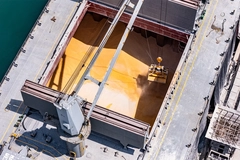
Producing enough food does not guarantee that it will reach the people who need it, with transport costs and economic inequality emerging as major barriers to global food accessibility, according to new research led by the University of Oulu, Finland.
The study combines global data on food production, demand, transport infrastructure, and transport costs to assess how efficiently road and maritime networks can connect areas of food surplus with areas of unmet demand.
Researchers modeled six major crop groups — temperate cereals, maize, rice, tropical cereals, tropical roots, and pulses — that together account for about half of the calories traded internationally.
“The study highlights that food availability alone does not guarantee food accessibility. Transport costs and economic inequalities can limit access to food even when sufficient supplies exist,” says Terhi Ala-Hulkko, researcher at the University of Oulu.

Economic inequality widens the gap
The team tested three scenarios: one assuming equal transport costs, another incorporating regional economic differences, and a third examining shocks from production losses and infrastructure hazards.
Under equal transport costs, regional delivery could satisfy nearly 80% of global food demand, rising to 93% when delivery was extended globally. However, the results indicate that the existing transport network still cannot fully balance food supply and demand, with accessibility shortfalls particularly pronounced across parts of Asia and Africa.
Economic inequality had the strongest effect of the scenarios assessed. When the researchers accounted for differences in income and food expenditure, unused food surpluses and unmet demand rose at the same time. About two-thirds of global unmet demand was concentrated in Asia, according to the study.
That coexistence suggests that food can be present within the wider system but remain economically or logistically out of reach.
The findings align with broader industry concerns over food system resilience. Food Ingredients First reported in March that Cargill’s Resilient Food Systems Index identified major gaps in countries’ ability to withstand climate, trade, and logistics shocks, while emphasizing market access and infrastructure as critical to keeping food moving.
Africa faces transport cost barrier
The researchers found a different dynamic in Africa. When transport costs were assumed to be equal, much of the continent’s domestic food production was theoretically accessible. Once the higher transport costs experienced by many African regions were incorporated, however, substantially more food remained undelivered.
This indicates that infrastructure alone is not the only issue, as the cost of using transport networks can itself restrict access.
The study also highlights the potential for production and infrastructure disruptions to affect regions unevenly. Our recent coverage of the Sustainable Foods Summit Europe similarly highlighted how freight disruption, geopolitical tensions, and climate-related pressures are increasing supply chain risks and ingredient costs.
“As transport networks are the backbone of the global food delivery system, improving food security is therefore not only about producing enough food in a sustainable way, but also about ensuring that food can reach the people who need it,” says Ossi Kotavaara, research director at the University of Oulu.
The researchers say road and maritime infrastructure, transport costs, and economic inequality need to be considered together when assessing food security.
The model is designed to examine spatial accessibility rather than reproduce actual trade flows. Its food supply-and-demand inputs are based on data from 2006–2010, and the analysis does not incorporate trade relationships or geopolitical influences — factors that could further shape real-world outcomes.
The study was published in the Journal of Cleaner Production.




Upcoming webinars

Oat-Standing Ingredients - Showcasing Irish Grain Through Innovation
Tirlán Ingredients

2027 Food Safety Risks for Quality & Compliance Leaders
FoodChain ID

Formulating for function: Developing benefit-led beverages with natural colours, botanicals, and flavours
Givaudan Sense Colour