


Pork price slump sharpens China’s low-soy feed push as Muyuan sinks to H1 loss


Key takeaways
- Muyuan Foods swung to a RMB 6.08 billion (US$904 million) H1 loss, as weak hog prices squeezed China’s pork sector.
- The company is leaning on low-soy diets, precision nutrition, amino acids, and flexible feed formulations to cut production costs.
- Downstream processing and feed ingredient sales provided some resilience, highlighting the value of diversification beyond hog farming.
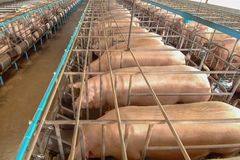
China’s Muyuan Foods Group is continuing to develop low-soy diets, precision nutrition, and flexible feed formulations, as weak hog prices squeeze margins across the country’s pork sector.
The vertically integrated producer has reported a net loss attributable to shareholders of RMB 6.08 billion (US$904 million) for the first half of 2026, reversing a RMB 10.53 billion (US$1.57 billion) profit in the same period last year. Revenue fell 22.3% year over year to RMB 59.41 billion (US$8.84 billion).
Muyuan said the downturn was mainly driven by sharply lower hog prices. Its average selling price for finished hogs fell about 28% year over year to RMB 10.4 (US$1.55) per kilogram, more than offsetting gains made on the production side.

The company said China’s hog farming industry remained in a state of deep losses during the first half.
Feed costs under the microscope
Muyuan’s total unit cost of hog farming had fallen to about RMB 11.7 (US$1.74) per kilogram by June, and the company is targeting an average of RMB 11.5 (US$1.71) per kilogram for the full year.
It plans to keep pushing costs down through animal health management, genetics, nutritional formulation, smart farming technology, and tighter operational control.
Feed strategy sits at the center of that effort.
Alongside conventional corn-soybean meal and wheat-soybean meal diets, Muyuan has been expanding the use of barley, sorghum, agricultural by-products, and other grains and meals.
It is also developing low-soybean diets built around net-energy and true ileal digestible amino acid systems, with fermented amino acids used to reduce soybean meal requirements.
That gives Muyuan more room to switch between raw materials as prices change, rather than relying too heavily on a single feed basket. Its nutrition models also allow rations to be adjusted for different herds and stages of production.
For suppliers, that creates a clearer commercial case for amino acids, enzymes, fermentation-derived ingredients, and technologies that help producers get more value from lower-cost feedstocks.
The push also fits with Beijing’s wider effort to reduce the livestock sector’s dependence on conventional feed grains.
China’s Ministry of Agriculture and Rural Affairs is targeting soybean meal at around 10% of total livestock feed use by 2030. It also wants average feed consumption per kilogram of animal product at standardized, large-scale farms to fall by more than 7% compared with 2023 levels.
The policy backs precision feeding, low-protein diets, amino acids, enzymes, fermented feed, microbial proteins, and the development of insect- and algae-derived feed ingredients.
Soybean meal prices themselves fell significantly year over year during the first half, according to Muyuan. That suggests the shift toward lower-soy formulations is not simply a reaction to expensive soy.
Processing provides some relief
Muyuan’s downstream business offered a brighter spot.
Revenue from hog farming fell 30.5%, but revenue from slaughtering and meat products rose 14% to RMB 22.06 billion (US$3.28 billion). The segment’s gross margin increased from 2.1% to 4.2%, while Muyuan said its slaughtering and meat business was profitable during the period.
The company slaughtered 17.23 million hogs in the first half, up nearly 51% year over year, and sold about 1.92 million metric tons of fresh, frozen, and other pork products.
Muyuan said it plans to keep expanding processed cuts, customized products, and higher-value offerings, as it works to improve profitability in slaughtering and meat processing.
Feed raw-material revenue also rose sharply, climbing 245.8% to RMB 4.32 billion (US$642 million).



Upcoming webinars
Oat-Standing Ingredients - Showcasing Irish Grain Through Innovation
Tirlán Ingredients

2027 Food Safety Risks for Quality & Compliance Leaders
FoodChain ID

Formulating for function: Developing benefit-led beverages with natural colours, botanicals, and flavours
Givaudan Sense Colour