


Iran’s Hormuz blockade leaves fertilizer stranded as food price inflation nears


Key takeaways
- US urea prices have surged 32% in a single week, with nearly a million metric tons of fertilizer physically stranded in the Gulf and major producers declaring force majeure.
- A sulfur shortage (the Gulf produces 44% of global supply) is cascading into phosphate fertilizer production worldwide, compounding the nitrogen disruption.
- US President Trump’s push for a naval “Hormuz Coalition” has drawn no public commitments, while Iran signals it may reopen the strait selectively and on its own terms.
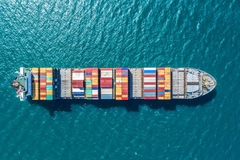
The closure of the Strait of Hormuz — now entering its third week following US-Israeli strikes on Iran and the Islamic Republic’s retaliation across the Gulf — is inflicting significant damage on the global fertilizer supply chains that underpin food ingredient production.
Prices for urea, a nitrogen-rich compound that is the world’s most widely used solid fertilizer and a critical input for staple crops, including corn, wheat, and rice, have surged more than 30% since the war began.
Nearly a million metric tons of fertilizer cargo are physically stranded in the Gulf, major producers have declared force majeure, and a previously overlooked shortage of sulfur — an oil and gas byproduct essential for manufacturing phosphate fertilizers — is cascading into crop input supply chains far beyond the Middle East.
With Brent crude at approximately US$105.66 per barrel on March 15 — the highest since mid-2022 — disruptions in the F&B industry are compounding rapidly. We examine the latest developments and expert predictions on how the crisis could continue to impact food manufacturers and consumers.
The price damage, two weeks in
According to the Center for Strategic and International Studies, urea prices at the New Orleans import hub jumped from US$516 per metric ton on February 27, 2026, to US$683 on March 5, 2026 — a 32% increase in a single week. One ton of urea now costs US farmers the equivalent of 126 bushels of corn, up from 75 bushels in December 2025.
Fitch Ratings senior director Guillaume Daguerre told The National that urea has reached approximately US$591 per metric ton globally, up around 25%, while Oxford Economics has raised its Q2 2026 fertilizer price forecast by roughly 20%, with risks “skewed to the upside.”
Stranded cargo and contract terminations
At least 21 ships carrying nearly a million metric tons of fertilizer are stuck in the Gulf as of March 13, according to reports.
Industries Qatar (Qatar’s largest listed industrial company) and SABIC Agri-Nutrients (a Saudi Arabian fertilizer producer) have also declared force majeure — a legal mechanism that formally releases suppliers from contractual delivery obligations due to extraordinary circumstances, forcing buyers to seek alternative supply immediately — on shipments to South America and Asia, according to the Carnegie Endowment for International Peace.
Sulfur supply risks
Potentially the most consequential development since the war began is the emergence of sulfur as a compounding supply chain threat. The Gulf accounts for roughly 44% of global sulfur production, according to the United States Energy Information Administration — almost twice the region’s share of the hydrocarbons business.
Fertilizer producers outside the Gulf now face constraints because they depend on Gulf-sourced sulfur. The disruption impacts global phosphate production. CSIS notes that roughly 20% of global phosphate fertilizer trade originates from countries directly affected by the conflict.
No infrastructure workaround exists — Saudi Arabia built a pipeline enabling oil exports to bypass Hormuz, but there is no equivalent for ammonia or sulfur..webp) Nearly half of all seaborne urea exports and 44% of global sulfur production transit the Strait of Hormuz — far exceeding its better-known role as an oil chokepoint.
Nearly half of all seaborne urea exports and 44% of global sulfur production transit the Strait of Hormuz — far exceeding its better-known role as an oil chokepoint.
The planting window narrows
CSIS calculates that a vessel from the Persian Gulf to the US Gulf Coast takes roughly 30 days, meaning supply disrupted now will miss peak March and April planting. The American Farm Bureau Federation has written to the Trump administration urging it to prioritize critical farm inputs.
CSIS, citing industry sources, reports that Indian fertilizer manufacturers have already cut urea output as high LNG costs raise production expenses — threatening India’s monsoon planting season and rice and wheat export volumes.
The disruption is hitting Indian agriculture from both sides: India’s basmati rice exports to Iran — one of its largest rice markets — have halted entirely since the conflict began, according to the All India Rice Exporters Association.
Joseph Glauber, senior research fellow at the International Food Policy Research Institute, notes that the wider impact on food prices will be driven less by commodity moves than by energy cost pass-through, which represents roughly half the total retail food bill. Farmers may shift away from nitrogen-intensive crops such as corn, Glauber said — reshaping grain and starch ingredient supply heading into H2 2026.
Coalition push offers no quick fix
US President Trump called over the weekend for China, France, Japan, South Korea, the UK, and others to send warships to keep the strait “open and safe,” with reports that the White House hopes to announce a “Hormuz Coalition” as early as this week. No country has publicly committed.
Trump has acknowledged that even with Iran’s military degraded, “it’s easy for them to send a drone or two, drop a mine, or deliver a close range missile” along the waterway.
Iran, meanwhile, is signaling selective access on its own terms. Its foreign minister said that Tehran has been “approached by a number of countries” seeking safe passage. India confirmed that two of its tankers were allowed through on Saturday after bilateral talks, while a senior Iranian official told reporters that Tehran is weighing allowing vessels through on the condition that cargo is traded in Chinese yuan rather than US dollars.
For food ingredient supply chains, even a coalition escort or selective reopening would not restore normal fertilizer flows quickly. Carnegie warns that restarting Gulf production and transport takes weeks that Northern Hemisphere farmers do not have — and a conditional, bilateral reopening creates unpredictable access that procurement teams cannot hedge against.