



Scientists tackle flaxseed oil bitterness to improve flavor stability and shelf life

Key takeaways
- Researchers in Germany develop a method to reduce bitterness in flaxseed oil, extending its shelf life while preserving health benefits.
- The process removes the compounds responsible for bitterness, without using chemical additives or complex refining.
- The innovation aligns with growing consumer demand for natural and eco-friendly products.
 Lead author Roman Lang from the Leibniz Institute for Food Systems Biology at the Technical University of Munich (Image credit: Dr. Gisela Olias / Leibniz-LSB@TUM).
Scientists in Germany have developed a method to improve the flavor stability of flaxseed oil — an omega-3-rich oil known for its health benefits, but which poses shelf life challenges to F&B manufacturers. The team used bleaching earth (magnesium-aluminum silicate) to reduce the oil’s bitterness, offering a sustainable way to extend its freshness without chemical additives or complex refining.
When fresh, flaxseed oil has a pleasantly mild taste, but quickly develops bitter notes during storage and eventually becomes inedible. This process makes it difficult for companies to maintain flavor and quality.
A team, led by Roman Lang from the Leibniz Institute for Food Systems Biology at the Technical University of Munich, addressed this challenge by removing compounds called “cyclolinopeptides,” naturally present in flaxseed oil, using bleaching earth. Previous research by the university had found that cyclolinopeptides are responsible for this change in taste.

To test this hypothesis, Lang’s team analyzed eight mineral-based cleaning agents approved for the refining of edible oils, including bleaching earth.
The study, published in Applied Food Research, is particularly important in the context of making flaxseed oil — rich in omega-3 fatty acid alpha-linolenic acid — a more viable and appealing option for consumers seeking to improve heart health. The German Federal Center for Nutrition recommends replacing saturated fats with polyunsaturated fats to lower LDL cholesterol and reduce the risk of coronary heart disease.
Moreover, plant‑based sources of omega‑3s — including flaxseed and chia — are part of rising consumer dialogue about health benefits, including heart health, brain health, and overall wellness, finds Innova Market Insights research.
Targeting flaxseed oil bitterness
The scientists at Leibniz Institute mixed 200 grams of flaxseed oil with 10 grams of bleaching earth, followed by stirring (20 minutes at 30°C), and separation by centrifugation. This process reduced the bitterness-inducing compound cyclolinopeptide in the oil by more than 80%.
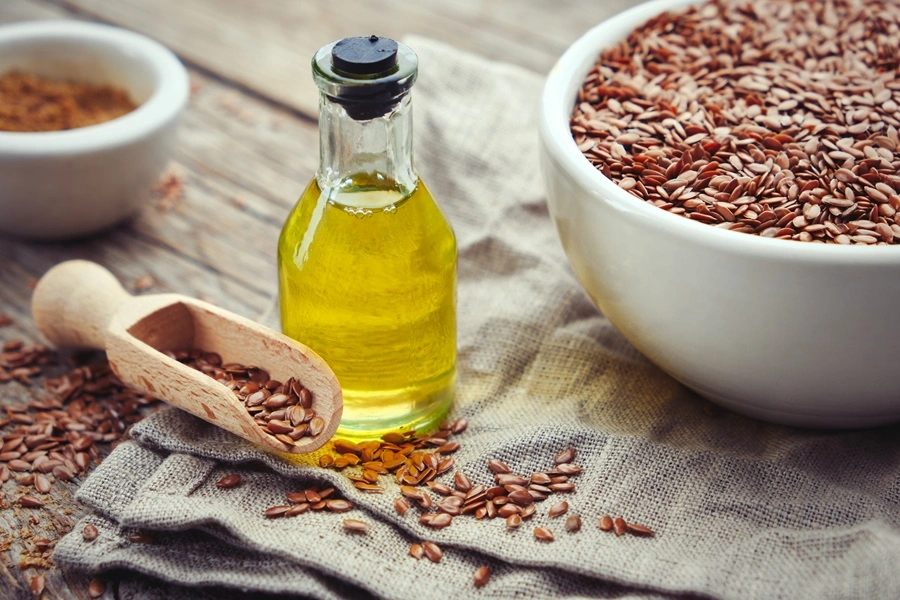 Flaxseed oil’s taste starts mild but becomes bitter over time due to cyclolinopeptides oxidizing into bitter compounds.This method did not compromise the oil’s color, odor, or fatty acid profile — key characteristics of the oil that contribute to its nutritional value and appeal.
“Sensory tests subsequently confirmed the success of the new research approach — while the untreated flaxseed oil exhibited a noticeable bitterness right from the start, the treated oil tasted hardly bitter at all. The taste advantage of the treated oil persisted even over a longer period,” note the authors.
Even after nine weeks of storage in the dark, the treated oil remained much milder and retained its fresh taste, while untreated oil became increasingly bitter. This finding opens up opportunities for manufacturers to extend the shelf life and quality of flaxseed oil products.
Sustainable food progress
The scientists call the reduction of cyclolynopeptides a “sustainable approach” to waste prevention due to the extended shelf life. It also offers a method to increase consumer acceptance — “without chemical additives or complex refining.”
This approach aligns with the rising demand for natural, eco-friendly solutions in the F&B industry. Additionally, by reducing waste through longer-lasting products, this method contributes to sustainability in the supply chain.
Looking ahead, the researchers plan to examine the optimal combination of materials used and the impact of treatment duration and temperature on cyclolinopeptide residues. They will also study the stability of polyunsaturated fatty acids to further refine the purification process.
The Leibniz Institute for Food Systems Biology at the Technical University of Munich funded this research.