

Botaneco: Oleosomes emerge as multifunctional plant-based fat alternative


Key takeaways
- Oleosomes can replace conventional fats and emulsifiers while supporting texture, creaminess, stability, and sensory performance.
- Botaneco’s water-based process preserves intact oil bodies, enabling multifunctional ingredients and broader whole-seed utilization.
- The technology shows promise in plant-based dairy and meat applications, with commercialization now focused on validation, partnerships, and scale-up.
Fat does much more than add calories to food. It influences texture, lubrication, flavor release, aroma, juiciness, melting behavior, and the overall tasting experience.
Jason Hargreaves, R&D director at Botaneco, says these functions make fat replacement particularly challenging in dairy alternatives, plant-based meats, and other formulated foods. Oleosomes, however, could offer manufacturers another option.
Oleosomes are natural structures that oilseeds use to store and protect oil prior to germination.
Food Ingredients First speaks with Hargreaves to explore how structured plant-fat systems could expand manufacturers’ formulation toolboxes, and how oleosomes can deliver fat, emulsification, texture, and sensory performance within a single ingredient system. We also discuss their potential to replace conventional fats, the formulation changes they may require, and their cost competitiveness.

Why are food manufacturers looking for new alternatives to conventional animal fats and processed vegetable oils?
Hargreaves: Manufacturers are looking for systems that can deliver fat functions while responding to changing consumer expectations concerning ingredient lists, plant-based products, and the use of agricultural resources. Conventional formulations may require refined oils to be combined with separately produced emulsifiers, stabilizers, and texturizing ingredients to achieve the desired performance. If the performance of a multitude of ingredients can be replaced by a single multifunctional ingredient, the consumer is happier. Similarly, if the performance of a saturated fat can be replicated with a structured ingredient comprising unsaturated fats, the resulting food product is more nutritious.
A successful alternative must provide reliable sensory and technical performance, fit within established manufacturing processes, meet regulatory and food-safety requirements, and make commercial sense. Jason Hargreaves, R&D director at Botaneco.
What makes oleosomes suitable for use as functional fat systems in food formulations?
Hargreaves: During oleosome isolation, the oil remains enclosed within a naturally stabilized membrane comprising proteins and phospholipids, rather than being extracted, refined, and subsequently rebuilt into an emulsion.
This unique structure enables oleosomes to be multifunctional food ingredients. Depending on the application, they may contribute fat delivery, emulsification, texture, and overall sensory performance within a single ingredient system. Their particle size can also help recreate some of the sensory characteristics exhibited by dairy milk-fat globules.
In beverage testing, formulations containing oil bodies have shown increased creaminess, together with greater microfoam volume and stability compared with those using conventional combinations of oil and lecithin.
Oleosomes are not a universal replacement for all conventional fats. Their value is specific to the application and comes from retaining the seed’s native functionality, which may reduce the need to reconstruct that functionality using several separate ingredients.
Can you explain how Botaneco’s water-based processing technology separates intact oleosomes and proteins from oilseeds, and how it differs from conventional oil extraction?
Hargreaves: Conventional oilseed processing typically extracts crude oil before refinement, often using combinations of pressure, heat, and solvent-based processing. The refined oil may then be combined with emulsifiers and other ingredients when specific functionality is required in a finished food.
Botaneco uses a water-based process designed to open the seed while preserving valuable natural structures, including intact oil bodies. The process then separates the oil body and protein-rich streams so they can be developed into functional ingredients for food, personal care, and feed applications.
The key distinction is that Botaneco’s process is designed to preserve the oil within the structure created by the seed, rather than extracting it as a commodity oil and then using it to rebuild an emulsion. This approach allows recovery of intact oleosomes in addition to differentiated valuable seed protein ingredients and other useful co-streams.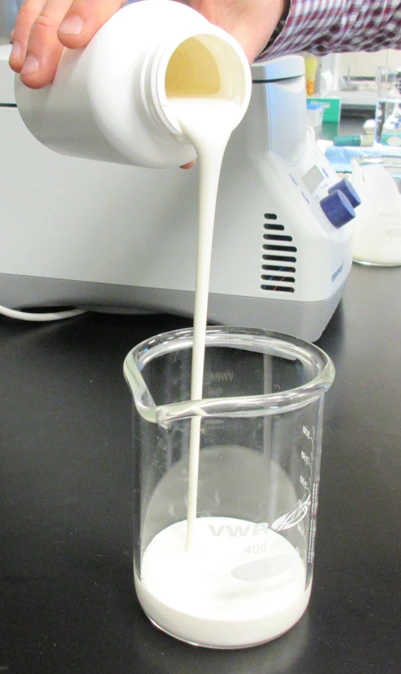 In plant-based beverages, oleosomes are a drop-in fat-and-emulsifier replacement solution compared to standard beverages.
This approach is intended to support whole-seed utilization. Rather than focusing on a single extracted component and treating the remainder as a lower-value by-product, multiple fractions can be directed to applications where they provide the most value.
How closely could oleosome-based structured fats replicate the mouthfeel, lubrication, and temperature-dependent melting behavior of dairy fat, palm oil, or other solid fats?
Hargreaves: Oleosomes have the potential to replicate the functional properties of dairy fat or tropical fat in food products, across the board.
In alternative dairy beverages, by replacing tropical fat, such as coconut oil, with oleosomes, we see an almost linear relationship between oleosome level and the mouthfeel and creaminess of the final product, when assessed by a trained sensory panel. In ice cream, oleosomes have demonstrated the ability to replace butter fat without compromising the creaminess and overrun of the final product. Lastly, in an alternative cheese project with the University of Guelph, oleosome-containing prototypes demonstrated meltability and stretchability that cannot be achieved with other vegetable oil sources, and produced metrics that were comparable to dairy cheeses such as Cheddar and mozzarella.
Furthermore, Botaneco is currently engaged in a project with the University of Saskatchewan in Canada to better understand oleosome gelation and temperature-dependent melting in plant-based dairy products. We also aim to extend these learnings to the application of oleosomes as adipose tissue fat mimetics in plant-based meat systems, where oleosomes have already demonstrated their ability to successfully replicate muscle meat fat to enhance the juiciness of high-moisture meat analogs.
How do these ingredients perform under industrial conditions, such as heating, mixing, freezing, high shear, and extended storage?
Hargreaves: In the case of plant-based beverages, oleosomes are a drop-in fat-and-emulsifier replacement solution and have demonstrated their applicability to standard beverage manufacturing conditions that comprise high shear, high pressure, and ultra-high temperature processing. At the same time, these prototypes have demonstrated enhanced physical stability compared to commercial plant-based milks on the market today.
The sensory attributes were assessed by a trained sensory panel of tasters after over two months of storage in the freezer.
What formulation changes would manufacturers need to make when replacing conventional fats with oleosome-based systems?
Hargreaves: Since our oleosome ingredients are already concentrated emulsions comprising oil, water, and natural emulsifiers, most food product manufacturing processes we have explored introduce the oleosomes at the same stage as vegetable oil would otherwise be. In some cases, we have even seen that the manufacturing process can be shortened when using oleosomes because a pre-emulsification step is no longer required.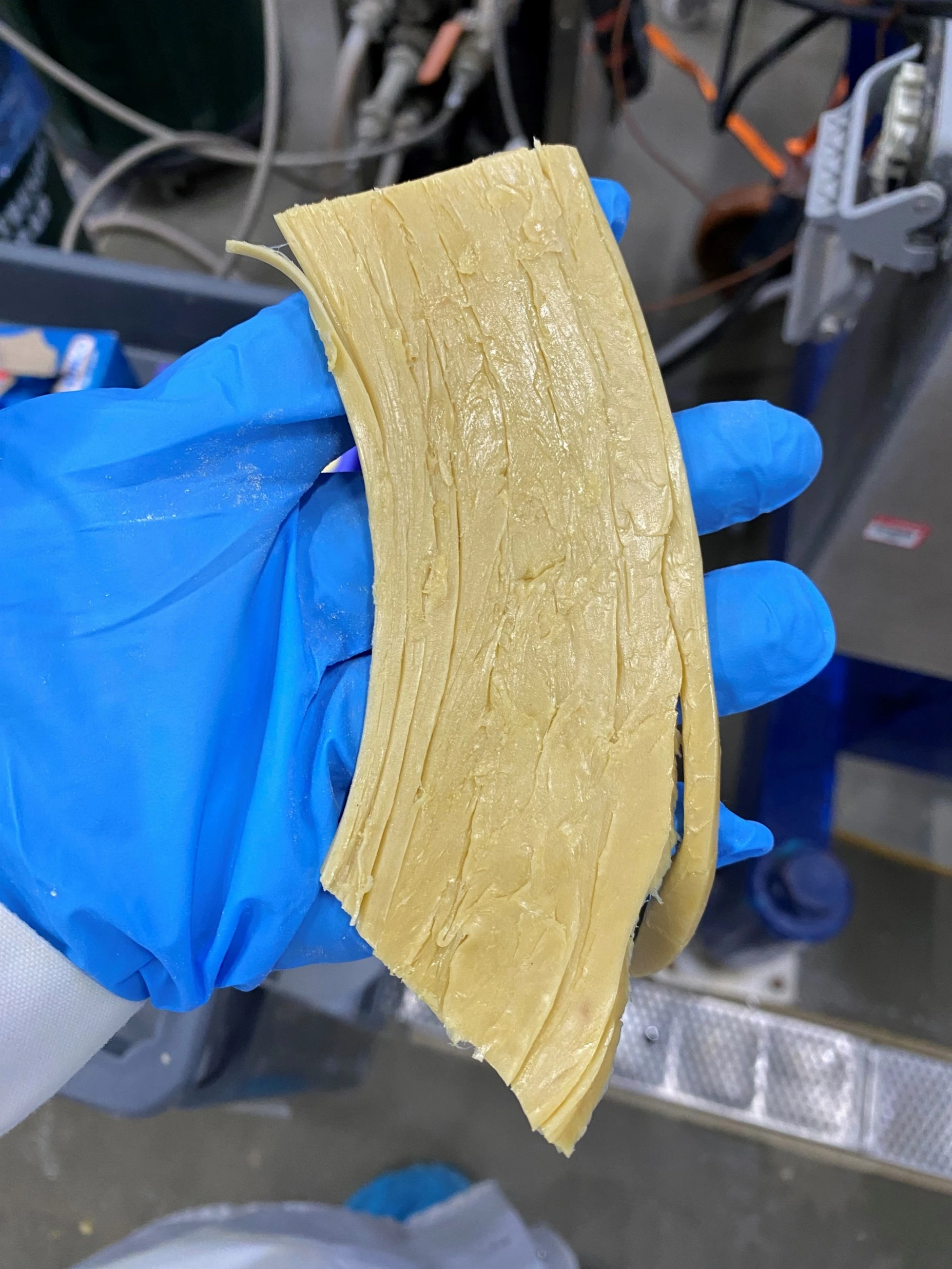 Oleosomes have demonstrated their ability to replicate muscle meat fat to enhance the juiciness of high-moisture meat analogs.
When using oleosomes in plant-based ice cream, we found the same sensory attributes with and without high-pressure homogenization used in the process, which opens the door of our ingredient to boutique ice cream producers, without sophisticated processing equipment, in addition to the mass market producers.
When using oleosomes in high-moisture meat analogues (HMMA), the incorporation of fat in the form of oleosomes rather than vegetable oil enables the fat to withstand the extrusion conditions required to make HMMA ribbons. This reduces oil loss during processing and allows for the production of high-moisture meat analogues with higher fat contents, which in turn can allow the manufacturer to modulate the fibrosity of the HMMA depending on its intended application.
One limitation for the replacement of oils with oleosomes is their use in low-moisture systems prior to cooking. One example is the replacement of butter as a laminating fat – we are currently attempting to modify the rheological and surface properties of the oleosomes to create alternative ingredient offerings for products that require fats with no additional water-holding capacity.
What technical breakthroughs are still needed before oleosome-based ingredients can compete at scale with conventional fats and emulsifier systems?
Hargreaves: From our perspective, there are no further technical breakthroughs required for oleosomes to be widely adopted by the food industry at this stage. They have demonstrated either comparable or enhanced performance to conventional fat and emulsifier systems in a wide variety of plant-based food products. Since oleosomes are not the only value-added co-product from Botaneco’s process, it enables our oleosome ingredients to be cost competitive with the ingredients they replace, making their value proposition to the industry clear.
Instead, Botaneco believes the breakthrough needed for oleosome commercialization will come from market development activities. We are seeking a commercial partner to take our oleosome ingredients and co-develop commercial products with us, which will ultimately enable our oleosome platform to scale to the annual volumes required to supply the food industry.
How close is Botaneco to demonstrating these systems at a commercial scale, and which food categories are likely to adopt them first?
Hargreaves: Botaneco’s food platform is in the application development and partner validation stage. The Calgary facility includes internal laboratories, infrastructure supporting commercial personal care production at multiple-ton scale, and pilot capabilities for producing initial quantities for food development and customer evaluation.
The earliest opportunities are expected in categories where oleosomes provide a clear functional advantage, and manufacturers are prepared to co-develop the food products alongside us. Botaneco’s work has included plant-based and hybrid dairy products such as beverages, creamers, yogurts, ice cream, and soft cheeses. The team has also explored higher-fat applications, including providing unparalleled juiciness to plant-based meats through the incorporation of otherwise unattainable levels of fat.




Upcoming webinars
Oat-Standing Ingredients - Showcasing Irish Grain Through Innovation
Tirlán Ingredients

2027 Food Safety Risks for Quality & Compliance Leaders
FoodChain ID

Formulating for function: Developing benefit-led beverages with natural colours, botanicals, and flavours
Givaudan Sense Colour