

EFSA lowers trifluoroacetic acid safety threshold amid PFAS health concerns

Key takeaways
- The European Food Safety Authority has lowered the acceptable daily intake for trifluoroacetic acid by around 3.5 times following new evidence linking the chemical to changes in thyroid hormone levels.
- The revised guidance could influence future EU decisions on pesticide risk assessments, food monitoring programs, and consumer protection measures, although it does not introduce new legal limits.
- EFSA highlights remaining uncertainties around TFA’s potential long-term effects and is calling for further research to better understand the substance’s toxicity and environmental impact.
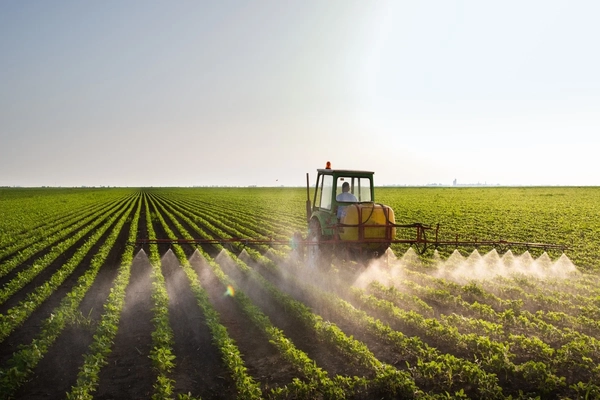
The European Food Safety Authority (EFSA) has lowered the acceptable daily intake (ADI) for trifluoroacetic acid (TFA), a persistent chemical that can form from the breakdown of certain pesticides and other per- and polyfluoroalkyl substances (PFAS). This follows new scientific evidence linking the compound to changes in thyroid hormone levels.
EFSA reduced the ADI to 0.014 mg per kg of body weight per day, down from the previous 0.05 mg/kg, a reduction of around 3.5 times.
It also established an acute reference dose of 0.07 mg/kg body weight, marking the first time a short-term exposure limit has been set for TFA.
Health concerns
The revised guidance follows a review of toxicological evidence showing that TFA can alter levels of thyroxine, a hormone produced by the thyroid gland that plays a key role in regulating metabolism, growth, and development.

According to EFSA, the updated health-based guidance values reflect the latest scientific evidence on consumer exposure.
While the scientific opinion does not introduce new legal limits, it will inform discussions between the European Commission and EU member states on whether additional risk management measures are needed to ensure consumer protection.
TFA in food systems
TFA is a highly persistent substance that originates from multiple sources. It can be formed when certain PFAS compounds degrade, including some pesticide active substances, allowing it to accumulate in groundwater, soil, and agricultural crops.
As a result, the compound has become an increasing focus for regulators examining environmental contamination and food safety.
For the food and agriculture sectors, the revised guidance could have implications for pesticide approvals, residue assessments and monitoring programs, particularly for products containing active substances that can degrade into TFA.
EU member states already monitor PFAS levels in drinking water, while separate monitoring programs track PFAS in food.
The lower health-based guidance values may influence future exposure assessments and regulatory decision-making, as authorities evaluate whether existing measures remain sufficiently protective.
The assessment drew on data from several sources, including evaluations of pesticide products conducted by EU member states, previous EFSA assessments of active substances capable of forming TFA, studies reviewed by the European Chemicals Agency (ECHA), and industry submissions.
EFSA also carried out a public consultation, receiving 177 comments from stakeholders that were considered during the final scientific assessment.
TFA uncertainties, further research needed
The authority acknowledged that uncertainties remain regarding TFA’s potential long-term toxicity, carcinogenicity, and developmental immunotoxicity. To account for these knowledge gaps, EFSA incorporated an additional “uncertainty factor” into its calculation of the revised ADI and identified these areas as priorities for future research.
The latest opinion forms part of wider EU efforts to better understand and regulate PFAS substances.
EFSA said it is continuing to work alongside the ECHA to assess how PFAS-containing pesticides degrade into TFA, as well as the substance’s behavior and persistence in soil and water.
That joint assessment is expected to be completed in summer 2027 and could provide further scientific evidence to support future EU policy on PFAS, pesticides, and food safety.