

Givaudan and Bühler-backed The Cultured Hub expands into plant cell culture


Key takeaways
- The Cultured Hub expands its offerings to include plant cell culturing for high-value F&B ingredients.
- The expansion addresses rising ingredient costs, climate volatility, and the need for sustainable sourcing methods.
- The hub hosted the Cultured Plant Cell Event 2025, bringing together start-ups, corporates, and researchers to explore innovations in plant cell culture.
Givaudan, Bühler, and Migros’ joint venture, The Cultured Hub, has expanded its alternative protein portfolio to include plant cell culturing for high-value ingredients like cocoa and coffee, while continuing its original focus on advancing cultivated meat and cellular agriculture.
This expansion is inspired by the need to overcome rising ingredient costs, climate volatility, and pressure on agricultural systems through more resilient and sustainable sourcing methods.
Additionally, nearly half of global consumers are highly aware of the climate impacts on food production, making them more likely to support brands addressing these issues, according to Innova Market Insights.
The Swiss collaborators position plant cell culture as a promising approach to achieving the controlled, year-round production of key plant compounds independent of farmland, weather, pests, or disease.
“Plant cell cultivation represents an important new frontier in sustainable food and ingredient production,” says Ian Roberts, chief technology officer at Bühler Group.
He explains that plant cell culture faces the same challenges as cultivated meat — the need to scale, reduce cost, and ensure quality at industrial levels. “By expanding The Cultured Hub’s offering into plant cell culture, we are supporting innovators in this transition and giving the food industry a unique platform to explore new, climate-resilient ingredient pipelines.”
The Cultured Hub also addresses the issues of high costs associated with plant cell culture, including bioreactors, energy use, and complex biology. It helps early-stage companies overcome scaling challenges by offering advanced bioprocess equipment, expert support, and a collaborative platform.
“By providing shared bioprocess infrastructure and a collaborative environment, The Cultured Hub enables both start-ups and corporates to scale more efficiently, shorten development timelines, and explore where strategic partnerships and investments can unlock the next wave of innovation,” says Yannick Jones, CEO of The Cultured Hub.
Advancing alt-protein innovation
The Cultured Hub operates a biotech facility in Kemptthal, Switzerland, with labs, cell culture, and fermentation capabilities, supporting start‑ups and more established companies.
The company recently hosted its first Cultured Plant Cell Event 2025 to inaugurate the expansion of plant cell culturing at the site. The event focused on exploring how plant cell culture can complement traditional agriculture and overcome the pressures facing the cocoa, coffee, and citrus supply chains.
Plant cell culture companies presented their innovations across coffee, cocoa, and next-generation ingredients, including Ergo Bioscience, Coffeesai, Phyton Biotech, Spicy Cells, Kokomodo, Food Brewer, Celleste Bio, and GALY. The solutions included cocoa biomass grown in bioreactors, stabilized coffee cell lines, and high-value plant compounds produced using controlled fermentation.
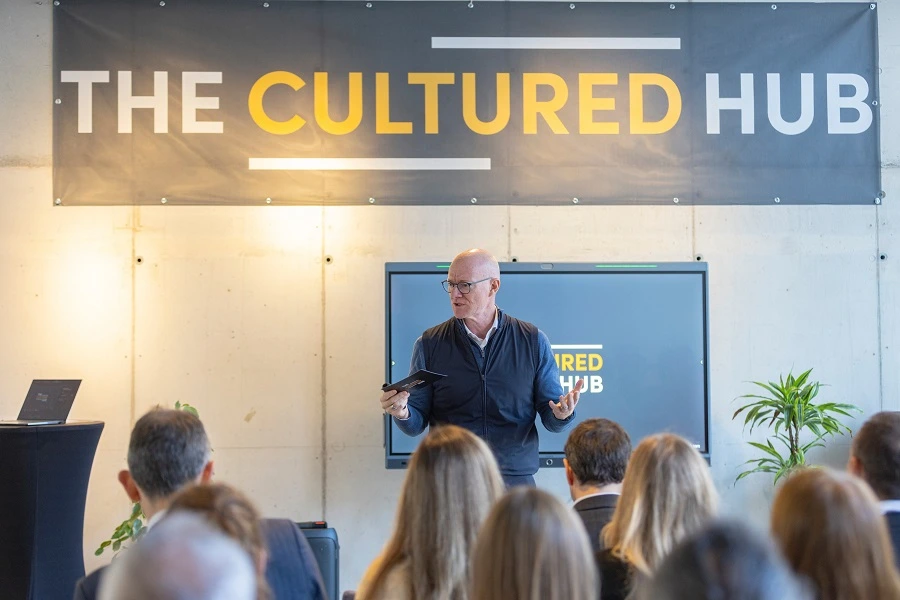 The challenges of scaling, reducing costs, and ensuring quality in cultivated meat also apply to plant cell culture, says Ian Roberts, CTO at Bühler Group.
Lab to commercialization pathway
Dr. Ing. Regine Eibl-Schindler from the ZHAW School of Life Sciences and Facility Management highlighted the emerging discipline of “microbotanics” — the precise and consistent cultivation of plant cells to produce targeted metabolites, flavors, and functional compounds — during the event.
Meanwhile, Philippe Jutras, founder of the Plant Cell Institute, explained that plant cell factories enable the production of molecules or biomass that are “difficult, slow, or expensive to obtain from fields, while reducing exposure to climate and disease risks.”
“But as with any new technology, scaling is the bottleneck. Events like this create essential alignment between researchers, start-ups, and industry so we can move from promising lab results to meaningful commercial impact.”
The Cultured Hub was established as a cellular agriculture start-up incubator last year. Companies using the hub can scale their processes from small-scale lab experiments to 1,000-liter pilot operations without investing in expensive assets to support resilient and sustainable ingredient pathways.