


After the spike: Cocoa’s volatile new norm forces structural industry shift


Key takeaways
- Barry Callebaut explores cocoa division split after 6.8% volume decline, 9x margin calls, 60% higher hedging costs.
- Cocoa prices fell 50%+ from US$12,931/MT peak, yet reformulation accelerates — Nestlé, Pladis drop “chocolate” labeling despite price relief.
- Alternatives go mainstream: Cargill NextCoa, Planet A ChoViva (Barry Callebaut partner), Bunge Coberine — threatening smallholder farmers.
The world’s largest chocolate maker, Barry Callebaut, is reportedly exploring separating its cocoa division from its chocolate business, marking what could be a structural break in the industry between manufacturing and commodity trading that would reshape how the sector manages supply chain risk.
According to anonymous media sources given to Reuters, potential options include a spin-off with minority stake sale, joint venture, merger, or complete sale. While Barry Callebaut declined to comment on the report, shares jumped 10% intraday following the news, before settling up at 5.8%.
The move comes as cocoa prices have crashed more than 50% since December 2024, when futures hit US$12,931 per metric ton (MT) on the Intercontinental Exchange (ICE). March 2025 contracts now trade around US$6,000-US$6,300, according to commodities data provider Barchart. Yet rather than slowing restructuring efforts, the industry is accelerating them.
Major brands continue reformulating products to reduce cocoa content despite price relief. Nestlé and Pladis, in December 2025, dropped “chocolate” labeling from UK products as reformulated recipes fell below legal cocoa content minimums. Manufacturers are investing heavily in cocoa-free alternatives that promise to insulate them from future volatility.
The disconnect reveals how last year’s price spike — which saw cocoa more than double from pre-2024 levels before crashing — is being treated as a forecast rather than an anomaly.
Barry Callebaut told us it would not comment on the market rumors but stressed that it is making strong progress with its investment plans.
“Our strategic priorities remain clear: deleveraging to strengthen our financial position, preparing the company for renewed sustainable growth through best-in-class customer experience and innovation, and decoupling from market volatility,” the company says.
The price paradox
March 2025 cocoa contracts trade around US$6,000-US$6,300 per MT— down more than 50% from December 2024’s US$12,931 record high on ICE, according to Barchart. Current prices remain 20% above the US$5,104 per MT 1977 high that stood for 47 years until early 2024.
Market forecasts continue shrinking despite improved West African harvests. ICCO in November 2025 reduced its global surplus to 49,000 MT from 142,000 MT. Citigroup in December cut 2025/26 surplus to 79,000 MT from 134,000 MT.
On December 10, Rabobank revised to 250,000 MT from 328,000 MT. In January 2026, cocoa will be added to the Bloomberg Commodity Index. Citigroup estimates this could trigger up to US$2 billion in buying from funds that track the index.
According to Innova Market Insights, one in three consumers will pay more for chocolate with verified sustainability claims, yet price sensitivity emerges as the top climate-affected food aspect.
From reformulation to alternatives
Major manufacturers are reducing cocoa content despite price relief. Nestlé removed “chocolate” from Toffee Crisp and Blue Riband bars in the UK in December 2025 after reformulation dropped content below the legal 20% cocoa solids and 20% milk solids minimum. The product packaging now reads “encased in a smooth milk chocolate flavour coating.” Pladis similarly reformulated Penguin and Club bars.
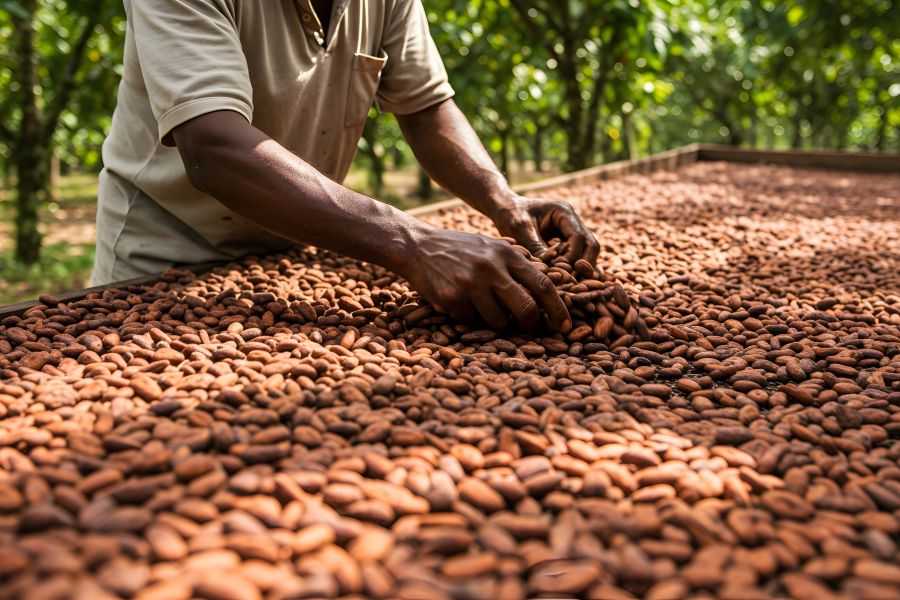 Despite the rebound in cocoa prices, manufacturers are innovating to protect themselves against further volatility.The timing is notable: cocoa prices have fallen to nearly half their US$12,000 per metric ton peak, yet reformulations proceed — revealing these are permanent cost management strategies rather than temporary crisis responses.
Nestlé also developed a patented technique using up to 30% more cocoa fruit by valorizing pulp, placenta, and pod husk otherwise discarded. Innova Market Insights reports 78% of consumers seek indulgence with natural ingredients, while cocoa prices have more than doubled since late 2023.
Beyond reformulation, cocoa alternatives have moved to mainstream strategy. Cargill NextCoa from roasted grape and sunflower seeds delivers cost savings versus chocolate and runs on standard production lines.
Planet A Foods’ ChoViva uses fermented oats and sunflower seeds. After US$15 million Series A funding, the company partnered with Barry Callebaut in November for global scaling.
Bunge’s Coberine 206 offers shea-based cocoa butter equivalents for Asian markets, while Barry Callebaut’s NotCo AI partnership integrates artificial intelligence for faster formulation.
Patent activity is growing, with Voyage Foods, WNWN Food Labs, Nukoko and Planet A Foods holding cocoa-free chocolate patents, according to Innova Market Insights.
Barry Callebaut’s calculation
Barry Callebaut’s consideration of splitting off its cocoa division reflects just how brutal 2024’s volatility was for manufacturers. Fiscal 2024/25 results showed group sales volume falling 6.8%, with Global Cocoa declining 12.8%. Revenue surged 49% to CHF 14.8 billion (US$16.8 billion) as the company passed cocoa price increases to customers via its cost-plus model — but margins collapsed.
Half-year 2024/25 results revealed the damage: initial margin requirements increased nine times above normal levels, while backwardation costs — where near-term prices exceed long-term prices — became 60% more expensive at H1 peak compared to prior periods. These are hedging costs that hit before beans even enter inventory.
“Consistent with our commercial model, we have priced through the cocoa price increases to our customers,” Barry Callebaut stated in Q3 fiscal 2025. “Meanwhile, customers are managing end-consumer price increases, causing short-term B2B disruption, further impacting our volume.”
The company now prioritizes deleveraging, targeting below 3.5x Net Debt/EBITDA in fiscal 2025/26. Total group volume declined 6.8% for fiscal 2024/25, which Barry Callebaut attributed to market conditions and “prioritization of volume towards higher return segments” in Global Cocoa.
Splitting the cocoa division would shield its higher-margin chocolate business — serving brands like Nestlé and Magnum — from commodity swings while improving financing access.
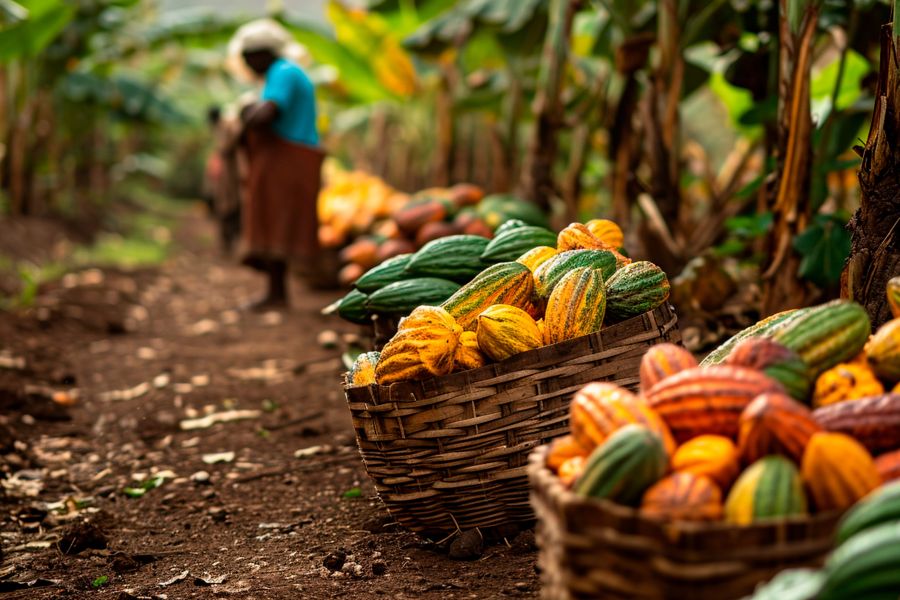 Ingredient replacement threatens smallholder farmers that produce traditional cocoa ingredients.
Farmer livelihood concerns
Over 90% of global cocoa comes from five to six million smallholder farmers, mostly in rural Côte d'Ivoire and Ghana.
“Chocolate manufacturers should commit to sourcing both responsibly-produced cocoa and sustainable alternatives — not one replacing the other,” Kerry Daroci at the Rainforest Alliance previously told Food Ingredients First. “Before scaling alternatives, companies must conduct human rights and livelihood impact assessments in source countries.”
Planet A Foods says ChoViva aims to “complement, not disrupt” cocoa butter. “Cocoa Butter is a premium and unique product, and will always have its place,” says Kevin Schmitz at Planet A Foods. “But it is sought after more than it is available.”
Daroci warns the chocolate industry faces a crossroads: “One path leads to technological substitution that leaves farmers behind. The other integrates innovation with investment in people and landscapes.”
Innova Market Insights reports 75% of EU consumers say sustainability influences chocolate choices, yet price remains a major barrier — a tension that complicates farmer welfare efforts.