




Climate-resilient chickpeas: Omics breeding targets yield and supply stability

Key takeaways
- University of Queensland researchers propose a staged omics roadmap to accelerate breeding of heat-tolerant chickpeas.
- Heat-resilient genetics could help stabilize chickpea yields and improve ingredient supply reliability.
- The research reflects a wider industry shift toward climate-proofing crops at the breeding stage.
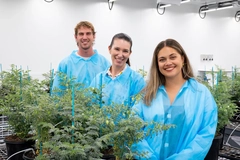 Project lead Dr. Millicent Smith (center) with co-authors Dr. Shanice Van Haeften (right) and Callum Jamie (left) at the UQ Plant Futures Facility (Image credit: Megan Pope, UQ).
Scientists in Australia are mapping a staged “omics” approach to accelerate breeding for heat-adapted chickpeas as rising temperatures threaten flowering, grain filling, and yields. The team aims to provide a practical pathway to accelerate the development of heat-adapted chickpea varieties and strengthen food security in vulnerable regions.
The authors note that the average global temperature is projected to increase by 1.8 to 4.0°C by 2100, exacerbating heat stress risk in major chickpea-producing regions, such as India, Pakistan, and Ethiopia, where grain legumes are a key dietary component.
Such heat stress during reproductive development is highlighted as a critical constraint to chickpea productivity in the review. It can cause flower and pod loss and reduced pollen viability.

Project leader Dr. Millicent Smith at the University of Queensland (UQ) tells Food Ingredients First that while the work has not investigated grain composition or processing performance, heat-resilient genetics could ultimately support more reliable chickpea supplies during hot growing seasons.
“Heat tolerance is a complex trait. It involves many genes and responses happening at different stages of the plant’s life,” she says.
“Omics technologies let us look underneath the trait and understand what’s actually going on. But most studies so far have used only one or two data types on a handful of lines, so we wanted to set out a realistic, staged way to use them.”
Omics roadmap for chickpea breeding
Omics technologies analyze different layers of a plant’s biology — including genes, gene activity, proteins, and metabolites — to form a more complete picture of how it responds to stresses, such as heat.
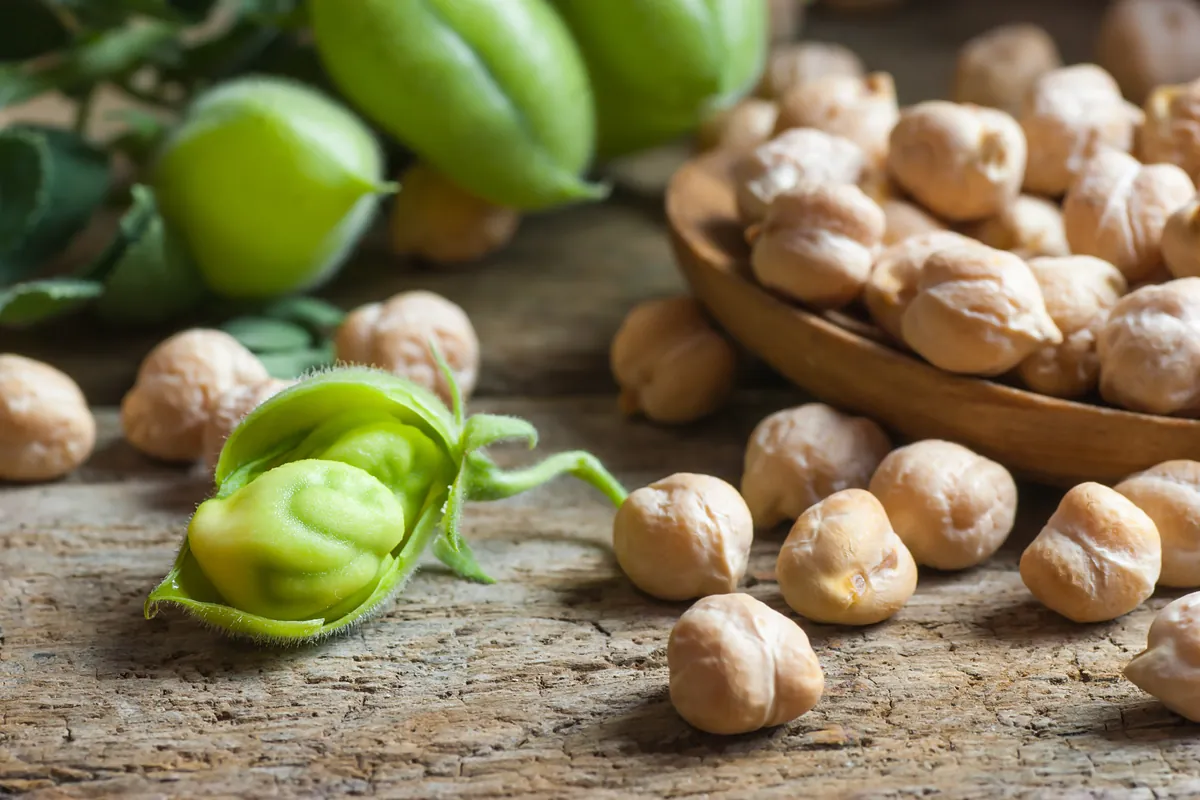 More resilient chickpea genetics may strengthen future ingredient supply.The research, published in Food and Energy Security, examines genomics, epigenomics, transcriptomics, proteomics, metabolomics, phenomics, and enviromics. It proposes how these tools could be progressively incorporated into chickpea breeding.
Previous chickpea studies have generally used only one or two omics datasets, small numbers of genotypes, and individual tissues, limiting their applicability to larger breeding populations, the authors note. They also point to cost, scalability, and data integration as key barriers.
“This paper is a roadmap rather than a new variety. Developing and releasing a chickpea variety takes many years, and the tools we’re describing are about shortening that process and making it more targeted,” explains Smith.
“In the near term, the immediate value is identifying heat-tolerant material that can be used by breeders. The payoff for supply chains comes later, as those genetics make their way into commercial varieties.”
Building heat-resilient chickpea supply
For food and ingredient manufacturers, Smith says the most immediate potential benefit is crop availability rather than changes to ingredient functionality.
“The most direct benefit for manufacturers is likely to be a more reliable supply from Australian growers in hot seasons.”
The scale of potential supply volatility is visible in Australia’s latest crop outlook. The Australian Bureau of Agricultural and Resource Economics and Sciences forecasts chickpea production to fall 52% to just over one million metric tons in 2026–27, citing significant cuts to planted area and lower expected yields in northern New South Wales and Queensland.
Smith stresses that the UQ project cannot yet draw conclusions about whether heat adaptation would result in more consistent protein, starch, flavor, or color.
“We haven’t measured grain composition yet in this project, but we do know from other studies that heat can impact protein, starch, flavor, and color. Also, we know that heat during flowering and grain fill causes pod loss and poorer grain filling, which can mean smaller grain and lower yields,” she says.
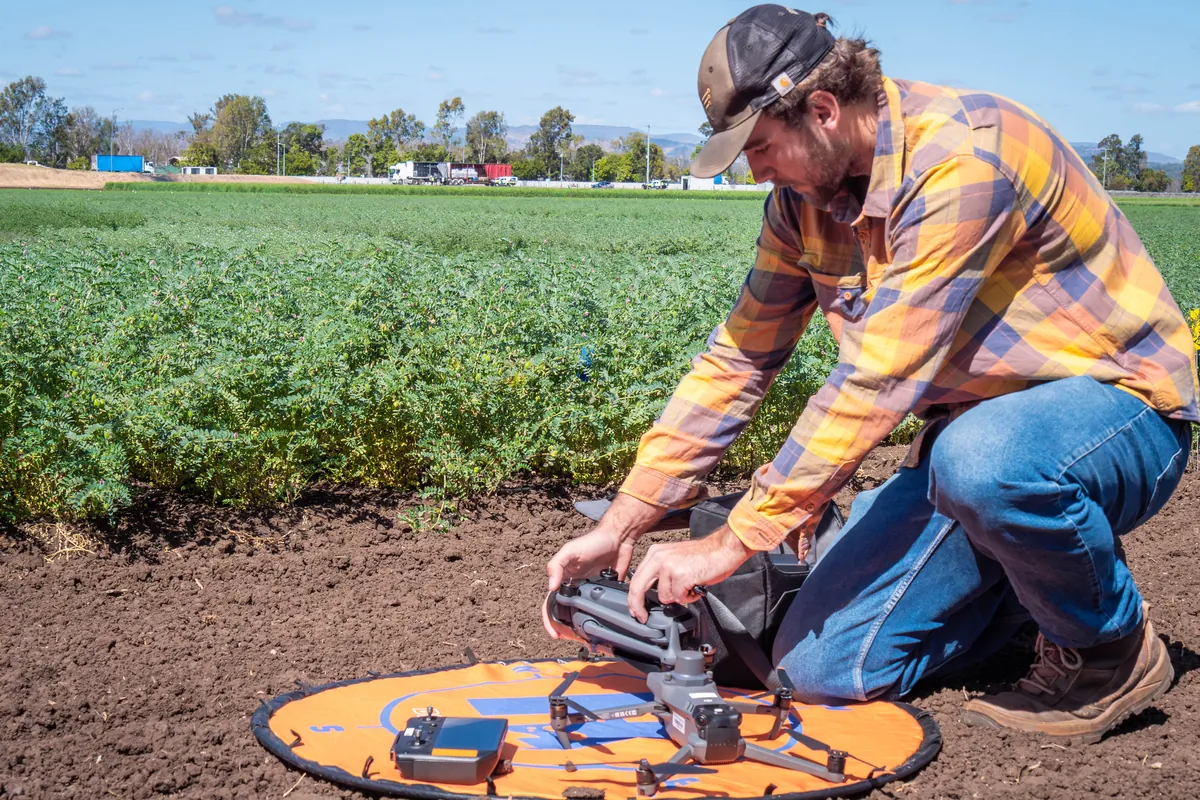 PhD candidate Callum Jamie prepares a drone at a chickpea trial in Gatton, Australia (Image credit: Megan Pope, UQ).“Whether that also means more consistent composition is a good question, and it’s one that would need further research.”
Smith adds that at this stage, the team has also not assessed processing performance, including milling, cooking, or protein extraction.
Industry moves upstream to climate-proof crops
UQ’s chickpea focus reflects a wider push to address climate-related supply risks at the crop level.
Recent efforts include AI-driven and gene-edited climate-resilient corn, drought-tolerant rice genetics, and Nestlé’s breeding of robusta coffee varieties for yield and cup quality. Research has also shown that climate stress can affect milk output and lead to declines in milk production, fat, and protein levels.
UQ’s omics roadmap positions chickpea breeding within that shift toward more climate-resilient crops.
“Breeding always involves balancing traits, and grain quality is assessed as part of developing any new variety. If we find useful heat-tolerance traits, the next step is making sure they can be combined with the yield and quality that growers and markets expect,” Smith concludes.