



Cargill study finds 98% correlation between ingredient perception and purchase decisions in APAC


Key takeaways
- Cargill’s IngredienTracker 2025 finds 98% correlation between health perceptions and purchase decisions among Asian consumers.
- Sugar-free and low-sugar claims are surging across APAC product launches.
- Chocolate and cocoa emerged as the strongest ingredient category influencing purchase decisions, with sustainability and origin narratives increasingly linked to health perceptions.

Asian consumers aren’t rejecting food science — but they are turning away from scientific-sounding ingredient names. Cargill’s APAC IngredienTracker 2025 finds that naming, familiarity, and brand credibility matter more than ingredient complexity when it comes to purchase decisions, with over 70% of consumers now checking labels before buying.
Yuchu Zhang, vice president of R&D at Cargill Food APAC, tells Food Ingredients First how the study’s findings across 91 ingredients are reshaping the company’s innovation strategy in the region.
What’s in a name?
The IngredienTracker surveyed consumer behaviors and perceptions across four ingredient groups — chocolate and cocoa, sweeteners, texturizers, and fats and oils — and found a 98% correlation between health perceptions and purchase decisions. But the mechanism driving those perceptions is more nuanced than a blanket preference for “natural.”
“Asian consumers respond to the naming of an ingredient. Its nomenclature, framing, and familiarity, besides brand credibility, that matter more than the reality of scientific complexity. This does not reflect a rejection of food science, but rather how consumers process trust and familiarity,” Zhang says.
The pattern plays out clearly in sweeteners. Consumers across the region tend to avoid artificial options such as aspartame and sucralose, while gravitating toward natural or natural-sounding alternatives — brown sugar, cane sugar, monk fruit, and stevia.
The same logic applies to texturizers, where familiar-sounding options like gelatin and wheat gluten outperform their more technical counterparts, and to fats and oils, where sunflower, canola, coconut, and soybean variants rate highest on both familiarity and health perception.
The findings align with broader global data. Innova Market Insights’ number one trend for 2025, “Ingredients & Beyond,” found that over half of consumers worldwide now prioritize ingredient quality above taste and environmental benefits when making purchasing decisions. And its 2026 “Authentic Plant-based” trend noted that 40% of global consumers identify “natural or minimally processed” as a key factor when choosing protein sources.
Sugar out, function in
Sweetener trends in the region are evolving fast. Sugar-free and low-sugar claims are rising sharply across APAC product launches, particularly in non-alcoholic beverages, bottled drinks, and functional beverages. Cargill’s data shows that use of additive sweeteners is climbing while traditional sugars are in decline — a shift reinforced by government sugar taxes and labeling regulations now active in several Asian markets.
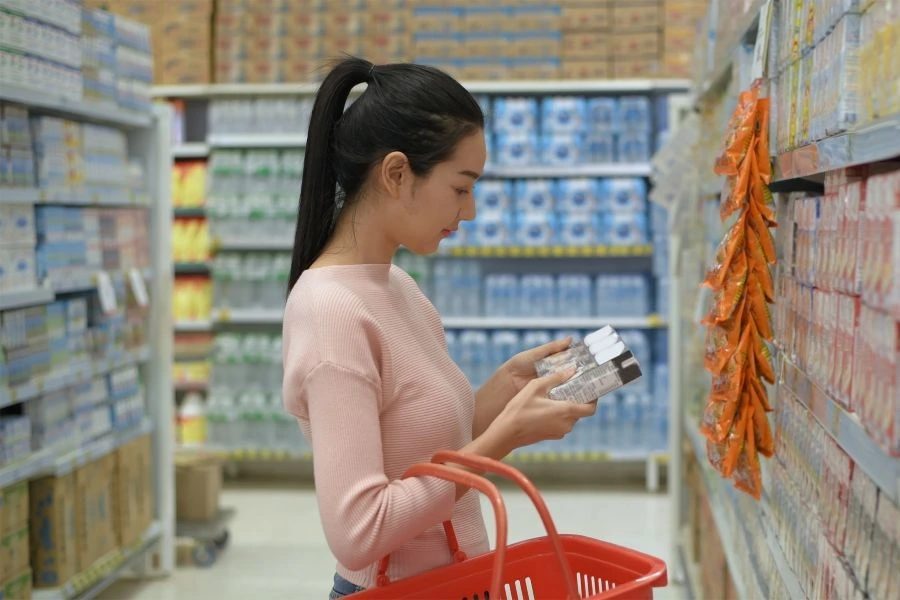 Over 70% of Asian consumers check ingredient labels before purchasing, with familiar-sounding names driving trust, according to Cargill's APAC IngredienTracker 2025.“Beyond sweetness, Asian consumers are looking for sweeteners that provide additional health benefits, such as weight management and gut health,” says Zhang. “Consumers are increasingly selecting beverages not just for taste but for functional enhancement, making this one of the strongest sweetener trends in APAC.”
Innova data supports the trajectory. The market researcher found that nearly 72% of consumers globally are actively reducing their sugar intake, with the sweetener market growing at an average of 8% between mid-2020 and mid-2025.
Meanwhile, its second-top trend for 2026, “Gut Health Hub,” found that 59% of consumers worldwide now view gut health as important for the entire body — a functional aspiration that’s increasingly finding its way into sweetener and beverage formulation.
Chocolate’s indulgence premium
Among the four ingredient categories, chocolate and cocoa showed the strongest overall impact on consumer purchase decisions, according to the study. The category dominates across confectionery, bakery, desserts, and ice cream — product types where consumers are highly responsive to ingredient cues.
“Consumers are willing to pay a premium for high-quality cocoa and attracted by new textures enabled by cocoa ingredients,” says Zhang, adding that sustainability and responsible sourcing are increasingly associated with being “better for you” in the region, especially when combined with labels like organic or lower-processed.
Cargill refurbished its Singapore Innovation Center last year to meet exactly this kind of demand. A separate Southeast Asia Indulgence consumer study conducted by the company found that almost 70% of consumers in the region are willing to pay more for unique tastes and innovative flavors, while 82% value what it calls a “super-sensorial” experience.
The premiumization opportunity
More than 58% of consumers surveyed are willing to pay 10% or more for premium ingredients — including dark chocolate, higher-quality and more sustainable inputs, and foods fortified with essential nutrients. The study also found that immune system-related health concerns jumped 101% between 2017 and 2024, fueling demand for fortified and functional products.
Zhang frames the data as both a commercial and strategic signal for manufacturers: “This trend should be embraced by manufacturers to create a strategic differentiator and build trust with their consumers by offering products catering to their health and sustainability requirements.”
Cargill says it is already translating insights from the tracker into product development for customers. Recent APAC launches include a zero-calorie vanilla latte syrup designed for milk coffee and milk tea applications, crispy air-fried sweet potato fries, Korean crispy wings made with sunflower oil, reduced-salt oyster sauce, and SlimFit salad sauce containing Cargill’s Corowise plant sterols brand, which helps lower cholesterol.
“Insights are the starting point for us,” says Zhang. “By helping our customers understand the market trends, we help them in their product development process. We partner with them to create healthier, more high-functioning, and tastier food and beverages for end consumers.”



Upcoming webinars

Oat-Standing Ingredients - Showcasing Irish Grain Through Innovation
Tirlán Ingredients

2027 Food Safety Risks for Quality & Compliance Leaders
FoodChain ID

Formulating for function: Developing benefit-led beverages with natural colours, botanicals, and flavours
Givaudan Sense Colour