


Investors back Mycoverse’s biological solution for potato late blight

Key takeaways
- Agri-tech firm Mycoverse secures investment to advance its AI-based fungal biocontrol platform targeting potato late blight.
- The investment will fund two years of EU field trials, production scaling, and regulatory filings, and bring the total funding to €4.3 million (US$4.9 million).
- Mycoverse aims to replace chemical pesticides with scalable biological crop protection tools.
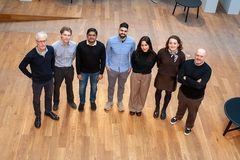 (Image credit: Rasmus Christensen).
Danish agri-tech company Mycoverse has raised €2.4 million (US$2.78 million) in pre-seed funding to combat potato late blight — one of Europe’s most destructive crop diseases. The company’s AI-based fungal platform identifies promising fungal strains to enhance crop protection and replace chemical pesticides with data-driven biocontrol solutions.
The cash injection follows Mycoverse’s earlier backing from Danish-based innovation accelerator BioInnovation Institute, worth €1.9 million (US$2.2 million), bringing its total fundraising to €4.3 million (US$4.9 million).
The funds will allow the Technical University of Denmark (DTU) spin-out to conduct two years of field trials toward commercial validation. The company plans to use the investment to develop its “first” solution targeting potato late blight amid mounting pressure to reduce chemical pesticide use driven by sustainability and health concerns in the EU.

The EU’s Sustainable Use of Pesticides Directive (2009/128/EC) mandates measures to reduce pesticide risks and encourages the use of substitutes, such as integrated pest management.
“Our key priorities for this financing round, with focus on Mycoverse’s first active substance, are to develop the production process, demonstrate open field efficacy across EU countries against potato late blight disease, and file the EU regulatory dossier,” Svend Petersen, CEO and co-founder of Mycoverse, tells Food Ingredients First.
The team also plans to identify Mycoverse’s next two product leads and demonstrate their performance.
By integrating AI into its fungal discovery platform, the team could “quickly and efficiently” select the right product leads early in the discovery process. “Hence, it has increased our speed to scale up significantly,” Petersen adds.
Boosting crop resilience
Late potato blight is caused by Phytophthora infestans, a fungus-like organism in the oomycete family, which causes pale green, water-soaked lesions that enlarge into dark brown/purplish-black spots on leaves and stems. The disease, which led to the Irish Potato Famine nearly two centuries ago, still remains a significant challenge for farmers. It causes up to US$3-10 billion in yield loss and management costs globally per year.
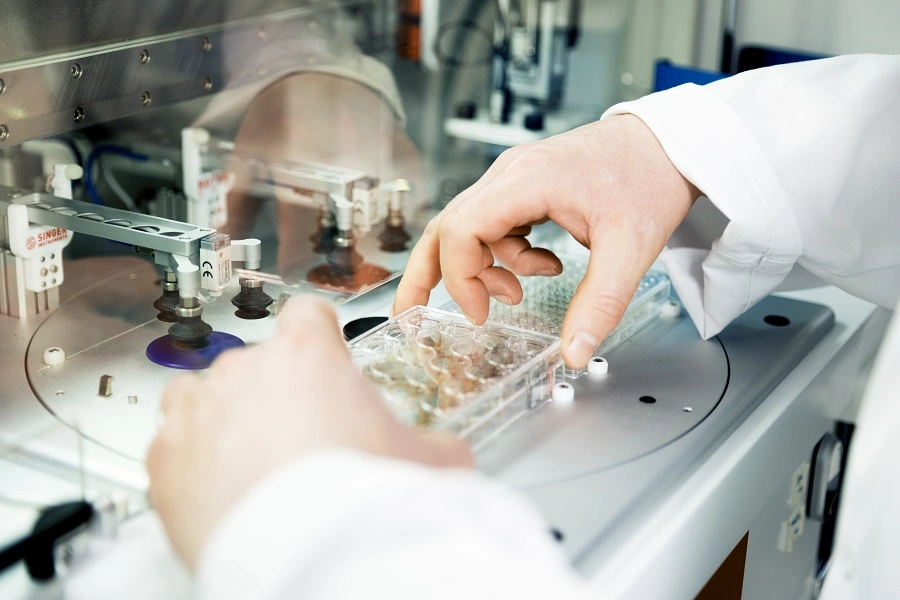 Mycoverse uses its AI-driven discovery platform and advanced fungal production technology to develop biocontrol solutions that can replace chemical pesticides (Image credit: Thomas Steen Sørensen).“Potato late blight is a notoriously difficult disease to control. This market is currently served entirely by conventional chemical pesticides — there are currently no biocontrol solutions,” says Petersen.
“As the chemical solutions are being banned or losing effect, our first priority is to offer efficacious biocontrol to enable potato growers to keep producing. Leveraging our unique fungal platform, we will deliver superior performance.”
Combining AI with Mycoverse’s fungal production technology enables “scalable biological crop protection” solutions that can be integrated into current farming systems, the company says.
However, the team faced challenges while developing the fungal platform, out of which “dealing with fungi producing airborne spores in high throughput without cross contamination” was the biggest hurdle, Petersen tells us. The team overcame these challenges by combining dedicated hard work and creativity.
“Lead candidates,” which are promising fungal-based crop protection solutions being developed toward commercialization, have shown “strong performance” in greenhouse trials.
Exploring sustainable crop solutions
PINC, the venture arm of Paulig (a global F&B firm), which participated in the funding, emphasizes a focus on the shift away from chemical inputs in the food system. The industry is currently targeting better crop protection tools through fermentation, regulatory approvals, and herbicidal modes of action through various technology platforms.
Rosemari Herrero, senior investment manager at PINC, tells us: “Biological crop protection is essential in the move toward a more resilient food system. There is no silver bullet — we will need many different solutions, but it is definitely an important part of a sustainable future.”
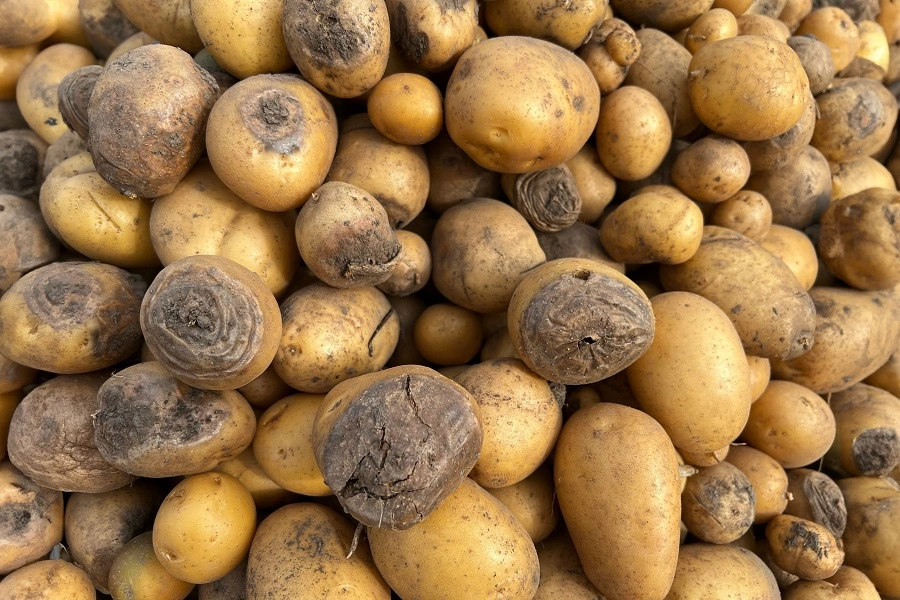 Potato late blight remains one of the most devastating diseases affecting global potato production, causing up to US$3-10 billion in yield loss and management costs per year worldwide.She adds that there is significant potential in technologies that reduce chemical inputs without compromising reliability. “Solutions that help maintain yields while supporting soil health, biodiversity, and long-term food security are essential for a resilient food system.”
Opening up innovation opportunities
Late potato blight represents an estimated US$1.9 billion global market opportunity, creating opportunities to innovate in bio-based solutions that support crop resilience while reducing environmental impact, says Mycoverse.
“As chemical crop protection products are phased out and growers are increasingly dealing with resistance to products still on the market, the need for new solutions has never been clearer,” says Kim Wagenaar, investment director at Future Food Fund, a Netherlands-based VC firm, which co-led the investment.
Petersen highlights that Mycoverse’s “unique set-up” enables it to act swiftly on market needs and deliver timely solutions. “We are building a focused biocontrol pipeline addressing key market needs in field crops, where chemical pesticides are coming short on delivering the solutions farmers need.”
Early-stage investor High-Tech Gründerfonds also co-led the funding with Future Food Fund and PINC.
Looking ahead, the shift toward biological controls for crop diseases will require substantial capital, says Herrero. “It may not be evident that venture capital is always a perfect fit here, given the long regulatory timelines. But there are different routes that can make it a relevant area for venture capital.”
Mycoverse plans to expand its platform to additional crops in the future, such as grapevines, as regulatory institutions and agribusiness across Europe drive the transition toward biological crop protection.