

Syensqo director explains vanillin’s shift beyond flavor into reformulation


Key takeaways
- Vanillin evolves into a multifunctional formulation tool, helping manufacturers reduce sugar and cocoa, mask off-notes, and maintain flavor balance.
- Syensqo expands natural vanillin options, including fermentation-derived Rhovanil Natural CW made from upcycled rice bran, to meet clean label, transparency, and sustainability demands.
- Supply resilience is a key differentiator, with Syensqo emphasizing regional production across North America, Europe, and Asia alongside traceability and consistent quality.

Syensqo is positioning vanillin as more than a flavoring ingredient, arguing that it has become a multifunctional formulation tool for F&B manufacturers grappling with sugar reduction, volatile cocoa prices, clean label demands, and supply chain pressures.
Thibaud Caulier, global commercial and marketing director for Syensqo’s Aroma Performance Business Unit, tells Food Ingredients First that demand is increasingly shifting toward solutions that solve several challenges at once.
We sat down with Caulier to hear more about how Syensqo is expanding into fermentation-derived natural options and emphasizing regional manufacturing, traceability, and supply reliability, as manufacturers seek to reformulate products without compromising taste or consumer expectations.

What can you tell us about Syensqo’s latest innovations in vanillin?
Caulier: Syensqo has been innovating with vanillin for more than 130 years, helping F&B manufacturers respond to evolving market needs. Today, those needs go beyond the flavor alone. Customers are looking for consistent solutions that combine excellent sensory performance with naturality, transparency, and dependable supply.
Our portfolio has evolved in step with changing customer needs. In addition to our flagship synthetic vanillin range, Rhovanil, we developed Rhovanil Natural CW, a fermentation-derived natural vanillin produced from an upcycled rice bran by-product. As a one-to-one replacement for synthetic vanillin, it allows manufacturers to achieve natural labeling with minimal reformulation while maintaining the taste, stability, and processing performance consumers expect. At the same time, we have expanded our portfolio with complementary flavor solutions in synthetic and natural formats, providing greater flexibility to optimize sensory performance across a wide range of F&B applications.
How is demand shifting between categories (synthetic, fermentation-derived natural, and mass-balance vanillin), and which applications are driving growth?
Caulier: Rather than one category replacing another, we’re seeing a more diversified market emerge. Synthetic vanillin remains the benchmark for performance and supply reliability, while demand for natural vanillin continues to grow as brands respond to clean label expectations and natural flavor regulations.
One of the biggest shifts we’ve seen is that vanillin is no longer viewed simply as a flavor ingredient. Increasingly, it’s a formulation tool. It helps enhance perceived sweetness, mask off-notes, and restore flavor balance as companies reduce sugar, incorporate plant proteins, and simplify ingredient lists. Thibaud Caulier, global commercial and marketing director for Syensqo’s Aroma Performance Business Unit.
Growth is broad-based across chocolate and confectionery, bakery, beverages, dairy, creamers, and nutrition products. As cocoa prices remain volatile, manufacturers are looking for practical ways to optimize formulations without changing the consumer experience. Studies have shown that the right combination of vanillin, ethylvanillin, or natural vanillin can reduce cocoa content by up to 20% while maintaining the expected chocolate flavor profile.
Syensqo is the only global producer of synthetic vanillin with plants in three key regions, placing us at the forefront of supply reliability. Overall, we’re seeing increasing demand for ingredients that solve multiple formulation challenges simultaneously and not simply deliver flavor. They’re seeking a partner like Syensqo (not simply an ingredient supplier) to help them do so.
To what extent can vanillin support sugar reduction by enhancing perceived sweetness, and what formulation limitations must manufacturers consider?
Caulier: Sugar reduction remains one of the industry’s biggest formulation challenges. Consumers want less sugar without sacrificing taste, yet sugar contributes far more than sweetness because it also affects texture and overall flavor balance.
Vanillin has become an important part of the solution. Both our synthetic and natural products help enhance perceived sweetness, rebalance flavor profiles, and mask unwanted notes from alternative sweeteners.
The best approach depends on the product, labeling strategy, and target market. For example, Syensqo application studies have shown that Rhovanil Natural CW can support sugar reductions of up to 15% in chocolate and confectionery while maintaining flavor balance.
Ultimately, successful sugar reduction requires the right combination of ingredients, formulation expertise, and sensory optimization.
How is Syensqo adapting its vanillin portfolio to changing consumer expectations around naturality, clean labels, and ingredient transparency?
Caulier: It’s true that naturality, clean labels, and ingredient transparency have become mainstream expectations. Consumers increasingly seek recognizable ingredients, sustainably sourced products, and greater confidence in how those ingredients are produced — all without compromising taste, quality, or performance.
To meet these evolving needs, Syensqo offers synthetic and natural vanillin solutions, giving customers the flexibility to select the option that best fits their formulation objectives, labeling strategy, and market requirements. As a responsible producer, we ensure traceability throughout the production process, from raw material sourcing to the final product.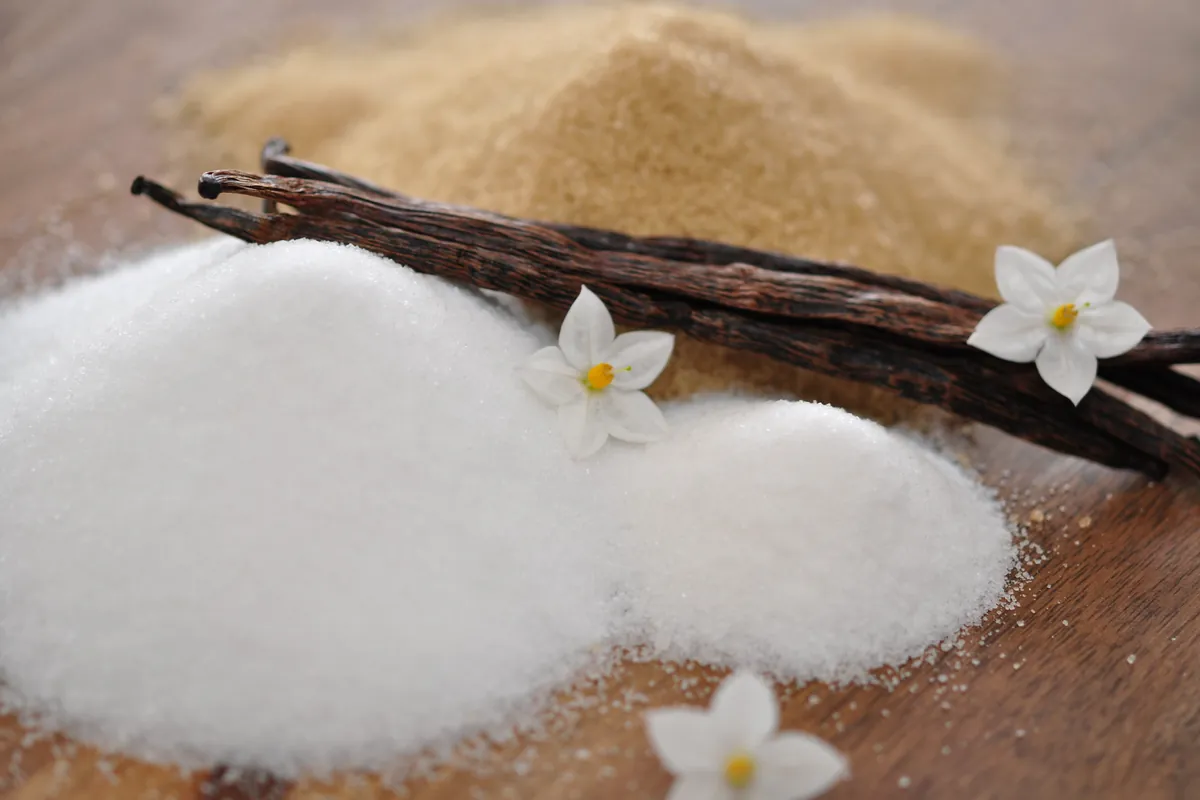 Rhovanil Natural CW can support sugar reductions of up to 15% in chocolate and confectionery while maintaining flavor balance, according to Syensqo.
Sustainability is another key priority for consumers and manufacturers. Syensqo supports customers on their decarbonization journeys by providing product carbon footprint data and implementing action plans that help secure the sustainable sourcing of both synthetic, and natural vanillin.
Our Rhovanil Natural range, produced through fermentation from an upcycled rice bran by-product, complies with US and EU natural flavor regulations while delivering the consistency, functionality, and supply reliability required for large-scale food production.
Transparency is equally fundamental to our approach. We provide full traceability across our production process. The authentication of the botanical origin of Rhovanil Natural can be done using validated isotopic methods, giving customers confidence in the integrity of their natural labeling claims.
For Syensqo, meeting regulatory requirements is only part of the equation. We believe that earning and protecting consumer trust through transparency, scientific rigor, and responsible sourcing is equally essential.
You highlighted vanillin at IFT FIRST 2026 in Chicago, US, last month. What main trends did you tap into within this category?
Caulier: One of the strongest messages from IFT FIRST 2026 was that companies are no longer looking for ingredients that solve a single problem. They want solutions that help them address taste, reformulation, clean label goals, and supply resilience at the same time.
Supply security was another recurring theme. In today’s geopolitical environment, continuity of supply has become a strategic business priority, making reliable regional manufacturing more valuable than ever.
This is where Syensqo is uniquely positioned. With manufacturing in North America, Europe, and Asia, we are the only vanillin producer with production sites in all three major regions, providing customers with consistent quality and dependable supply worldwide. A few years ago, taste was often the primary conversation.
IFT FIRST 2026 confirmed what we’ve been seeing across the industry: vanillin has evolved from a flavor ingredient into a versatile formulation tool. We’ve recently developed a new e-guide that’s available for free download.
Innovation today is less about developing a new ingredient than helping customers solve increasingly complex formulation challenges.



Upcoming webinars

Oat-Standing Ingredients - Showcasing Irish Grain Through Innovation
Tirlán Ingredients

2027 Food Safety Risks for Quality & Compliance Leaders
FoodChain ID

Formulating for function: Developing benefit-led beverages with natural colours, botanicals, and flavours
Givaudan Sense Colour