



How Puratos targets flour consistency challenges with new research hub

Key takeaways
- Puratos has opened a new Flour Competence Center to analyze flour variability and help bakers maintain consistent product quality despite changing crop conditions.
- The center uses flour analysis, baking, and predictive models to link flour characteristics with real-world production performance and enable proactive process adjustments.
- Insights generated at the facility will support the development of bakery improvers, sourdough solutions, and patisserie mixes, helping manufacturers balance sustainability goals with reliable production outcomes.

Puratos has opened a new Flour Competence Center designed to help bakers and manufacturers better understand and manage one of the industry’s most variable raw materials. The facility will analyze flour characteristics and connect them to real-world baking performance, enabling more predictive approaches to quality management and product development.
When even the smallest variations in key parameters can significantly affect dough behavior, fermentation, and finished product, there is a growing need for deeper flour understanding and more predictive, data-driven solutions.
Puratos — which is poised to acquire global bakery manufacturer and ingredients supplier Dawn Foods in a major move in the bakery ingredients space — will lead a series of targeted research initiatives at its new center, with the insights feeding directly into the development of its bakery improvers, sourdough, and patisserie mixes.

Speaking to Food Ingredients First, Paul Baisier, chief R&D officer at Puratos, says the center was established to address growing challenges linked to flour variability, which are being amplified by climate change, evolving agriculture, and the industry’s shift toward more sustainable sourcing.
What problem is the new Flour Competence Center designed to solve?
Baisier: Wheat flour is one of the most complex and variable raw materials in baking. No two harvests are ever the same: weather conditions, soil quality, wheat genetics, and farming practices all influence flour composition, which in turn impacts dough behavior and baking performance. Take protein, for example. Protein quantity and quality can vary between crops and over time, which impacts dough strength, elasticity, and gas retention. Even small variations can affect volume and crumb structure, something bakers know all too well, and that consumers would notice in their favorite bakery products, too.
Similarly, changes to ash content can affect dough handling and final product color, while moisture levels impact flour stability, shelf life, and water absorption during mixing. When flour’s capacity to absorb water is compromised, bakers end up having to make extra recipes or process adjustments — time and resources that could be better spent elsewhere. Changes in crops can also affect enzyme activity, which has a ripple effect on fermentation behavior, sugar availability, and crumb softness. Too much, or too little, enzyme activity can significantly alter the final texture. This is exactly the kind of variability the Flour Competence Center was built to help manufacturers navigate.
Why is flour variability becoming a bigger challenge for bakers today?
Baisier: It all comes down to how agriculture is changing. Agricultural practices are evolving to address challenges caused by climate change, and that’s reshaping where and how flour is grown. Regenerative agriculture is becoming increasingly important, and we’re moving toward a future where more of our flour will be sourced using these sustainable practices. That’s great news for soil quality and biodiversity, but it also comes with a trade-off — greater variability in flour quality from batch to batch. So for bakers, the challenge is that they want, and need, to support these more sustainable farming practices, but not at the cost of consistency. Consumers expect the same taste and texture every time, regardless of what’s happening in the field. This means that understanding flour variation will become more important than ever. We continuously analyze flour by tracking shifts and translating these insights into optimized improver performance. That way, bakers don’t have to choose between sustainability and reliability, no matter what the harvest yield.
What will the center actually do day-to-day in terms of research and testing?
Baisier: Day-to-day, the center carries out flour analysis and links the resulting data to real-world baking outcomes, gathering large data sets to develop predictive models. Our R&D teams dig into the root causes behind performance inconsistencies, so we can anticipate how flour changes will impact production before they cause problems. This lets us proactively refine ingredient recommendations and process settings, rather than reacting after it’s happened.
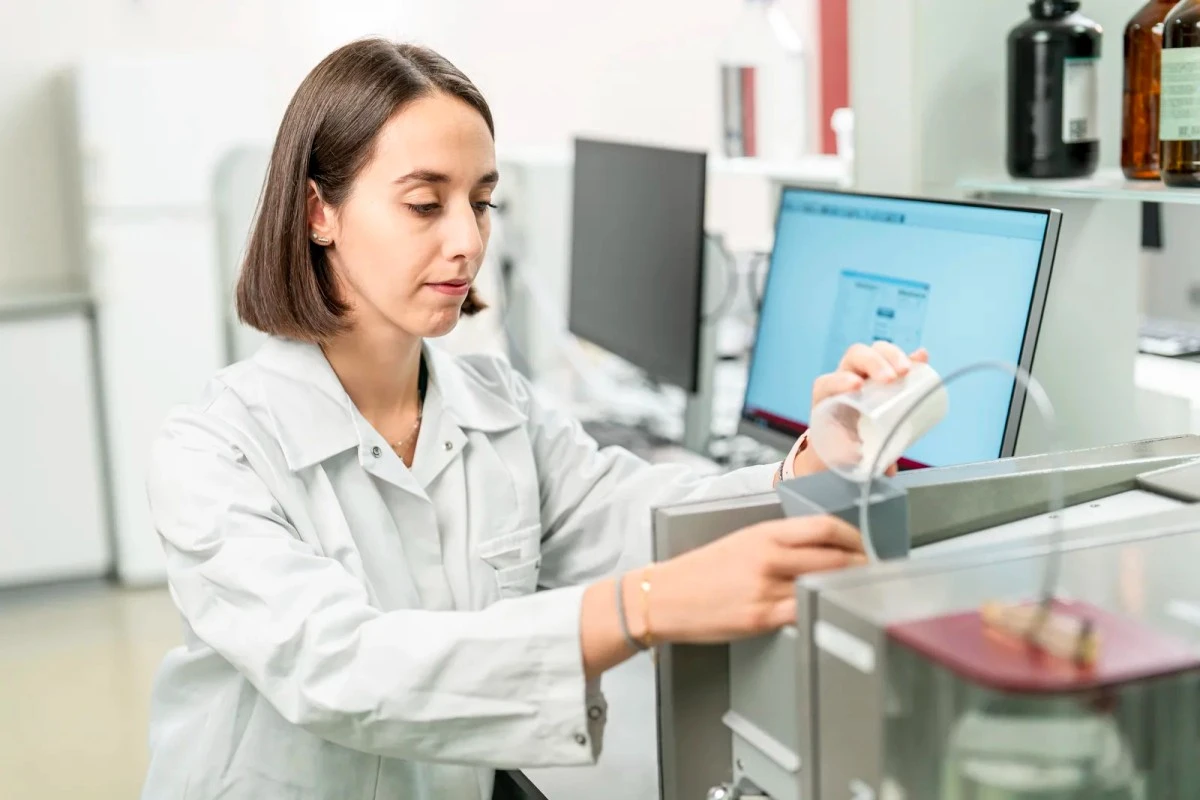 Insights from the new center will support the development of Puratos' bakery improvers, sourdough and patisserie mixes.
How will insights from the center be used in Puratos’ product development?
Baisier: This is where all of our flour expertise comes full circle, it’s directly connected to how we design our bakery improvers. By understanding how different flours behave at every stage of the production process, we can tailor-make solutions for fresh, frozen, and soft baked goods. Rather than designing improvers in isolation and hoping they perform consistently, we’re building them on a deep understanding of how flour actually behaves. Our global flour insights already shape several of our improver ranges, and looking ahead, these same insights will continue to inform how we refine and expand these ranges, ensuring consistent quality no matter the flour, climate, or process our customers are working with.
What does the “glocal” approach mean in practice for your customers?
Baisier: “Glocal” is the best way to describe how we work, thinking globally but acting locally. The Flour Competence Center is digitally connected to a network of flour laboratories around the world, so insights and experience from one region can inform decisions in another, in real time. This allows us to build a global understanding of flour behavior, while remaining locally relevant, which means supporting our customers across different regions and their specific crop conditions. A bakery in one part of the world might be working with a completely different wheat profile than one elsewhere, but they can both benefit from the same depth of knowledge and the same level of support.
We’ve also found that collaboration is key to building more resilient bakery processes, even in an increasingly variable world. In fact, the Flour Competence Center has been crucial in strengthening internal knowledge through training and shared protocols. We also collaborate with academic institutions to continuously push the science further and ensure our customers always benefit from the latest thinking.
How will digital tools and data help predict or manage flour variability?
Baisier: Digital tools and data are helping transform flour variability from an unpredictable issue into something that we can anticipate and manage. By combining large datasets of flour analysis, dough behavior, and baking results, we are able to develop models that link raw material characteristics directly to final product performance. This enables us to predict how flours from new harvests or suppliers will behave by combining the historical data and continuously monitoring flour quality, going beyond traditional indicators that are not sufficient on their own. As a result, manufacturers can proactively adjust recipes, processes, or improvers before problems occur on the production line, improving consistency and reducing the need for trial-and-error testing.
How do you see flour science and baking innovation evolving over the next decade?
Baisier: Looking ahead, flour science is expected to become far more data-driven and predictive, moving beyond traditional trial and error approaches. With the growing use of advanced analytics, modeling and digital tools, we aim to better link flour characteristics directly to dough behavior and final product quality, enabling faster and more reliable formulation decisions. At the same time, innovation will likely focus on managing raw material variability, driven by climate change and shifting agricultural practices, through tailored improvers, new functional ingredients, and closer collaboration with farmers and millers. The result will be a more science-led, integrated approach to baking, where consistency, sustainability, and product performance are increasingly designed upstream rather than corrected during production.




Upcoming webinars

2027 Food Safety Risks for Quality & Compliance Leaders
FoodChain ID

Formulating for function: Developing benefit-led beverages with natural colours, botanicals, and flavours
Givaudan Sense Colour
Let's reveal the grain potential: Innovate
Meurens Natural