


Innova’s Global SVP Research unpacks prominent trends at Fi Europe 2025


Key takeaways
- Protein and fiber were key themes at Fi Europe 2025, while multi-sensory flavor science — where companies explore not just ingredients but how the brain perceives flavor — was also highlighted.
- GLP-1 is reshaping consumption behavior, pushing opportunities for “eat less, but better” product development and elevating nutrient-dense, high-quality foods.
- Plant-based foods are entering a normalization phase, shifting away from meat mimicry toward functional ingredients, while fiber is gaining traction through soluble formats that align with gut health demand.

GLP-1’s impact on the food industry, products powered by protein, and increasing fiber intake inspired conversations on the Fi Europe 2025 show floor in Paris, France (Dec 2–4).
Food Ingredients First sat down with Lu Ann Williams, SVP of global research at Innova Market Insights, as she unpacked the latest F&B innovation trends — pushing back on the idea that “protein is the new fiber,” and highlighting significant opportunities for creativity in the evolving GLP-1 landscape.
What are some of the top themes that you’ve seen around the trade show?
Williams: Protein and fiber are definitely some of the bigger themes, and a lot of ingredients are being reframed as “plant-based,” even if they’ve always been plant-based. There is a lot of seaweed, and it’s not at a huge scale, but there was a lot of it, especially in the start-up section, where there are seaweed and ocean ingredients.

We had seaweed on Innova’s top ten trends around five years ago. Sometimes we’re too early, but we saw it coming, and this is the first year that I’ve noticed a lot of ingredients. I saw crab powder being used as a flavor enhancer as well.
I have also heard a lot about kokumi. We know about umami, our sixth sense, but kokumi is the satisfaction you get from eating meat. I spent a lot of time in Japan this year and saw presentations on kokumi, as well as a couple of stands discussing kokumi here. Fermented flavors go along with that as well.
Studies are emerging about how the brain perceives flavor. How far can flavor modulation go when companies start engineering not just ingredients, but the sensory and neurological pathways involved in tasting them?
Williams: One of the key themes this year is that everything is multisensory. Even if you look at some of the concerts or art gallery events now, they might project something on a church and have a rave. We used to look at Van Gogh paintings, but now you can be immersed in the painting. Many things are multi-sensory, like that.
This is also relevant to color and flavor. Think of Wicked as an example. Since its release a year ago, green has taken over. Think Dubai chocolate, it’s always in a green box, or there’s something green on it. Matcha is huge as well. So that’s, again, that multi-functional, multi-sensory type of thing. Everything is going deeper and getting more complex. Entertainment is like that — so why wouldn’t food be like that as well?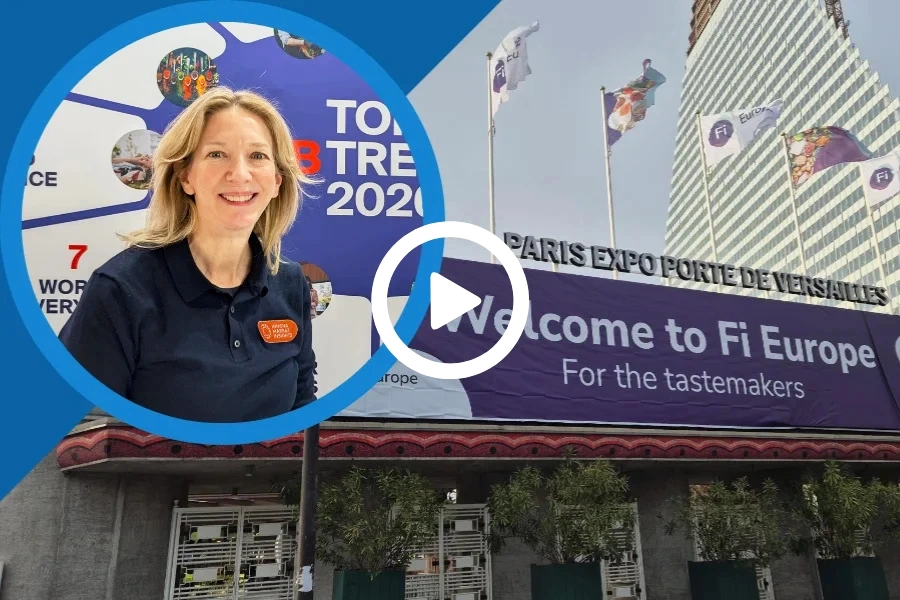 Innova’s Global SVP of Research discusses emerging Fi Europe 2025 trends — from protein and fiber to GLP-1 and multisensory flavor innovation — during an on-site interview in Paris.
How is GLP-1 disrupting the food industry?
Williams: A lot of Americans have already experimented with these medications, but some people are saying that many of the people who use GLP-1 then become socially isolated because food is so connected with the fabric of being social. That also has an impact on creating foods that can give happiness and enjoyment, especially if people aren’t drawn to food or interested in food.
GLP-1 could just be the new mocktail. There are many amazing mocktails and menus worldwide full of flavor and discovery. I have been in the industry since 1994, and since then, there has been a push toward health, and it’s always been a challenge. There’s a price issue, or consumers don’t want to eat certain things. Perhaps this will finally be the catalyst that pushes more of this into the mainstream, as for more consumers, it’s just an opportunity.
People will not stop eating. For a long time, food prices have been too low, and food should be more expensive and cost more, so you should eat less. That’s where there’s the biggest opportunity for transformation, because if you are on GLP-1, you have to eat less, but better quality, to stay healthy. So I don’t see this big doom and gloom. Say you’re having a Christmas cocktail hors d’oeuvre party, and you know there are a lot of people on GLP-1s, you’re going to offer some protein, like sushi, and lots of high-fiber fruits. There’s absolutely a way to avoid isolating people — it doesn’t have to be just potato chips, soft drinks, and beer for everybody.
Where are we now with the plant-based movement?
Williams: Around three years ago at Fi Europe, I described it as the ecosystem to make plant-based taste better. We began to see some of the new fats emerging, and there were numerous products that would be incorporated into the matrix to enhance the taste of plant-based options. What we see now is more advanced technologies, such as enzymes or fermented flavors. But, in our Innova top trends, we’ve been saying for several years, “Why are you mimicking something that everybody knows exactly what it tastes like, and deal with everybody who has a preference for their perfect hamburger, chicken sandwich, or chicken nugget?” We are surprised now to see that it kind of failed.
We’ve been saying that plant-based should be an ingredient. If I were doing a plant-based meat business, I would make cooking ingredients, because if you put it in a taco, spaghetti, lasagna, or in an Indian curry, it’s all sauced and flavored up, and it tastes great. Now, consumers say, “stop mimicking,” but use “plant-based” in a different way.
That is what we are seeing happen now. But plant-based is bigger than that. Starch is plant-based, and nuts are plant-based — it’s such a big umbrella. So it should have this big positive benefit, because it’s also better for your health, and has fewer saturated fats. It will evolve, but this was never going to happen in three or five years — things become so overhyped and too saturated that it creates a problem at some point. And now we’re just coming back to that normalization. This is going to be a 20- or 30-year transition.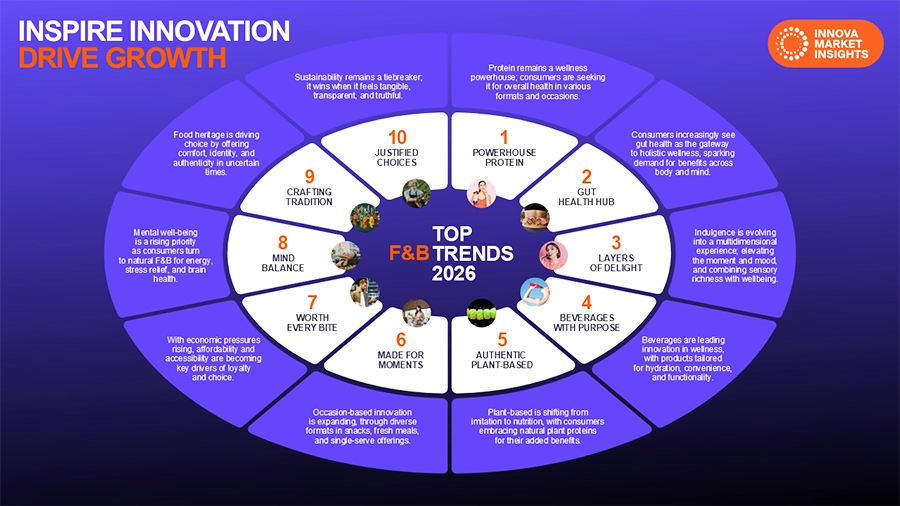 Innova’s Top Ten Trends 2026: Shaping the future of food and beverages.
There’s been some talk that “fiber could be the new protein.” Do you agree?
Williams: No, it’s not. Fiber is not as fun to eat as protein. It is really hard to eat compared to a big mouthful of Greek yogurt or a juicy chicken breast. It’s really hard to get enough fiber in your diet, and it’s usually not that pleasant. It’s not a soft piece of bread — it’s a chewy piece of bread. Not everybody likes that. So I agree with the concept that, in terms of nutrition, it’s “the next protein,” but from an eating experience, from a consumer point of view, it is absolutely not the next protein.
However, there are ways to do it with soluble fiber. For example, a less chewy approach. There are numerous opportunities for products like inulin and other soluble fibers. It’s a really important nutrient, and with the interest in gut health, there is a huge opportunity for fiber.
But plant-based, you just own it, and because animal proteins are having a big comeback now, you’re seeing a lot of consumers associate in a very positive way that meat is nice to eat. Additionally, consumers are highly interested in the biome, so making that connection with plant-based products and fiber in general is a significant opportunity.
What are some of the Innova top trends that you have seen around the show floor?
Williams: “Made For Moments” — life has gotten very nuanced and personal. There’s a trend here about authenticity and a crafting tradition that we’re super interested in, particularly with our foods and the traditional ingredients used, as well as where we make things. But we’re also interested in everybody else’s traditions and how we make things. I also mention these micro-moments for the little feelings of happiness that tie into layers of delight — this very holistic definition of enjoyment. It all comes together well.



Upcoming webinars
Oat-Standing Ingredients - Showcasing Irish Grain Through Innovation
Tirlán Ingredients

2027 Food Safety Risks for Quality & Compliance Leaders
FoodChain ID

Formulating for function: Developing benefit-led beverages with natural colours, botanicals, and flavours
Givaudan Sense Colour