
- Industry news
Industry news
- Category news
Category news
- Reports
- Key trends
- Multimedia
- Journal
- Events
- Suppliers
- Home
- Industry news
Industry news
- Category news
Category news
- Reports
- Key trends
- Multimedia
- Events
- Suppliers
Today’s consumers expect a lot from the food and beverage products they choose. To successfully respond to changing consumer needs and wants, the industry needs to decode latest consumer trends. This applies especially in times of a global polycrisis that acts as an accelerator of change. Leif Jago, Global Marketing Manager Food & Beverage at Symrise, reveals in this webinar the latest consumer trends in food and beverages decoded by trendscope™ 2024+. Also, you will learn how Symrise can support you in the development of consumer-preferred products to respond to these trends. This relates, for example, to the need for products supporting healthier and more sustainable lifestyles.
Hello, everyone.
Thank you so much for joining us.
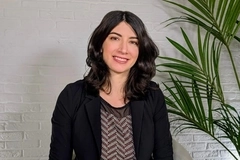
I'm Anita Sharma, an editor with CNS Media, an international publisher of FMCG Industry News.
As you know, we deliver news that matters for industry players to stay up to date with stories and events impacting their business.
And that brings us to today's webinar.
We are living in a world right now where consumers are demanding a lot from their food and beverage products.
With companies striving to meet and fulfill that demand, it can be vital to be able to successfully decode the latest consumer trends, especially when several issues are unfolding at the same time.
Issues that accelerate change.
I'm very pleased to be joined by Life Iago, global marketing manager of food and beverage at SimRse.
Life has been working with SimRse AG since 2019 and has made it his primary focus to decode the latest and upcoming consumer and market trends with the help of SimRise's proprietary trend tool, Trendscope, for 2024 and beyond.
In this webinar, life will unveil the latest consumer trends in food and beverages that were decoded using SimRise's trend tool.
We will also learn how SimRise can support you in the development of consumer-preferred products that respond to current trends.
A key trend that continues to evolve is sustainability.
We know that scores of consumers are now seeking products to support a healthier lifestyle and at the same time, be conscious and respectful of our environment.
So how can companies cater to this trend and get ahead of it so they can deliver products that matter to consumers?
Let's find out from Life Iago.
Welcome to the webinar, Life.
Yes, thanks a lot, Anita for the nice introduction and hello everybody from my side, and thank you for joining today's webinar.
My name is Li Iago and I'm part of the global marketing department for food and beverages at Sunrise, and we are really happy to have you here as our audience today and to see your interest in our Trendscope 2024 plus insights.
As Anita mentioned, we will have a look today at latest consumer trends and food and beverages and how we use our trendscope tool to decode them.
And the objective of today's webinar is that you understand what Trendscope is, how are the new trendscope reports look like, and what some of the latest consumer trends in food and beverages are for 2024 and beyond.
On this slide you see a kind of agenda with 3 key questions that will be answered today.
The first question is what makes consumer trends important.
Then how do we decode them at sunrise with Trendscope?
So what are we doing to know and understand the trends?
And the key part for today, what are current consumer trends in food and beverages?
And the objective of the presentation is that you can answer these questions afterwards and that that you get a basic understanding of current trends and how they work as a basis for product development.
In addition, we will summarize some key takeouts at the end and have a Q&A session for your questions.
So let's directly come to the first question.
Why are consumer trends important?
In short, we decode consumer trends to develop consumer preferred products because we need to know what the consumer wants to be able to address these demands.
What does it mean exactly?
It's important to closely monitor consumer demands and to anticipate market shifts, because our solutions are designed to deliver against these evolving needs.
So we had summarize use the trends as a basis to develop consumer preferred taste, nutrition and health solutions.
And with these solutions, we enable our customers in the end to respond to the consumer trends with the right food and beverage products.
So all in all, this is why trends of high relevance for the development of innovations and the future success, because addressing them is key to drive consumer preference.
And to do so, we have inside teams and some rise around the world, and they create a global overview of trends while at the same time diving deep into locally relevant insights.
To understand the trends, we consolidate several sources of information into one proprietary trend tool, and this trend tool is called Trendscope.
And this leads us already to the 2nd question for today.
How do we summarize the code current consumer trends with Trendscope?
So let's start with the definition.
Trendscope is our symized proprietary trend tool to decode the latest consumer trends in food and beverages.
And to do it, the tool combines different methods of analysis.
In the end, the tool and its results are summarized in 6 different trendscope reports.
One cross-category report that explains the trends on top line level, and 5 category dedicated reports for beverages, culinary, dairy, snacks, and sweet.
And here it is shown more in detail what the trends actually mean for the respective category.
So this category specific reports are much more detailed by showing, for example, trend manifestations, product examples, and emerging flavors and ingredients.
The objective of the tool is to illustrate how overarching consumer trends manifest themselves in food and beverages.
This way, Trendscope is used as an important basis for the development of consumer preferred taste, nutrition and health solutions.
And this is also how our partners and customers can benefit from Trendscope when working together with us.
The tool enables us to develop solutions which are tailored to the needs and trends in their respective categories.
And so our solutions help them to respond to the decoded consumer needs with the right food and beverage products.
Overall, the trendscope trends combine overarching consumer needs, wants and expectations.
So they go beyond a certain target group or a specific market, but, Trendscope investigates key opportunities on a global level.
But of course, millennials and transet often act as innovators and early adopters, so they play a crucial role for the decoding of the trends.
Now we move to the methodology of Trendscope, as mentioned already, Trendscope uses different methods of analysis to decode consumer trends.
It combines qualitative research, quantitative research, and the global urban hotspot analysis.
The qualitative research contains, for example, meta analysis of consumer reports, startup screening and to see who current innovators are and social media screening to set, to see what shared online related to food and beverages.
In addition, we also incor incorporate insights from our taste tracks with star chefs, where we connect with chefs and mixologists from the American dining scene.
On the other hand, we see the quantitative research, and it contains analysis of existing studies and market reports and surveys and polls related to consumer behavior and mindsets.
Also, social media listening is an important part, and AI bias trend prediction supports us in validating the trends.
And last but not least, we have a very important and unique part of the analysis, the global urban hotspot analysis.
Here we conducted 24 interviews and 12 global urban hotspots with selected trendsetters like food bloggers, journalists, and trend scouts.
And these trendsetters shared insights into cultural trends, new and emerging consumer behaviors, as as the latest in the food and beverage scene.
Yeah, as you know, the new trendscope edition was compiled during a global poly crisis.
So we see that consumers face a crisis continuum ranging from COVID-19 and its effects to the Ukraine war, rising costs of living, surging inflation, and looming recession.
And as a result, consumers look for stability and emotional anchors.
So for example, they change their buying behavior due to, due to cost consciousness.
On the one hand, they, they save money and they demand products with added value, but on the other hand, we also see the so-called lipstick effect.
And here consumers search for little treats for indulgent moments.
So overall, you can say that the poly crisis can be seen as an accelerator of change that boosts or slows down specific consumer needs and need to be considered.
Yes, this is, in short, what we in SimRes do to decode current consumer trends.
Next, we move to the key part of today's presentation and to the question what current consumer trends in food and beverages are for 2024 and beyond.
So these are the trendscope 2024 plus consumer trends we see as highly relevant and highly important for the food and beverage industry.
Overall, you can see several trend clusters with a different number of sub-trends.
On the left, we have digitalization as a kind of underlying mega trend that affects many areas of life, and also the other food and beverage trends.
And in addition, we have 5 trend clusters with several subtrends.
Purposeful sustainability, natural goodness, healthy lifestyle, emotional discoveries, and premium indulgence.
You see already that health is the biggest trend cluster with 4 subtrends here, which emphasizes already that health is a key innovation driver for the industry.
Yeah, there's really a lot to discover for each of the consumer trends you see here.
So we will not be able to go through each of the trends today.
Nonetheless, we would like to show you some of them to give you an idea of current market drivers and to also show what kind of information you can expect in trend scope.
So please be aware that all details I shared today for a specific trends are also available for all other trends in this overview.
We simply don't have the time in this session to go through all trends.
So coming to the first trend, the digitalization trend.
Digitalization reshapes the way food is produced, distributed and consumed.
So consumer preferences are changing in a rapidly changing digital landscape, and food is becoming, yeah, an immersive, engaging, and also more interactive experience.
You can see the digitalization and new technologies are a driver of future innovation in food and beverages.
To give you some examples, F&B brands are entering the metaverse.
AI powered food and drink innovation becomes more frequent, and 3D printed plant-based meat and fish alternatives get popular.
The digitalization trend has revolutionized consumer behavior by offering convenience, personalization, and access to a wealth of information.
And this way it has reshaped how people order, consume, and interact with food and beverages.
We also see that viral flavors that are inspired by social media become more popular, especially TikTok plays a crucial role here as inspiration.
Another very important aspect for this trend is artificial intelligence.
There's quite a lot of hype in the area of AI, but there's also, or there are also use cases showing the real potential of using AI in food and beverages.
It is, for example, used as a fast insight prediction tool.
It is used to optimize product development or to refine recipes and menus based on customer feedback.
And digital tools also help to improve the customer experience.
For example, through virtual assistance that can provide quick service to enhance the eating experience.
Another very important point is personalized nutrition.
Digitalization of nutrition is driven by the convergence of technology, health consciousness, and convenience, and the main use case is to use data analytics and AI to provide tailored dietary plans for specific nutritional needs.
This way, the trend and digitalization is transforming the way people make food choices.
Access ingredients and manage their diets with the potential to improve overall health and sustainability in the food industry.
Yeah, in addition, the digital world can often or more often be seen as an extension of the real life, especially virtual reality offers unique experiences and product innovation is actually happening in the metaverse.
For example, Coca-Cola launched a limited edition new gaming inspired soda flavor.
But the special thing was instead of the real world, the company first launched the new beverage in the popular online game Fortnite.
And as another new technology, we have 3D food printing here.
It enables to create edible and customized food items, and it's used to develop plant-based products.
Here on this slide you can see 2 product examples based on the digitalization trends.
On the left side, there's an example from Absolute from Canada.
And in their campaign Mix Your Neighborhood, they used artificial intelligence to turn neighborhood descriptions into cocktails that best embody Canada's characteristics.
And the example on the right side is from the Swiss based company Viviola, and they launched this AI designed beverage named Vivinova.
And it's exciting to see that the recipe was created by Chet GPT and it integrated ingredients to address the health and naturalness trends, like chicory root fiber, Hake berries, and lime juice.
OK, the 2nd mega trend I would like to talk about today is purposeful sustainability.
In 2024 plus, climate change becomes even more relevant in food and beverages, so sustainability is no longer just a buzzword in the industry.
Consumers are increasingly aware of changing environmental conditions and the need to heal the planet by making sustainable food choices, and by establishing truly climate-friendly habits.
Biodiversity and regenerative agriculture have been gaining momentum since some years already, but they can be seen as driving forces in 2024 and beyond.
In more and more areas of life and industries, saving resources and circular thinking is becoming the new mantra, and this is where the desire for cost savings on the one hand and the need for environmentally friendly consumption on the other hand, meet.
In this context, also side stream valueization in the form of using byproducts, leftovers, and biodegradable materials become more and more common in the FNB world.
Yeah, the activist eating trends describes this behavior from the sustainability overarching mega trend with a focus on climate protection.
So consumers expect concrete solutions from the industry that actively support to protect the environment.
Regenerative eating could develop to the next level of sustainable eating.
But unlike vegetarians and vegans, regenerative eaters still eat meat, but in a way that limits the negative impact of their food choices.
Meaning that they choose foods that are grown with the intention to foster biodiversity.
And with a lower impact on the planet, like for example, meat coming from invasive species.
After the boom of climate friendly labels we saw over the past years, it's now all about regenerative practices and the idea to develop a collaborative relationship with nature.
So truly sustainable consumption has become a challenge because consumers crave clear, unambiguous recommendations.
Concurrently, they have become more skeptical about lofty green promises, but here again, it is important to deliver a clear definition and to prevent greenwashing.
And driven by a younger group of like-minded consumers, it's all about finding a creative, fun, and tasty way to follow futureproof nutrition.
Yeah, on this slide you see some trend manifestations from restaurants and bars that focus on beverages.
I would like to mention again that these kind of insights are available for all consumer trends within Trendscope and also for different food and beverage categories.
For activist eating?
When looking at the trend manifestations, we see a lot of bars offering menus and cocktails with reduced CO2 emissions and with zero waste options.
For example, the Norwegian Cruise Line bar offers zero-waste cocktails, and their mai tai is made with a syrup crafted from leftover almond croissants.
Another example is the Coffee Free Coffee by the startup Northern Wonder, which is the 4th example on the slide.
It is made with the non-tropical ingredients and aims to combat deforestation.
And the last example I would like to mention here is from Starbucks, who also joined with an initiative to save water.
Starbucks introduced smaller nugget ice to conserve water and to contribute to the company's objective to reduce its water usage in half by 2030.
And again I would like to show you some product examples to see how the trend is translated to the market.
The first one is the Bamnut milk from What If, and this milk addresses the regenerative eating trend very prominently on Peck.
The drink is made from the climate resilient and regenerative crop Bambara groundnuts, and it is able to grow on arid land with minimal water, while also boosting nitrogen in the soil.
The second example is watermelon seed snacks from Fossa Foods.
And this is a nutritious water-saving snack option in different taste tonalities like chocolate, banana, and strawberry.
According to the founder, watermelons require 78 times less water to grow than almonds, so the product is claimed to save water.
And last but not least, we have the so-called Kona bar from Aloa.
It's a climate-friendly snack bar made from pongamia trees that support sustainable agriculture in Hawaii.
The snack bar features responsibly sourced ingredients like Kona grown coffee and Hawaiian-grown macadamia nuts.
OK, the last trend cluster I would like to show you today is healthy lifestyle.
Because COVID-19 raised awareness of mental health disorders and started conversations about the urgency to invest in mental resilience, and this awareness especially raised among Gen Z and millennials.
Consumers don't longer see mental wellness and physical wellness distinct, so they understand the interplay between body and mind.
What is still important in healthy lifestyle is eating and drinking to strengthen the immune system, to boost resilience, and to support better aging.
What will increase in 2024 and beyond is the demand for guided health choices.
Despite greater awareness for personal health, consumers are struggling with the increased complexity to navigate inflationary health claims.
So they call for guidance and orientation.
And in addition, Transcope is taking a look at female health and its requirements in the context of nutrition.
Balancing hormones has become a key issue and an interesting field of innovation, and we expect to see more food and drinks dedicated to women specific health needs.
As an example for the Healthy lifestyle trend cluster, we have chosen the Braincare trend.
Consumers are exploring the cross section between nutrition and mental health, especially among younger target groups, mental health is, is really top of mind.
The COVID-19 pandemic strongly raised this awareness for mental health and the importance to invest in mental resilience.
So the trend shows that consumers don't longer see nutrition, physical health and mental -being distinct, but they follow a preventive approach and a holistic approach to what's health.
Yeah, managing emotional states and fostering mental sharpness has become a priority among the self-minded consumers.
So to improve mood and cognitive function, consumers have embraced new natural and functional ingredients, and these ingredients should boost mental resilience and fuel and stress resistance.
Yeah, brain care has become also a very relevant part of a modern wellness routine, and cultivating mental resilience has become a key competence.
And here you can see again some product examples this time for the Braincare trend.
So the first one is Brain brew from South Africa.
The Cape Town-based startup launched a mushroom-infused coffee blend to enhance cognitive health and to improve focus.
Arabica beans pair with lion's mane and coriceps mushrooms in this product.
The second example you can see on the left side, are the Mindr functional chips, and they claim on pack to be for a healthy mind.
So they claim to be the world's first nootropic infused chips for mood, energy, and focus, and the range comes with a flavor variant cinnamon churro, turmeric ranch, and chili lime.
And on the right side you can find the illicit elixirs, and this is a caffeine-free RTD beverage, and it is designed to support dopamine production.
The drinks are made with real fruit juices, with carbonated water, and with the so-called dopa joy, that's a proprietary mix of functional ingredients, including vitamins, amino acids, and antioxidants.
Yeah, this slide shows some emerging flavors and ingredients based on the trend.
Again, these kind of insights are also available for all other Trendscope trends.
And we see with these examples that mood boosting and mood elevating ingredients are emerging like dopamine, saffron, lion's mane, and hemp seeds.
Also, psychobiotics are getting more popular to fuel the mind gut connection, and here pro and prebiotics should help to improve gut health and to improve mental wellbeing.
To prevent cognitive decline, brain boosting nootropic herbs and botanicals of growing popularity, and examples are ginseng or gingko.
And in addition, adaptogenic mushrooms that provide scientifically backed support are key.
For example, lion's mane reduces mild symptoms of anxiety and depression.
And these are just some examples in the detailed category trendsco reports, more emerging flavors and ingredients based on the respective trend and category, yeah, are presented.
What you can also find in Transcope are slides with different quantifications.
And this helps us to validate and underline the relevance of the trends.
For example, with numbers from social media listening or consumer surveys.
Here's one example that shows that 63% of global consumers say that mental -being means health for them.
And this underlines once more the relevance of the brain care trends, but at the same time, it shows that the consumer awareness for this team is already very high.
OK, that was an overview of some latest consumer trends and of the insights, yeah, you can expect when looking into trendscope.
Again, I would like to highlight that there's a lot more to discover for each of the consumer trends you see in the, in the overview here on this slide, and that we just shared a very top line overview of some of the trends.
Before we close, I would like to present some key takeouts to you.
The first key takeout of the session is that we live in a crisis continuum.
Consumer sentiment and behavior during these uncertain times bring new requirements for product innovation in food and beverages.
Secondly, we have climate smart innovation.
Regenerative agriculture, human and animal welfare, and circularity these are topics that continue to drive innovation based on the need for climate protection.
Green and clean, especially flexitarians, are turning a more critical eye towards ingredients and production methods of plant-based alternatives.
So they expect cleaner plant-based alternatives.
Health and naturalness as driving forces.
As mentioned before, the pandemic has fueled the perception and relevance of healthy eating habits, and in 2024 plus, the healthy lifestyle trend cluster in combination with the naturalness trend continue as the most relevant innovation driver.
Mental meets physical being.
We saw that mental and physical -being are no longer distinct.
So the interplay between body and mind plays a key role for future innovation.
And the last key take out nudging informed choices.
So with the omnipresence of self acclaimed healthy options, clear labeling and guiding guidance and become key.
I would like to underline once more on this slide that we had Sirise use these insights to develop taste, nutrition and health solutions that support food and beverage manufacturers in the end to address consumer trends and to deliver against these trends.
And here are just some examples how we do it.
So to address sustainability, we, for example, integrated circularity as a guiding principle in our strategy with key activities like full stream valueization to use resources efficiently.
To respond to healthier lifestyle needs, we developed a health vision to move from a leading flavor house to an augmented flavor house with solutions in three areas, tastes, in nutrition, and in health.
And this vision is to be the trusted provider of sustained differentiated health solutions.
And our solutions focus here on three main areas that address important consumer health needs got and immune health, metabolic health, and healthy aging.
We're also the topic of mental health sits.
So with these solutions, we support our customers to develop products tailored to the health needs of consumers.
A more concrete example for health could be our cranberry solutions.
Reproduce high quality and standardized cranberry extracts and powders, and these extracts and powders retain the few active molecules and this way support urinary health.
So this would be a very concrete product solution that enables our customers to address the trend.
And as you can see on the right side, there are a lot of trends in the report we did not cover today, like the longing for plant-based foods.
And the longing for natural solutions or exciting taste experiences.
And here our wide range of taste solutions and natural ingredients support to address the trends.
Examples are our inspiring protein solutions, our Sim life taste balancing solutions that make good for you products taste great, like sugar reduced food and beverages, and our natural ingredients and products under the code of nature umbrella.
So the key takeout here is that we have solutions in place to respond to latest consumer trends and we are happy to discuss with you how we can do it for your specific needs.
Yeah, this brings us to the end of today's session, please don't hesitate to contact us if you would like to learn more about Trendscope, and yeah, to check how we can create the future together.
At the beginning of the presentation, I stated 3 key questions, and to sum up what you have heard today, I will answer them now in one sentence.
The first question was what makes consumer trends important.
And the answer is we need to know latest consumer trends and needs for the development of consumer preferred solutions.
Then, how do we summarize decode trends?
At Cymrise, we use our proprietary Trendscope tool which combines different methods of analysis.
And the last question question was, what are current consumer trends in food and beverages?
And the answer is that there are many highly relevant trends that are clustered under the following mega trends digitalization, Purposeful sustainability.
Natural goodness.
Healthy lifestyle, emotional discoveries, and premium indulgence.
Yeah, after the session and after the Q&A, session that will start in a minute, you will be automatically redirected to our Trendscope webpage.
And in the top right corner of this page, you can download our free white paper.
And this white paper, very, yeah, nicely summarizes the outcome of our trendsco research and it also works as a nice recap of today's presentation.
So please feel free to download it and to use it for your, yeah, day to day.
So thank you very much for listening and for your interest, and now I'm happy to look into your questions in the Q&A session.
Back to you, Anita.
All right.
Thank you so much for this life.
That was very, very insightful.
I'm sure our viewers have questions about your presentation.
In fact, I can see them already coming in, so let's get to them now.
Our first question for you, Life, do you see changing consumer needs and or behavior based on rising living costs?
Yes, thanks, Anita.
This is actually a quite interesting question because we see different consumer reactions to the rising costs of living.
So, In general, we see an economic volatility, so consumers have cost concerns, and these cost concerns drive their purchasing decision.
So they adjust their buying behavior due to cost consciousness.
An example is a so-called frugal culture that plays an important role.
And here saving money and waste reduction need.
So consumers become more aware of not buying too much food that could be thrown away in the end.
And one reason is waste reduction to have a positive influence on the environment, but it is also strongly supported by cost reasons.
And of course in this context, also downsizing can be observed.
So consumers simply decrease non-essential spending, and they, for example, more often cook at home or eat at home or buy products on offer.
In addition, what is also important when I'm talking about rising costs is added value.
So people demand added value and products to pay price premium.
Like, they demand nutritional benefits in their food and beverage products or natural ingredients.
And that means that consumers evaluate, evaluate, what's really important to them, and they try to stick to these values, even in times of rising costs.
So if they, for example, would like to consume organic products, they could switch to private organic label to save money.
And the last interesting effect is the so-called lipstick effect that I mentioned already in the presentation.
So with tight budgets, consumers opt for little things in everyday life and to indulge themselves, so they look for food and beverages, yeah, that are a little treat to themselves in these uncertain times.
And yes, these are some key effects we see as a result of the rising living costs.
OK, that's a very, very interesting life.
Let's get to a big buzzword, AI, artificial intelligence.
How does AI affect the trends in the industry?
Your thoughts on that, sir?
Yes, as you know, artificial intelligence is, yeah, kind of everywhere at the moment.
So, obviously, it also has an impact and an effect on food and beverages and on the food and beverage trends.
And , I tried to cover already some aspects of the influence of AI when we talked about the digitalization trend.
So, for example, we saw that AI is used as a fast insight tool and trend prediction tool.
It is used as a tool to refine menus and recipes based on customer feedback.
And also as a tool to provide personalization and with diets for specific nutritional needs, for example.
But AI is not only used to improve the consumer experience.
But also to innovate.
So it helps to find new ways to develop product innovations and to support new food technologies.
So on the one hand, AI can provide guidance and especially inspiration for food and beverage concepts.
It's a valuable tool when you pair it with human creativity.
And yeah, this helps to create more individualized innovations, for example, and for example to find new ingredient pairings.
And on the other hand, AI is also used by food and beverage brands to optimize product development and to speed up the development process.
Can, for example, help to, to optimize processes to save time and costs, and to simply become more efficient by analyzing massive amounts of data.
So, as you can see, Overall, they are really unlimited potential areas to apply artificial intelligence.
And yeah, that makes it difficult to summarize in a few sentences, but we deeply analyzed and investigated its influence in, in Trenscope.
All right.
Like, in your presentation, you certainly addressed Trendscope, and we're seeing, some questions in regards to SimRise's tool.
Where can we get more information about this?
And can you also tell us if this presentation will be shared?
Yes, thanks for the question.
So the presentation will not be shared after the webinar, simply because we think it's not the best format.
If you would like to have a second look at it or if you would like to share it.
And, this is why I mentioned a white paper some minutes ago.
And this white paper summarizes what Transcope is.
What kind of methodology is behind the tool and what latest consumer trends are.
So this white paper is a very nice recap of what you have heard today.
And in fact, it's even better than the presentation because it's, because it's covering even more trends than we discussed today.
So in the white paper, you have an explanation and an overview of each trend cluster of trendscope, while in today's presentation, we only covered a few of them.
And after the Q&A session, as mentioned, you will automatically be redirected to our web page.
And in the top right corner of this page, you can find a button to download this white paper.
So I would highly recommend to do so, to have a nice recap of this webinar, which can also be shared with colleagues.
And if you have any additional questions, you can of course also reach out to me directly, and yeah, at any time.
That's great life.
We listened to your presentation.
It was very in-depth, full of a lot of detail, but I wanted to ask you about plant-based trends.
How do you see this one unfolding?
Things, yeah, plant-based actually is an important trend in Trendscope as , but it was not covered today, yeah, simply due to the limited time and we had to make some choices in presenting the trends.
So You saw the natural goodness trend cluster in the trend overview, and there's a sub-trend that is called, flavorsome plants.
And, the subtrend is heavily talking about latest developments in plant-based.
When we look at the plant-based trend, it's all about appetizing and healthy plant-based options.
So, consumers would like to elevate, the taste experience of plant-based foods.
And in this context, we expect to see a revival of, of, let's say real veggies as meat substitutes to replace highly processed meat mimicking options that we saw in the past very often.
So what you can also observe is a growing need for plant-based options that highlight their concise ingredient lists and that use whole ingredients.
And, consumers turn a more critical eye toward ingredient lists and production methods when it comes to, to plant-based options, and they expect cleaner and less processed, alternatives.
So clean labels are becoming the new expectation in this area.
And, yeah, overall consumers have become more demanding in terms of taste and the nutritional profiles of these plant-based alternatives.
And, yeah, they are not willing to cut back on their health, and this is why they expect cleaner options.
OK, that is great.
This may be our, our final question.
I'll put it out to you live.
What changed in the new edition compared to past trenco versions?
Yeah.
First of all, you are right, that this 2024 plus edition is not the first edition of the tool.
And, Yeah, we use Trendscope is our trend tool quite a while now and we updated on a regular basis.
So the last version was published approximately 2 to 3 years ago, and of course we change, we changed some things for the new edition to optimize it and to stay even more relevant.
And I will give you some examples.
So for example, the new addition puts a spotlight on health, as we saw over the past years that consumer health awareness is growing and, can be seen as a key innovation driver.
So we extended our insights related to health, to represent this important shift also in trendscope.
Another example is that digitalization and sustainability are the first time integrated as standalone mega trends, because, we experienced that both of them have a huge influence on consumer lives and also on, on industries.
So in addition to a classic update of the trends, we really looked at, yeah, what's really driving the market and reworked the trend landscape accordingly.
And there are also some changes from a research perspective.
We, for example, ed additional sources of information to have a comprehensive market view.
For example, we added more quantitative data sources like social media listening and consumer surveys to underline the findings of the research and also insights from the exchange with our chefs network star chefs are incorporated.
And we did this to better cover insights from, from food service and from the experience from chefs.
So these are some examples of what changed in the trendco version compared to past and yeah, trend reports from sunrise.
All right, that is excellent life.
Thank you so much for that very detailed information.
And of course, we would like to thank everyone for the questions.
It was great to do this deep dive into consumer trends and find out more about how companies can use SimRse's trend tool to stay on trend and get ahead of them to satisfy consumer.
Needs.
Now we should note that any questions we could not get to in this webinar will be answered by the samurai team via email.
They will also send everyone the on-demand webinar link to today's session live.
Do you have any final comments for us, sir?
No, just, thank you everyone for joining and for listening and thanks, Anita for, for moderating the session.
And yeah, have a nice day.
Excellent.
All right, thank you again for this information, Life.
On behalf of CNS Media and SIRS, we thank you all for joining us and like Life said, have a great day.

Leif Jago
Global Marketing Manager Food and Beverage
Leif Jago
Global Marketing Manager Food and Beverage