



- Industry news
Industry news
- Category news
Category news
- Reports
- Key trends
- Multimedia
Multimedia
- Journal
- Events
- Suppliers
Suppliers
- Home
- Industry news
Industry news
- Category news
Category news
- Reports
- Key trends
- Multimedia
Multimedia
- Events
- Suppliers
Suppliers
The Future of Protein Production 2025: How The ProteInn Club connects the fermentation value chain
18 Nov 2025 | The ProteInn Club
The ProteInn Club connects innovators across the fermentation-based protein value chain — linking sidestream feedstock suppliers with developers of high-value microbial proteins and the brands that need them. Stef Denayer, stakeholder relations manager, explains how structured networking and open knowledge exchange help companies find the right partners faster, reduce development risk, and accelerate commercialization.
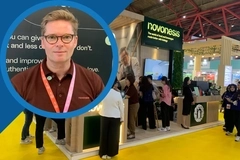
This is Missy Green with Food Ingredients First.
I'm here with Steph, who's a stakeholder relations manager at the Protein Club.
So Steph, what is the protein Club?
It's an industrial club, so a club of companies.
We bring them together because they can all play an important role in.
Creation of innovative value chains for fermentation-based proteins.
Fermentation-based proteins means we are not considering plant-based, insect-based cultivated meat.
We focus on Microbial proteins.
So we use microbes to grow proteins.
These applications are of course partly in the food area but can also be in the feed.
You can also what we call have functional proteins, fine chemicals as for example bio pesticides.
It can also be.
Protein, but these kinds of developments we focus on, and our focus of the industrial sounding board with the members as you see here is that we connect companies that can play a role in the value chain of fermentation-based proteins.
Value chain means you need entities that provide feedstock.
It could be a side stream of a company.
For example, Cargill, they have a lot of glycerol.
Can you make proteins out of glycerol?
And so we have a lot of companies that are wondering, can we use our side streams as a feedstock for production of proteins.
Then we have the bio innovators developing new technologies on different types of proteins microproteins, heme proteins.
Casin, lecrofen, yeah, different applications.
So these are the bio innovators developing the technologies and then of course you need clients, you need people that are off taking your product and also these people, we bring them together.
So the XXL nutrition is the sports foods.
They use a lot of whey proteins, but you can also replace that with using sustainable proteins, microbial.
Proteins, so they are the demand side, the feedstock side, and the developers, and we bring them together physically in a club so that they connect to each other, that they learn to collaborate, that they start collaborating, and then we create new value chains, and that is our ambition.
We have an impact ambition.
We want to go towards production impact, so thousands of Tons of production that also means revenues, profits, employment.
That is what we are aiming for with the protein club.
Who is behind the protein club?
Who started it?
These are the founding fathers.
You see them here on the left.
So they are, for example, it has been created in Ghent in Belgium.
Because you have in Ghent strong competence, expertise in this area of microbial proteins, so you have the University of Ghent which is involved with research groups, strain engineering, that kind of stuff.
Capture is also linked to the University of Ghent, but also involves other universities in Belgium.
Focusing on circularity of carbon, for example, then we have the scale up support, so the pilots and demo infrastructures.
So Biobase Europilot plant is one of the founding fathers.
Also, and Ivo, they have the food pilot which also supports in developing the food products on the market.
So this is more let's say the early stage.
123 and then 4567 scale of support that we provide with the founding partners to support these members to go faster to the industrial scale.
What does somebody have to do or what does a company have to do to become a member of the protein club?
They first need to commit.
That they are that they have a short term plan to do something.
So it needs to be in their strategy to do something actively in deploying a new value chain for fermentation-based protein.
That doesn't mean they need to do it themselves.
It can be as a feedstock provider or a no, but they need to have a plan in the short term.
We only want to have active, actively involved members.
Because we are not a blah blah club, so action is needed.
And then there is a membership fee to be involved in all the activities because we have a lot of gatherings 3 or 4 times a year.
We come together.
We do a lot of knowledge building, knowledge sharing, so for that there is a.
Fee, but it is a small club, not big, but trying to collaborate on the short term towards industrial scale.
Is there ever any feelings that if you have all these people together, maybe it's not in their best interest because they need to protect their IP?
How do you?
Prevent them from becoming competitors, but they are competitors.
We have several competitors together in this area, and Trios is a competitor of Cargle in some areas, and here you also have competitors, but the market is big enough.
It's better to join forces and to create, and we don't put any on the table.
Protein club.
Of course there is bilateral contacts and there is collaboration ongoing among several members, but it's not the idea of putting all the IP on one table and then sharing everything.
That's the ambitions about what are the benefits of joining the benefits are that we move faster towards industrial scale.
By connecting companies so they find each other much better, much easier, and they have the support from the from the members, from the founding partners, so they have scale up support from Bioass Europilot plant, for example, to fastly go to industrial scale.
Thank you so much.