Banner with cereal bars and Biospringer logo with a learn more button in the right bottom corner
Home
Videos
Copa-Cogeca: Assessi...

Copa-Cogeca: Assessing the impact of Trump’s tariffs on the EU wine industry

10 Apr 2025 | Copa-Cogeca

Christian Schwörer, vice-chair of the Copa-Cogeca wine working group, breaks down the severe impact of US President Donald Trump’s 20% tariff on EU wine imports. The tariff affects 27% of EU wine exports, valued at €4.9 billion (US$5.4 billion). Schwörer urges exemptions for agricultural products in the trade negotiations while flagging issues in the recently announced EU wine package.


Hi, I'm Anvisha Manjal.

I'm a senior journalist with Food Ingredients First.

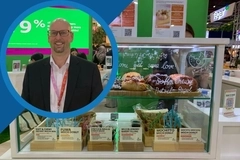
Joining me today is Christian Schroeder, who's the vice chair of the Working Group on Wine of Copa Cocheca, which is Europe's largest agricultural union representing farmers and agri cooperatives.

It's a pleasure to have you with us, Christian.

My first question to you is, with US President Donald Trump's recent announcement of a 20% tariff on EU imports, how does CPA and Kjeca assess the immediate impact on EU wine producers?

Yeah, the recent messages, adopted by the US government represented a real threat for our sector, so 20% customs duties will have a dramatic impact on our wine exports, and there's no way we can pass these tariffs on to the consumer in the form of, price increases.

The US market is the porter's market for us.

It represents 27% of the volume of wine exported from Europe and the market is really irreplaceable in terms of volume and value.

We are talking about €4.9 billion and exporting is a very difficult but a rewarding business and we made enormous investments over the years to consolidate the US market.

And it takes in general years to develop or decades to develop a market as the US and the China, Chinese market has shown and would really be a disaster for these years of investment were to be destroyed.

So we cannot ignore this, this introduction and which will have a, it is destructive effects on our sector and, the sector.

Which is already in, in difficulty due to the complex economic and structural context, of, of the wine market and we really have to, to, to react and the problem is the, the response of the European Commission is first that they will include US bourbon and US wine in the list of products to be hit with, European duties.

And we really demand that the wine sector or the agriculture sector in, in general as a whole must not be involved in this trade dispute that that is not directly concern or that not really directly concern our, our product and we really hope that Ursula von der Leyen will , we reach a good, a good negotiation, results because we cannot really accept that only industrial goods, will be exempted, but we really need exemptions for agricultural products and, therefore we, we, we do everything to, to stay out of that conflict, which starts with aluminum and steel in the beginning.

Mhm.

Now, Copa and Kojeka have expressed concerns about the financial framework of the recently announced EU wine package.

Could you explain what these are and how they affect the success of the proposed measures?

Yeah, as part of the US wine sector program, the member states receive the budget every year that can be used for, interventions such as restructuring or investment promotion, sales promotion, or financing of crop insurance.

And many, European member states are hardly not able to use the funds made, made available to them within a year.

Last year, for instance, Germany and Italy.

In particular, failed to utilize a large amount of the money and, there are many reasons for this.

Often the time required for the application for the authorization, for the implementation, for the completion and for the settlement of the information is just too short and in the end, the money goes back to Brussels and This cannot continue like this, that's why we need greater flexibility here, the possibility of switching between interventions must be possible, but also to transfer funds from one year to another year, and we should also have the possibility to use unused funds for crisis measures, for example, grabbing up at the end of the year.

This flexibility is not provided in the wine package so far as it's, it's horizontal measure and the European Commission considers such, such an addition to the wine, package to be cogmatic.

But, we have hope because the European Commission has announced, simplification of the CAP.

There will be a proposal for May, and according to the initial information, this is to Include greater flexibility for the member states in the management of their strategic plans and that would be a good measure for us in order to really use the money made available from the European Union to the member states.

Thank you.

Thanks for sharing that.

Now, in response to the new US tariffs, what strategies do you recommend for EU wine producers to reduce market dependence on the US?

Yeah, it's, it's difficult to develop a good strategy or any strategy at all because as I said, the US market is irreplaceable in terms of volume and value.

And there are also many products that are successful on the, on the market but not on, on other markets.

So it is possible to place a high price and high quality products on the US market for which there's no comparable market, but of course, we need to focus on new emerging markets in Asia, in Africa, or Latin America.

However, these are sometimes very difficult markets due to the mentality of the population or also because the group of people who drink alcohol is small, for example, in India, and it also takes years to develop a, a market, but of course, but of course, export, exporters need always, several pillar, pillars.

And in principle, we are in favor of international free trade agreements, but international agreements.

Must take, particular account, the protection of, protected geographical indications.

Thank you.

Now, we've heard time and again from industry associations that the US market is extremely important for the EU wine sector.

What actions do you plan to take to advocate for the removal of the US tariffs and to protect the interests of EU wine producers in trade negotiations?

We mentioned, so we are clearly calling on the European Commission and the US to ensure that the wine sector is not involved into the dispute, and we are really relying on the negotiation skills of the European Commission and also on the pressure from the US wine industry which is also against these tariffs.

So 0 for 0 would be, an ideal solution.

And the US must really realize that they will only be losers from this trade war on both sides of the Atlantic and the tariffs would also cause, prices to rise in the US leading to higher inflation and, a decline in investment with this, which is harmful for the economic evolution in general.

And considering this trade war and the current policy landscape, what is your outlook for the wine and spirits sector over the next few years?

Yeah, but unfortunately, the outlook is not quite so good.

The US market, the number one market for new wine, is, is, is, is showing uncertainty as we have seen, and the Chinese one was once booming but it's currently also in crisis.

So in the last 5 years, wine consumption in China has halved and they are also building trade barriers and.

In a context where the new, wine sector is going through a structural crisis, there's a need of stable markets and, a stable geo geopolitical situation.

And, the actual context is really difficult, but, we, we hope we will get the support of the European Commission.

We already had the, the, the support of the European Commission, we have, we have this, this wine package which has been proposed last week, and we, we are confident that, That these measures will, will help us, not only for, for the export but in, in general for, for our production with the adjustment of the production, potential, but also, strengthening resilience to market and climate changes.

And, a better adaption to, to market trends, so I think this, this will be our, our strategy at the moment to really go the way with the commission, and to, to, to be in a, in a, in a strong dialogue with the commission.

Yeah, yeah.

In terms of support, do you think the EU should ensure additional measures to , ensure that the wine sector remains sustainable and also competitive amid these new challenges.

Yeah, sure, yeah, it would be nice to have a, a compensation mechanism, but that will be difficult.

I already mentioned the recently proposed wine package, support longer periods for promotion in consolidated markets.

We often have the problem, we, we get money, to, to open the market, to develop the market, but to consolidate the market, it's often not possible because the period, for the promotion is too short.

And that's a good sign, that the, that the time is, the time limit for promotion, support is longer now, past from 3 to 5 years.

From our vision, it would be, probably it would be good to, to have a a longer period or even no, no limit for, for, for the promotion, but, that would be difficult, but, we also have modifications concerning wine tourism.

That are enclosed in the reform and that's a positive, a positive initiative and should be good if, the, the entities, the organizations that could benefit from, from these, measures, is, is, making larger, even, a single wine enterprises should be able to, to benefit or to have access to this kind of, of funding.

I think openness towards innovation is also fundamental, but we should, just be careful in the end, ensuring that wine remains, an agricultural product, that wine remains wine and not an industrial product at the end.

Thank you so much for sharing your insights with us today, Christian.

Thank you for your time.

More videos

Image