

- Industry news
Industry news
- Category news
Category news
- Reports
- Key trends
- Multimedia
- Journal
- Events
- Suppliers
- Home
- Industry news
Industry news
- Category news
Category news
- Reports
- Key trends
- Multimedia
- Events
- Suppliers
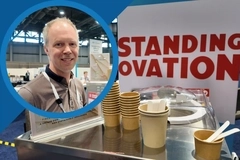
Food formulators face the challenge of maintaining freshness when using a fruit or vegetable powder. At Fi Europe 2019, Diana Food showcased its vegetable powders and liquids created with a new technology that allows the company to capture the volatile ingredients which naturally occur in the fruit or vegetable and put them back into the product. The company’s roots in agronomy are what give it the lead in creating the technology, according to Lilian Régnier, Regional General Manager EMEA. Régnier also highlights that the market for organic pigments is emerging, especially in applications like meat replacements, which can harness the power of beets for a juicy red.
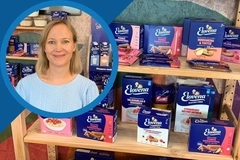
This is Missy Green at FI Europe 2019 in Paris, and I'm here with Lilian Renier who's going to tell us about some latest developments at Diana Food.
Lion, your diet and Food just launched a premium vegetable powder.
How is this being used for clean label, and what is the technology behind it?
Good afternoon, Missy.
Thank you for your question.
So indeed, for this FIE Dina Food has been launching a new range of vegetables, so they are in dry form or in liquid form, and the idea behind it is to bring to the market really the fresh element of a carrot that you will pick into the, into the field or an onion that you will pick into a field into a powder or a liquid.
What does this mean?
It will mean that in your soup or in your food preparation, you will be able to have a clean label because this is still carrot, this is still onion, and keep the freshness and the notes of the intensity that you would like to have or you would love to have when you go to a new market.
Your own soup.
So that's indeed the idea behind it.
And in terms of technology, that's really our roots, meaning the economy.
So we know when and how to actually pick the vegetables from the field and then when we process, we're able to capture all the volatile.
Monitor them and reinject them into the into our product, then you have the freshness.
Wow, so you capture them and then put it back.
Exactly.
Is this a secret technology?
It is a secret technology for sure.
I won't ask you any further questions about that, but that is very impressive.
So you've also come up with a natural vitamin C solution, and what is the demand behind that?
So yeah, vitamin C.
Diana is the largest producer of powder vitamin C in the world.
We are sourcing and having a long term partnership with farmers in Brazil, and we are then able to actually monitor the content of vitamin C into magic food named Acerola.
So what does this make to you?
It makes you in good shape, a lot of energy, and this is indeed what we do in offering to the market, mainly into supplements, so dietary supplements, consumer health markets, this vitamin C.
You call this a magic food, yeah, magic food, because that's a fantastic berry, and that's a berry that that is grown only in Brazil, and, and this is indeed where our talent lies in making sure that we have a connection with our farmers we can help them to grow the berry at the right pace with the right, maturity to actually get the highest vitamin C content inside.
Do you, would you say that there's a difference between a magic food and a superfood?
No, that's correct, that's, that's actually a superfood, that's correct.
There's no difference, that's my own word, my own definition.
It sounds exciting.
So what about organic colors?
Right.
Is there a market for organic colors?
That's that's an emerging market.
So Dana has been actually into the color business for long, long years, so supplying red pigments from red beet, for instance, or purple carrot, and in a commercial way.
So now indeed the market is mature enough to also demand the next generation being organic.
So it is still emerging, but still in let's say at a small age level, but.
We are starting to see demands appearing in the US and also in Western Europe.
So Dyna is their position, using economy, using sustainability to actually provide an organic version of conventional pigments.
OK, so a market is emerging for organic colors.
What other future market opportunities do you see?
Do you have any premonitions on where the industry is headed?
It's like Midterm, what we see on the market, the weak signal that actually can be considered as strong signals being the vegan trend.
So Dana is also now looking at the vegan trend and offering colors.
We just talked about pigments, for instance.
You need to actually.
Colors to some veg spotting that will be used as as meat, for instance, so the red meat pigments will bring that, and this is where you can link that up with organic.
We also bring the organic pigments to the meats, and the veg meat in a way.
So we see that as a very strong development going forward.
OK, thank you so much.
You're welcome, I.