

- Industry news
Industry news
- Category news
Category news
- Reports
- Key trends
- Multimedia
- Journal
- Events
- Suppliers
- Home
- Industry news
Industry news
- Category news
Category news
- Reports
- Key trends
- Multimedia
- Events
- Suppliers
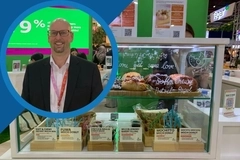
FlavoLogic presented an innovative aroma extraction technology. “The extraction technology is a concentration technology where we have managed to achieve a very highly concentrated natural extracts which have a very authentic smell,” says Alexander Hasselbarth of FlavoLogic. “The specialty is that we have achieved this highly concentrated form with a dosing that can be 1-10,000. It offers real authenticity and makes flavors really natural. A solvent is a binding material where you absorb the aroma. It takes a very long time to saturate the solvent itself. It pumps through any water or liquid-based or ethanol-based liquid. The aroma binds to the solvents and after a certain period, it can wash down the aroma and you can get it concentrated into a very small volume of a solvent like ethanol.”

Wires at the Inuga Food Tech in Cologne and I'm here with Alexander Hasselbart from Flavor Logic, and the company has launched a very interesting aroma extraction technology.
Alexandra, can you explain a little bit what is this technology and how can it be used?
The technology basically is an extraction or concentration technology.
We managed to achieve very highly concentrated natural extracts which have a very authentic smell.
And this is achieved on a solvent-based technology, and the specialty is that it's highly concentrated.
We achieve a very concentrated format with a dosing level 1 to 5000, 1 to 10,000, and it's really of outstanding authenticity because we really managed to.
Transport polar compounds and this makes flavors really natural.
Can you very briefly explain how the processing behind it works?
The process is sorbent based.
We have a special absorbent process.
A sobent is a binding material where you absorb aroma.
So it takes a long time to saturate the solvent cell.
You pump through any liquids, water-based, ethanol-based liquids.
The aroma binds to the solbent, and after a certain period of time, you can wash down the aroma.
You get it concentrated into a very small volume of a solvent like ethanol, and this is.
The basis of the process.
What type of materials can you use for extraction?
The starting materials, there is a wide range of starting materials.
We can concentrate up aromas from side streams as they occur in concentration processes, in drying processes, for example, coffee drying, or you can take them from distillates like.
They occur in the de-alkalization of wine, of beer, or you can concentrate aromas from permeates when you have a membrane process, plenty of aromas lost into the permate be concentrated up and can give it back to the product such that the final product, the dried product, the de-alkalized product is really having this original aroma.
I think the example you give of the side streams is particularly interesting.
What, what, what, what might you be thinking of from that regard, because I think that really goes down this sustainability platform.
But it is really interesting because many products are required, for example, de-alkalized products.
People wish to consume less alcohol, but to have products with a full flavor.
So when you think about for example de-alkalized wine at the moment in the market, there's very little which is really good.
So when we add back the aroma, the wine really gets the full bouquet, and the wine really can be consumed by people who like wine and so they're really satisfied by the bouquet and don't notice so much the lack of alcohol and overall it's it's a big win for them.
OK, thank you, thank you very much, Alexandra.