

Vanilla’s expanding value and versatility in modern F&B formulation


Key takeaways
- Vanilla is evolving beyond flavoring to enhance sweetness, mask off-notes, and improve sensory quality across F&B applications.
- Demand for reduced-sugar, plant-based, and functional products is driving vanilla’s role as a multifunctional formulation ingredient.
- Sustainability, traceability, and origin transparency are strengthening vanilla’s value in clean label and premium product development.

Vanilla has a long-established reputation as a classic, timeless flavor. As a highly adaptable ingredient that adds value across a wide range of food and beverage applications, its role in formulation has expanded significantly as manufacturers look for ingredients that can deliver both sensory quality and functional versatility.
Vanilla is evolving beyond its traditional role as a flavoring agent into a multifunctional ingredient for food, beverage, health, and wellness formulations. One of its key strengths is enhancing overall flavor profiles, even at low usage levels, it can round out taste, improve balance, and create a smoother, more rounded sensory experience.
This makes vanilla especially valuable in modern product development, where consistency and consumer satisfaction are central priorities.
Vanilla as a value-enhancing ingredient
Vanilla plays an important role in supporting evolving product innovation, particularly in categories such as reduced-sugar, plant-based, and protein-enriched foods. In these applications, it helps create familiar and appealing taste profiles, contributing to greater consumer acceptance of new or reformulated products.
Beyond its sensory contribution, vanilla offers formulators a flexible building block that integrates well across a wide range of systems. Its compatibility with dairy, plant-based alternatives, cocoa, and bakery applications makes it a reliable tool in diverse product development strategies.
We speak to several leading players — International Flavors & Fragrances (IFF), Prova, Symrise, and Takasago — in the vanilla space to get the latest insights on how vanilla is increasingly being used as a strategic enabler of innovation.
They examine which consumer trends are driving demand for multifunctional vanilla ingredients, how they are being used across clean label F&B applications, and in formulations targeting the growing functional nutrition and wellness markets.
Laurent Deniau, global competence director, Vanilla, at Symrise, explains how the role of vanilla has evolved in F&B formulations due to the increase in natural vanilla prices (which have now eased) a few years ago, followed by rising vanillin prices.
“This has led flavorists to consider vanilla usage more carefully, adding only the amount needed to achieve the desired taste profile. This has also prompted a thorough review of vanilla portfolios, with the aim of developing an approach that optimizes both extraction methods and formulation, addressing consumer expectations in the best way possible,” he tells Food Ingredients First.
“Companies like Symrise can add value by leveraging their strong expertise across the full value chain from field to consumer. Vanilla is a widely beloved flavor often associated with comfort, familiarity, and childhood memories. Based on this consumer acceptance, vanilla can be used as a natural masker in health and nutrition applications. It is often used to improve the taste, mouthfeel, and smell of these products.”
“Now, with the recent decrease in natural vanilla prices, we are seeing some customers reintroduce natural vanilla when launching new products. This is supported by our ability to help stabilize both price and quality over the long term through our integrated approach across the value chain, including agronomy, sourcing, extraction, and formulation,” Deniau says.
 Vanilla is a versatile ingredient that integrates well across dairy, plant-based, cocoa, and bakery applications, making it a reliable choice for diverse product formulations.
Masking functional ingredients’ off-notes
Justin Demers, director of applications and product development at Prova, tells us vanilla has a history of being a standalone commodity flavor concept across bakery, beverage, confections, and frozen desserts. But as these product categories evolve, the company is increasingly seeing more novel, functional ingredients being introduced, and staple ingredients like sugar and fat being reduced.
“Vanilla can aid in masking off-notes of functional ingredients, boost sweetness perception, and enhance mouthfeel in sugar or fat-reduced formulas,” he says. “An emerging application leaning into vanilla’s flavor is the trend of dirty soda. We see this across quick service chains as well as large ready-to-drink (RTD) soda brands.”
“These products use classic sodas as a base and often add creamy vanilla by way of dairy products in addition to other added components like fruit or citrus. The vanilla adds a juxtaposing creaminess, rounding out the bright acidity, and sometimes spice notes from the soda, creating a new flavor and texture experience.”
Michael Zampino, IFF’s vice president of innovation, creation & design, backs up how vanilla has evolved from a familiar flavor profile into a multifunctional ingredient that helps manufacturers address a range of formulation challenges.
“We see growing demand for a wider spectrum of vanilla tonalities, allowing manufacturers to move beyond traditional vanilla profiles and create more distinctive sensory experiences tailored to evolving consumer preferences. As products become more complex — particularly in high-protein, plant-based and reduced-sugar applications — manufacturers increasingly require sophisticated vanilla profiles that deliver flavor performance while supporting overall sensory quality,” he tells Food Ingredients First.
“At the same time, consumer expectations have shifted beyond simple sweetness toward more authentic and natural flavor experiences. Growing interest in global and cross-cultural food experiences is also creating demand for more nuanced flavor profiles that extend beyond traditional vanillin-based solutions.”
Zampino highlights how vanilla is also playing a greater role in helping brands create distinctive sensory identities. “With a broad spectrum of tonalities ranging from creamy, and indulgent to floral, spicy, or caramelized, vanilla can be tailored to complement other flavors and support unique product positioning. As a result, its role has expanded from flavoring to becoming a strategic tool for formulation, differentiation, and consumer appeal.”
Zampino also heralds the ingredient’s use in plant-based applications, where vanilla can help reduce beany, earthy, or astringent notes while creating a more familiar and indulgent sensory experience.
“Beyond traditional categories, vanilla is playing an increasingly important role in products such as protein beverages, meal replacements, nutrition bars, and other wellness-focused formulations. In these applications, manufacturers are looking for solutions that not only deliver great taste but also improve overall palatability and encourage repeat consumption. Vanilla’s ability to combine technical performance with a signature taste profile makes it particularly well-suited to these applications.”
“Consumers are seeking products that balance wellness with enjoyment, while also paying closer attention to ingredient transparency, sourcing, and quality. Real vanilla is often associated with authenticity, craftsmanship, and premium experiences, making it particularly valuable in products positioned around naturalness and indulgence. Together, these trends are encouraging manufacturers to adopt vanilla solutions that deliver multiple benefits beyond flavor alone.”
Honing in on using vanilla to improve flavor perception in reduced sugar products, Zampino says the ingredient has the “unique” ability to enhance sweetness perception through its aroma and flavor profile.
“When sugar levels are reduced, products can lose some of the richness, balance, and overall enjoyment consumers expect. Vanilla helps compensate for these sensory gaps by adding depth, warmth, and roundness to the taste experience,” he says.
“When combined with modern taste modulation solutions, vanilla can help manufacturers achieve meaningful sugar reduction while maintaining flavor impact and consumer appeal. This makes it a valuable tool for developing products that support healthier eating habits without sacrificing enjoyment.”
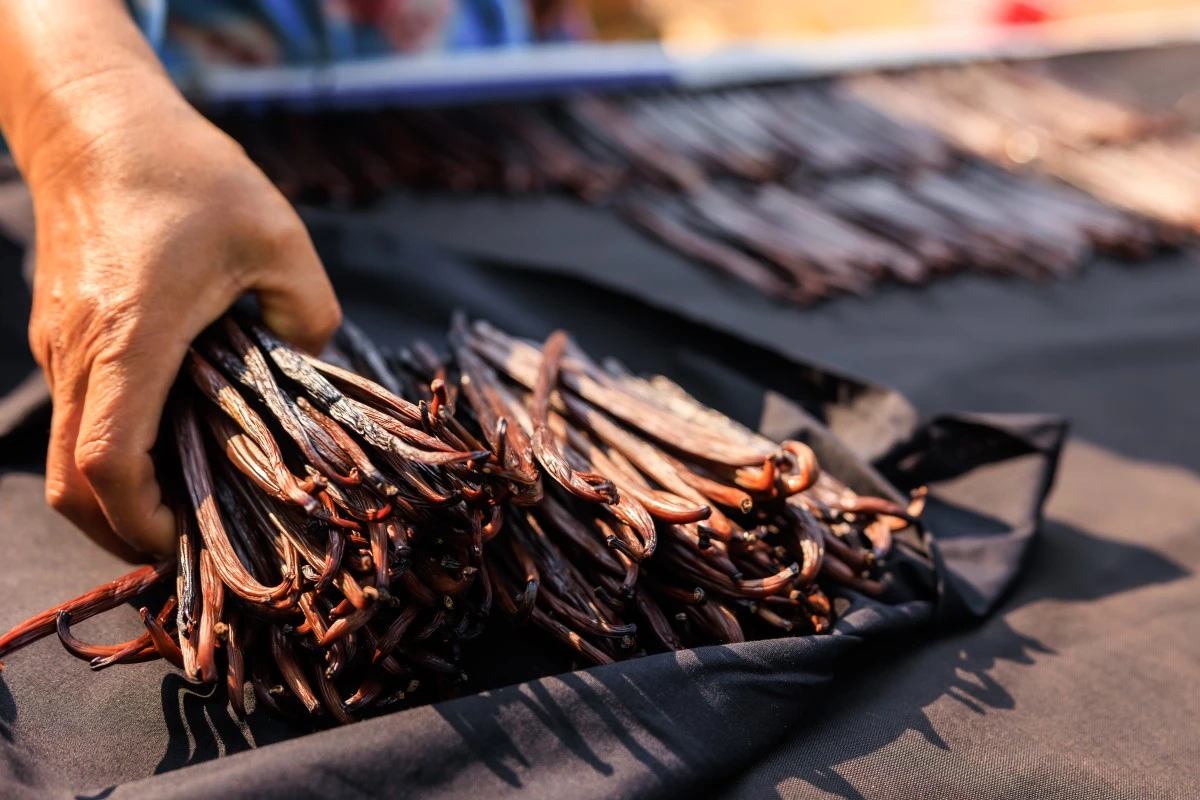 Manufacturers use vanilla as a recognizable natural flavor, with sourcing transparency, origin, and documentation increasingly supporting clean label positioning and consumer trust.
Supporting functional nutrition and clean label innovation
Didier Lebret, global vanilla coordinator from Takasago, says a key opportunity is to use vanilla as a bridge between functional benefit and emotional enjoyment. Many functional nutrition products focus on protein, fiber, vitamins, minerals, plant-based ingredients, or reduced sugar, but consumers still need these products to taste good, feel familiar, and fit into enjoyable daily routines, he notes.
“Vanilla can help create this bridge through its sweet, rounded, creamy, and comforting aroma profile. This makes it relevant not only for physical nutrition, but also for wellness concepts built around reassurance, pleasure, and everyday balance.”
“The opportunity is not to make direct functional claims for vanilla, but to use it to make functional products more enjoyable, more emotionally resonant and, when responsibly sourced, more connected to naturalness and sustainability.”
Vanilla’s sustainability credentials
Takasago’s Lebret adds how manufacturers are using vanilla both as a recognizable natural flavor direction, and as an ingredient where sourcing transparency can add credibility. For clean label positioning, the type of vanilla, its declaration, origin, and supporting documentation are becoming increasingly important, he says.
“This is why F&B manufacturers and flavor houses are putting more emphasis on supply chain control, traceability, origin verification, and long-term relationships in vanilla-producing countries. These elements help support claims around naturalness, provenance, social responsibility, and environmental stewardship.”
“For vanilla, sustainability is not only linked to ‘premium’ positioning; it is increasingly applied as a practical mechanism to generate meaningful impact to reduce supply chain risks, and ensure that consumers receive a high-quality, compliant, and appealing product.”
“However, it is important to avoid suggesting that vanilla automatically makes a product clean label. A more accurate way to say it is that vanilla can support clean label and natural positioning when the ingredient, declaration, sourcing model, and supporting evidence are aligned.”
Enhancing sustainability and innovation in vanilla sourcing is at the heart of IFF’s recent investment in a new Madagascar-based center to “innovate at origin” by tracking vanilla’s journey from extraction to flavor creation.
What’s coming next for vanilla?
Looking ahead, the companies agree that rather than being confined to traditional applications, vanilla is increasingly being used as a strategic enabler of innovation, helping brands deliver products that meet both taste expectations and modern formulation goals.
“We see significant growth opportunities for vanilla across functional nutrition, active lifestyle, and healthy aging products. As consumers increasingly prioritize protein, gut health, and overall wellness, taste remains one of the biggest barriers to long-term adoption,” Zampino at IFF, says.
“Its associations with comfort, familiarity, and indulgence can help transform functional products from something consumers feel they should consume into something they genuinely want to enjoy.”
“We see opportunities to move beyond traditional vanilla profiles, and develop more targeted flavor experiences for functional nutrition where delivering both health benefits and exceptional taste will be essential for success,” he concludes.
Julie Pickette, marketing manager, Prova, cites the increase in GLP-1 users as a factor to consider going forward.
“Consumers are eating less but expecting more from every bite. Driven by health trends and GLP-1 dietary shifts, they are seeking multifunctional products that combine clean label ingredients, like vanilla extract, with high protein and mood-enhancing adaptogens, all without sacrificing the rich, indulgent flavor that remains non-negotiable,” she says.
Deniau at Symrise concludes: “While more countries introduce stricter sugar-reduction regulations, consumers still expect products to deliver on taste. This creates significant opportunities for vanilla.”
“With its familiar, comforting profile, and indulgence-enhancing ability, vanilla can play an important role in helping manufacturers create better-for-you products that remain appealing and enjoyable.”