



What’s next for fats and oils? Exploring the future of functional food ingredients

Key takeaways
- Fats are being repositioned, not reduced, as new dietary guidance emphasizes quality and source, driving demand for nutrient-dense, minimally processed oils.
- High-oleic oils and specialty fats are gaining ground as they deliver better nutritional profiles alongside stability, texture, and shelf life.
- Advanced processing and precision fermentation are enabling more tailored, sustainable fat solutions beyond traditional plant and animal sources.

Fat consumption remains a core pillar of the Dietary Guidelines for Americans (DGA), which were released earlier this year. But the new guidelines explicitly move away from the old “low-fat” mindset and instead rethink recommendations for fats and oils. The updated guidelines now emphasize getting fats from whole, minimally processed foods, and position fats as part of an overall nutrient-dense dietary pattern.
The DGA is not just nutrition advice — the recommendations are a market signal about what kinds of fats will win and how they should be positioned. The message is not “eat less fat,” but “get fat right.”

We speak to experts from AAK and Cargill to examine which oils are growing the fastest in food and beverages, and the trends driving innovation. The speakers also take a look at what new technologies or processes are changing the fats and oils sector, and what the space might look like in the years ahead.
Reformulation is happening, but it is far more strategic than simply moving away from one ingredient, Cornelia Schaffrath, product line senior director for Edible Oils Europe at Cargill, tells Food Ingredients First.
“Manufacturers are responding to dietary guidance, retailer expectations, and label scrutiny, which often means reducing saturated fat, where technically possible, and maintaining alignment with global best practice on industrially produced trans fats. Non-hydrogenated systems and WHO-aligned standards are now baseline expectations rather than differentiators.”
“At Cargill, for example, our global edible oils portfolio aligns with WHO’s recommended limit of a maximum two grams of industrially produced trans-fatty acids per 100 grams of fats and oils — including in markets where legislation is not yet in place.”
“What has changed is the mindset. Reformulation is no longer about removal — it is about optimization. In confectionery and bakery applications, fats control structure, snap, creaminess, aeration, and shelf life. If you alter the fat system, you alter the eating experience.”
The most successful projects treat fat as a system rebuild rather than a substitution exercise. That is why tailored blends and fat systems are becoming more relevant, particularly where manufacturers want to balance nutritional progress with stable processing performance, Schaffrath notes.
Delivering on multiple fronts
Cargill is seeing an increased demand for oils and fat systems that solve multiple pressures at once. Consumers are more engaged with ingredients than ever, with around six in ten actively checking labels to avoid certain ingredients.
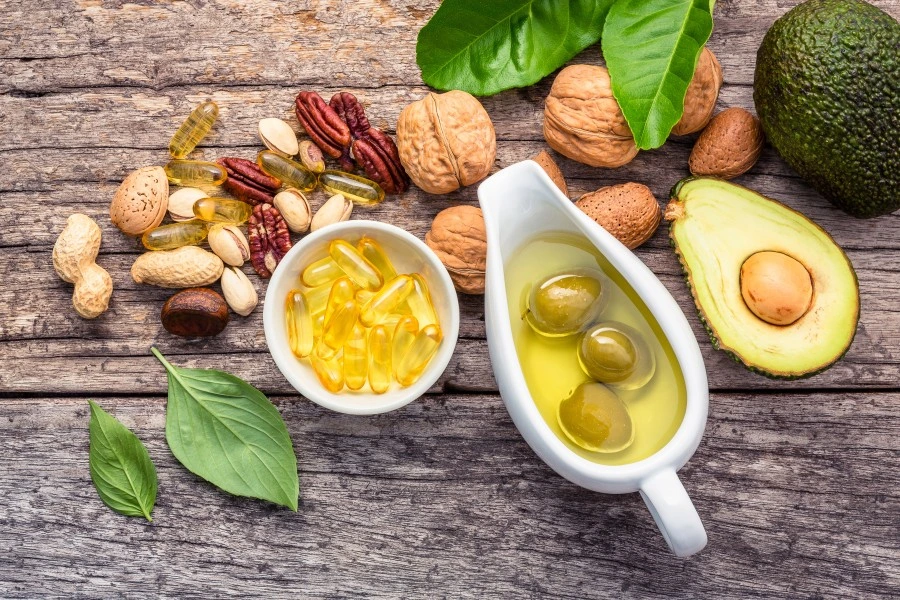 The latest Dietary Guidelines for Americans repositions fats, recommending fats from whole, minimally processed foods, as part of an overall nutrient-dense diet.Fats and oils remain among those scrutinized, according to the company’s research, Cargill Trendtracker 2025. At the same time, interest in functional benefits, such as heart health, continues to rise.
“That combination is pushing reformulation toward solutions that improve fatty acid profiles without compromising stability or shelf life. High-oleic sunflower and rapeseed oils, for example, offer improved oxidative stability alongside a more favorable monounsaturated fat profile, which makes them attractive in this environment,” Schaffrath says.
Specialty fats in the spotlight
Cargill is also seeing growth in specialty fats. Industry projections continue to point to steady annual expansion in this category, driven by the need to optimize sensory performance and manage cost exposure at the same time.
“In confectionery and sweet bakery especially, taste remains non-negotiable — according to proprietary research, flavor is still the primary driver of choice for most consumers. But many also say they want indulgent categories to offer healthier options,” Schaffrath continues.
“That tension is accelerating demand for fat systems that deliver precise melting behavior and texture while supporting nutritional, and economic objectives. It’s less about a single oil winning, and more about functionality delivering across the board.”
Combining health and functionality
Food manufacturers are under increasing pressure to deliver fat systems that satisfy consumers on multiple fronts: health, taste, and functionality. This push for multi-functional performance is driving growth in specialty fats, which allow manufacturers to optimize sensory properties while managing cost exposure.
AAK is a global ingredients company that focuses on developing and supplying specialty fats and designing tailored fat systems for food manufacturers.
Ryan Branch, senior marketing manager at AAK USA, notes that with the release of the US DGA, AAK has seen increased interest in avocado oils, as some customers see consumer demand for it rise. However, this doesn’t mean there is any decrease in demand for tropical oils, which remain key ingredients for various categories.
“With the recently released DGA, I see a growing shift toward cleaner label, nutrient-dense, and minimally processed foods. Opportunities and higher demand in premium ‘high oleic’ versions of traditional oils and fats will remain strong, as they continue to provide healthy, functional, and affordable options to consumers,” adds Steve Council, customer innovation manager at AAK USA.
Compelling claims connected to fats & oils
Claims remain influential, particularly when they align with broader health and transparency expectations.
Branch says that claims like “non-GMO,” “low saturated fat,” or “high oleic” are key messaging drivers for certain companies and health-conscious consumers, so AAK continues to develop and certify oils to meet the requirements of these claims.
For Cargill, a “high oleic” claim is compelling because it bridges the functionality and perceived health benefits of the product.
According to Schaffrath, “low saturated fat” can be a strong positioning tool, but it is highly application dependent. In indulgent categories, reducing saturated fat without compromising structure, melt, or texture is technically complex. “Non-GMO” tends to vary by region and channel, often sitting within broader expectations around sourcing and transparency.
“Increasingly, though, a claim on-pack is only the starting point. Now, they need to be backed by real functionality and responsible sourcing to carry weight,” she says.
 Fats and oils are among ingredients that are being increasingly scrutinized by consumers, who are looking for healthier options.
New technologies for fats & oils
Schaffrath also highlights how advancements in technology will push the innovation in fats and oils to new heights.
“Advances in solvent fractionation, multistage palm fractionation, and interesterification allow for more consistent quality and more tailored fat profiles at scale. That means manufacturers can design fats with highly specific melting points, crystallization behavior, and heat resistance,” she explains.
“Heat stability, for example, is increasingly important in warmer climates where chocolate melting is a major concern. Specialty fats can enhance resistance and, in some cases, simplify processing by reducing or eliminating tempering requirements. That is a tangible operational advantage.”
However, the biggest opportunity lies in combining precision functionality with nutritional optimization and supply resilience.
“When manufacturers can improve saturated fat profiles, maintain indulgence, and protect against commodity volatility in a single system, that is where real value is created.”
Precision fermentation technology is emerging as a potential game-changer for the fats and oils industry, particularly as manufacturers seek alternatives to traditional plant and animal fats, while improving sustainability, functionality, and nutrition. It uses microorganisms (yeast, fungi, bacteria, or algae) that are programmed to produce specific lipids, oils, or fat molecules.
Beyond specialty fats and tailored blends, emerging technologies are starting to redefine what is possible in fats and oils.
Melt&Marble has positioned itself at the forefront of precision‑fermented fats, using engineered yeast to produce designer lipids with highly controlled composition and functionality. Rather than relying on conventional plant or animal sources, the company rewires microbial metabolism, so that sugars are converted directly into fats with specific properties.
Late last year, the Swedish biotech firm secured €7.3 million (US$8.5 million) in Series A funding to propel its precision fermentation-based “designer fats” transition from R&D to commercialization.
The move highlights a growing interest in precision fermentation as a driver of innovation in the fats and oils sector.
“The biggest opportunity for innovation today is precision fermentation, or the idea of deriving tailor-made fats from yeast or microbes to meet the needs of specific applications or nutritional requirements,” adds Council at AAK.
“It will be interesting to see if this technology can be scaled up and made cost-competitive with traditional oils like soy and palm within the next few years. If it does, this can be a game-changer for our industry, delivering more sustainable customized solutions than ever before.”


Upcoming webinars

2027 Food Safety Risks for Quality & Compliance Leaders
FoodChain ID

Formulating for function: Developing benefit-led beverages with natural colours, botanicals, and flavours
Givaudan Sense Colour

Let's reveal the grain potential: Innovate
Meurens Natural