

China’s evolving food standards: Yurun commits to cage-free poultry and eggs


Key takeaways
- The company plans to transition to 100% cage-free eggs and chicken across its global factories by 2035, integrating animal welfare into its procurement standards.
- Because of Yurun’s scale, the commitment could push suppliers and other Asian food manufacturers to adopt cage-free practices across the poultry supply chain.
- The move reflects growing demand for ethical sourcing, food safety, and ESG commitments in the global food industry.
Yurun Holdings Group, one of China’s largest meat suppliers, specializing in slaughtering, processing, and distributing pork under brands like Yurun, Furun, and Wangrun, has committed to 100% cage-free egg and chicken sourcing across all global factories by 2035.
As a vertically integrated meat producer, a large Chinese meat company like Yurun making such a pledge could reshape supply chains beyond China. Cage-free eggs and chicken will become the key inputs for Yurun’s production operations.
With two publicly listed subsidiaries, operations spanning seven major industries, and dominance in the meat sector, Yurun’s decision is seen to carry weight.
When a company of this scale changes procurement rules, suppliers across regions must adapt. This means that the Chinese meat giant’s move could influence Asian poultry and egg producers, and set a precedent that could reverberate across Asia’s food manufacturing landscape.
China’s animal welfare moment
Animal welfare standards in China have historically lagged behind those in Europe and North America.
China has historically focused on food security, price, and scale, but it is now beginning to see some companies address issues such as animal welfare, sustainability, and ESG expectations.
However, this commitment positions Yurun as a leader in ethical supply chain management and reflects growing global demand for higher animal welfare and food safety standards.
Headquartered in Nanjing, the company controls the entire industrial chain from source to consumer, producing chilled and frozen meat, poultry, duck, beef, and processed meat products under eight major brands distributed globally.
Transition to cage-free sourcing
By committing to source only cage-free eggs and chicken, Yurun is setting a precedent for how major global food manufacturers can embed animal welfare standards throughout their supply chains.
“Yurun has always prioritized making life healthier and becoming the most trusted food enterprise,” says Ye Bingsheng, sales director of Yurun Group. “We recognize that superior quality requires strict control over every detail, starting with ingredient sourcing. Our commitment to transition to 100% cage-free sourcing by 2035 is a cornerstone of our corporate responsibility and sustainable development strategy.”
“This action will provide customers with safer, healthier, and more trustworthy products while leading the industry toward a more sustainable future.”
Advancing animal welfare standards
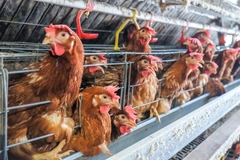
Cage-free farming allows chickens to move freely in indoor or outdoor environments, rather than being kept in small wire cages. Instead, they can walk, spread their wings, perch, and sometimes go outside. This is considered better for animal welfare than battery cage systems, where hens are confined to very small cages.
Chickens living in less restrictive conditions are healthier and less stressed. Because of this, producers argue that the eggs or meat may be of better quality, as well as adhering to the animal welfare standards that today’s consumers expect.
Consumer demand for ethical food
Cage-free systems may reduce contamination from bacteria such as Salmonella and Campylobacter infection.
“Yurun’s commitment is significant precisely because of the company’s global scale,” says Bing Lam, corporate engagement director at Lever China, a consultancy that collaborated on the initiative.
“As a major player in the global meat industry, Yurun’s decision to source exclusively from cage-free suppliers demonstrates that leading enterprises are willing to adopt the highest animal welfare and food safety standards. This move will likely accelerate similar commitments across Asia’s food manufacturing sector and reshape global supply chain expectations.”
Yurun’s cage-free commitment closely follows the Court of Justice of the EU hearing the first case of its kind earlier this month. It has pressed the commission to commit to a legislative timeline on caged farming and follow a public consultation on EU animal welfare, which drew more than 190,000 responses, with near-unanimous support for phasing out cages across all farmed species.