
How the US takeover of Venezuela could reshape F&B supply chains


Key takeaways
- Venezuela’s agriculture remains structurally weak, limiting short-term global F&B impact.
- Cocoa, coffee, seafood, and rum show selective long-term potential under stability.
- Oil dominance risks renewed “Dutch disease,” complicating agricultural recovery.

The US military operation that resulted in the capture of Venezuelan President Nicolás Maduro on January 3 has sent shockwaves through global markets, primarily in the energy and oil sectors. However, the country’s vast agricultural resources will likely see dramatic changes over a longer timeframe.
US President Donald Trump has stated the US will “run the country” until a transition can be arranged, raising immediate questions about the future of Venezuelan commodity production and trade.
Yet for global F&B markets, the short-term impact is likely to be limited.
“Venezuela has been an isolated market for decades. The implications on global markets are rather muted. We don’t expect any immediate impact,” Carlos Mera, head of agri commodity market research at Rabobank, tells Food Ingredients First.

This muted response reflects the reality that Venezuela’s agricultural sector has been in structural decline for over two decades. According to the US Department of Agriculture (USDA), Venezuelan agricultural imports in 2024 increased by 9% year-over-year to US$3 billion, with the US serving as the second-largest supplier, accounting for a 26% market share. The country now imports approximately 60% of its total food supply.
A sector in decline: The legacy of land reform
The transformation of Venezuela from agricultural self-sufficiency to import dependence represents one of the starkest examples of policy-driven agricultural collapse in modern history.
“The agricultural sector in Venezuela suffered under land reforms and price controls in the last couple of decades, leading to many farms being abandoned and a significant drop in production,” Mera explains.
Until 2000, Venezuela was self-sufficient in white corn, fruits, vegetables, coffee, cocoa, and rice, with domestic production supplying up to 70% of sugar, 80% of beef, and 80% of chicken meat consumption requirements, according to USDA analysis. From 2008 to 2021, agricultural production of cereals, sugars, vegetable fats, and animal proteins decreased by 54.3%.
The US has historically been a major agricultural supplier to Venezuela. In 2024, US agricultural exports to the country totalled US$800 million — the highest level since 2014, according to the USDA Foreign Agricultural Service. However, whether this trade relationship will strengthen under US control remains uncertain.
“At the moment, it is not clear whether Venezuela would favor the US for its wheat and corn imports,” Mera notes.
Cocoa: Fine flavor potential amid global supply pressures
Venezuelan Criollo cacao has traditionally been considered among the finest flavored cocoas in the world. The country produces between 15,000-25,000 tons annually — less than 1% of global output — but its share of the premium fine flavor segment is disproportionately high, according to cocoa trade analysis from Bohnkaf.
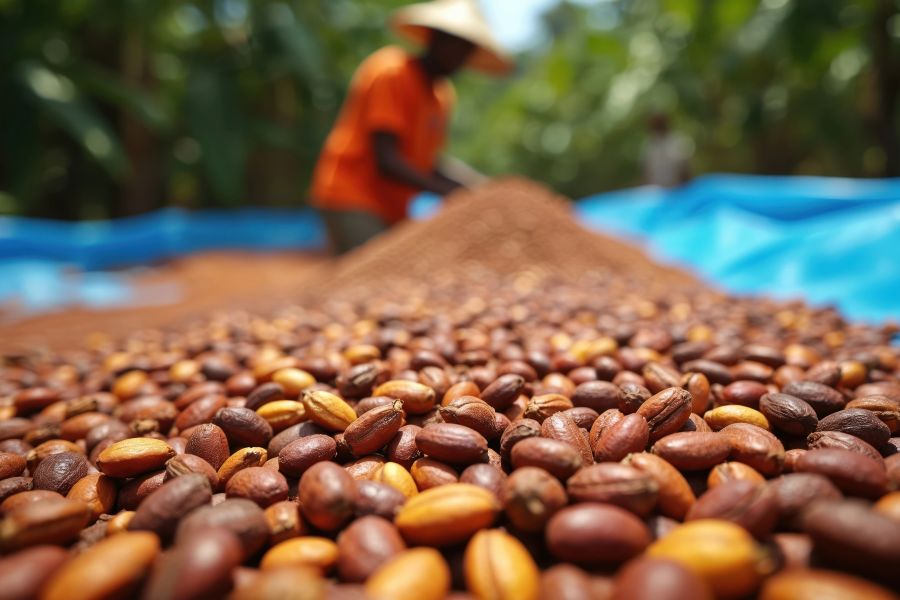 A revival in Venezuelan cocoa production and export could ameliorate recent market volatility in the future.The International Cocoa Organization notes that fine flavor cocoa accounts for approximately 12% of global exports, with Latin America responsible for 90% of the world’s fine flavor cocoa trade.
Recent trade data also suggests early signs of revival: Venezuelan cocoa exports nearly doubled (+128.9%) year-on-year in 2024.
The timing is notable given ongoing supply pressures from West Africa, with cocoa prices reaching record highs in 2024. This pressure has led to reformulation efforts and potential business divisions as companies scramble to deal with price volatility and consumer demand.
Research by Innova Market Insights indicates one in three consumers is willing to pay more for chocolate with verified sustainability claims, while 78% seek indulgence with natural ingredients.
Coffee: Specialty potential, but patience required
Venezuela was historically a major coffee exporter — ranking among the world’s largest producers in the 19th Century. Today, the country produces approximately 36,000 metric tons annually — just 0.3% of global output, according to global trade data. Most is consumed domestically.
Government price controls introduced in 2003 restricted production to the point where imports became necessary to meet domestic demand. Yet Mera sees coffee as the sector most likely to respond first to any stabilization.
“The first sector to react would be specialty coffee, as these coffees can be praised in the international market,” he says. “Venezuela can produce some fine coffees, and the specialty coffee sector has been strong in the last few years.”
However, Mera cautions that recovery will not be swift: “Abandoned plantations could be reactivated, but this would take time, and it is still largely uncertain at the moment. Any foreign investment at the moment is out of the question. There is a blockade for the foreseeable future.”
Seafood: Success story turns cautionary tale
Perhaps the most striking exception to Venezuela’s agricultural decline has been its seafood sector — the country’s largest agricultural export category.
Seafood exports increased 174% since 2016, totaling US$361.7 million in 2021, with aquaculture shrimp production growing 157% over the same period, according to the USDA Foreign Agricultural Service. Venezuela’s frozen seawater shrimp exports grew 87.1% between 2020 and 2024, second only to Ecuador among major producers.
However, the sector’s trajectory took a dramatic turn in late 2024 when the Maduro government seized Grupo Lamar, the industry’s flagship company, in December, accusing its owners of plotting a coup, according to local media reports. The family fled Venezuela, and then in April 2025, one of the company’s main processing plants was destroyed by a fire.
The episode illustrates both the potential and the risks of Venezuelan agricultural investment under unstable conditions — and why US control may prove transformative if it delivers genuine stability.
Rum: Quietly resilient
Venezuela’s premium rum producers have maintained international exports throughout the crisis. Diplomático, distributed in over 100 countries, was recently acquired by Brown-Forman (parent company of Jack Daniel’s).
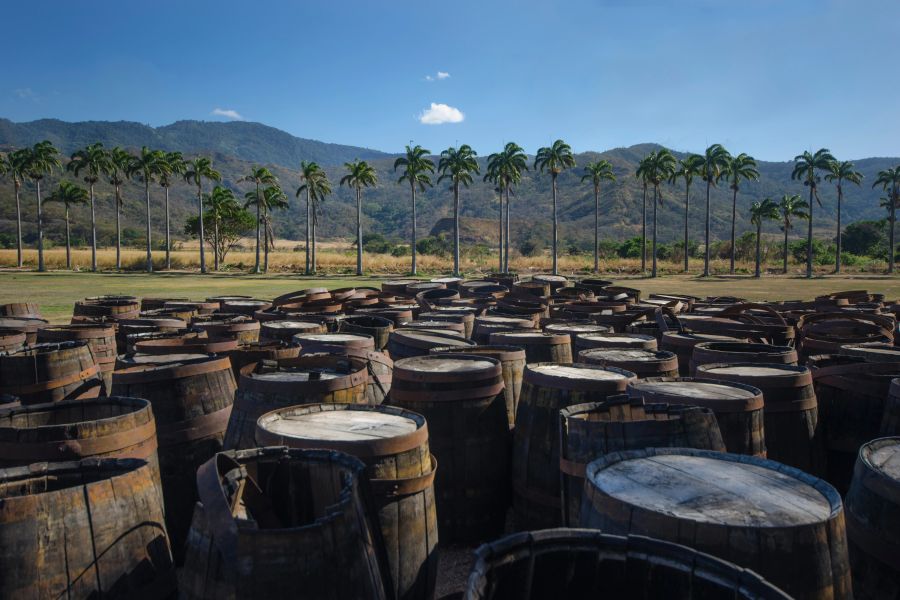 Rum production has shown resilience throughout decades of political turmoil.Both Diplomático and the 220-year-old Santa Teresa hold “Ron de Venezuela” denomination of origin certification.
The sector’s resilience — and Brown-Forman’s investment — could signal international confidence in Venezuelan beverage production under improved conditions.
The Dutch disease dilemma
Mineral fuels, including oil, accounted for US$10.8 billion — or 79.6% of Venezuela's total exports — in 2024, according to Tendata trade data.
The country holds the world’s largest proven crude oil reserves at approximately 303 billion barrels, according to OPEC’s Annual Statistical Bulletin 2025, as corroborated by the US Energy Information Administration.
“Dutch disease” refers to situations where resource booms (like oil) strengthen a country’s currency so much that its other exports become uncompetitive internationally — so even if Venezuela wanted to revive agriculture, a flood of oil money would make its farm products too expensive to sell abroad while cheap imports undercut domestic producers.
President Trump has stated that US oil companies would invest in new infrastructure, with the president claiming the operation “won’t cost us anything” because Venezuela’s oil wealth would fund development.
For agriculture, this creates a familiar problem.
“If Venezuela becomes a large oil exporter, its currency could appreciate quite a bit, discouraging domestic agricultural production,” Mera explains. “Every country is very different. Again, in the case of Venezuela, the oil industry could result in a strong local currency, disincentivizing agricultural production in favor of imports.”
Investment outlook: Stability first
For F&B companies considering Venezuelan sourcing or investment, the message from analysts is clear: wait.
“It is hard to see direct US investment in agriculture as the situation continues to be in flux,” Mera states. “But a stable political situation could lead to more investment.”
Venezuelan agricultural exports to the US totaled US$173 million in 2024, rising 27% from 2023, with seafood comprising 60% of that trade, according to the USDA Foreign Agricultural Service.
The infrastructure for expansion exists in pockets — but unlocking broader potential will require not just political stability, but careful navigation of the oil wealth that has historically undermined agricultural development.




Upcoming webinars

Oat-Standing Ingredients - Showcasing Irish Grain Through Innovation
Tirlán Ingredients

2027 Food Safety Risks for Quality & Compliance Leaders
FoodChain ID

Formulating for function: Developing benefit-led beverages with natural colours, botanicals, and flavours
Givaudan Sense Colour