


Unilever targets mayonnaise reset as food volumes fall in Q3

Key takeaways
- Unilever’s food volumes fell 1.1%, prompting mayonnaise innovation and US pricing adjustments.
- Foodservice and emerging-market growth helped offset weaker developed-market retail sales.
- The McCormick combination remains on track for completion by mid-2027.
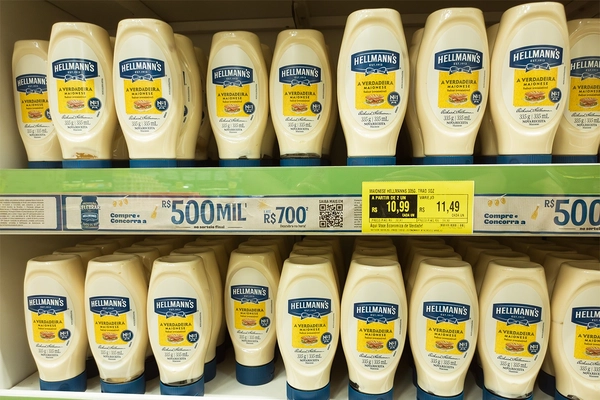
Unilever is stepping up mayonnaise innovation and adjusting US pricing after food volumes fell in the third quarter, as Hellmann’s faced competition from premium products and cheaper brands.
Underlying sales in the Foods division edged up 0.1%, with a 1.1% volume decline offset by 1.3% price growth. Quarterly turnover was flat at €3.1 billion (US$3.45 billion).
The slowdown follows 2.5% underlying sales growth in Foods in 2025, when Hellmann’s and Knorr supported the division’s performance. Underlying growth for the first nine months of 2026 was 0.8%.
Mayonnaise competition intensifies
Unilever says its limited presence in the fast-growing premium and avocado mayonnaise segments contributed to US weakness. Discount brands have also expanded their national distribution, putting Hellmann’s under pressure at both ends of the market.

Speaking on the earnings call, CEO Fernando Fernandez said higher soybean oil costs had prompted Unilever to raise prices while some competitors cut prices and increased promotions.
The company has since adjusted pricing and its pack offering. Hellmann’s avocado oil mayonnaise is building distribution, and another major launch is expected in the first quarter of 2027.
Fernandez cautioned that “it will not be a short-term fix,” but said he expects Foods to perform better in 2027.
The cost challenge is set to continue. CFO Srinivas Phatak said Unilever expects higher input-cost inflation in Foods in 2027, highlighting soy-related pressures.
Foodservice provides support
Unilever Food Solutions grew at a low-single-digit rate, with North America accelerating to mid-single-digit growth and China delivering low-single-digit growth.
India Foods grew at a high-single-digit rate, supported by double-digit growth in Horlicks. However, emerging-market and foodservice gains were offset by weaker developed-market retail. Cooking Aids and Condiments were broadly flat as price increases offset lower volumes.
The results come as Unilever prepares to combine its Foods business with McCormick. Announced in March, the transaction is expected to close by mid-2027, subject to McCormick shareholder approval, regulatory clearance, and other closing conditions. It excludes Foods in India and certain other businesses.
Phatak said the separation remains on track, although asset disposals are being considered in a couple of markets to facilitate antitrust clearance. He did not identify the markets or assets.
Across Unilever, underlying sales grew 5.2%, with volumes up 2.9%, highlighting the gap between Foods and the wider business. The group now expects at least 3% underlying volume growth for 2026 while maintaining its full-year underlying sales growth range of 4% to 6%.