



Tate & Lyle targets oil and egg reduction with clean label mayonnaise toolkit

Key takeaways
- Tate & Lyle’s new toolkit helps reduce oil and egg in clean label mayonnaise and dressings.
- Sensory insights guide reformulation to maintain texture, stability, and consumer appeal.
- A customer project achieved an egg-free dressing with just 10% oil.

Tate & Lyle has launched a Clean Label Mayonnaise Solutions Toolkit to help manufacturers cut oil and egg while maintaining the texture and stability consumers expect. The launch targets mayonnaise and dressing producers juggling shorter ingredient lists, nutrition goals, and pressure on formulation costs.
The toolkit combines the company’s Sensation sensory and formulation tool with Claria functional clean label starch and Nutrava citrus fiber. It starts by identifying consumers’ preferred texture, then matches ingredients to the product’s brief and manufacturing conditions.
Alisson Borges, senior manager for Soups, Sauces and Dressings & Dairy Application at Tate & Lyle, says that what is changing in the industry is that mayonnaise and dressing manufacturers are rarely reformulating for one reason anymore.

“They may need a cleaner label, lower oil or egg, better nutrition, and a formulation that helps manage cost and supply exposure within the same brief. That means the formulation route needs to consider the product, the process, and the sensory target together.”
“Focusing on one challenge in isolation can create trade-offs elsewhere. The real opportunity is to make those decisions in a way that protects consumer appeal while helping manage formulation cost, processing complexity, and supply exposure.”
Starting with texture
Reducing oil or removing egg changes more than the ingredient list. Tate & Lyle explains manufacturers must rework formulations to maintain emulsion stability, viscosity, and mouthfeel, with adjustments potentially adding development time and processing complexity.
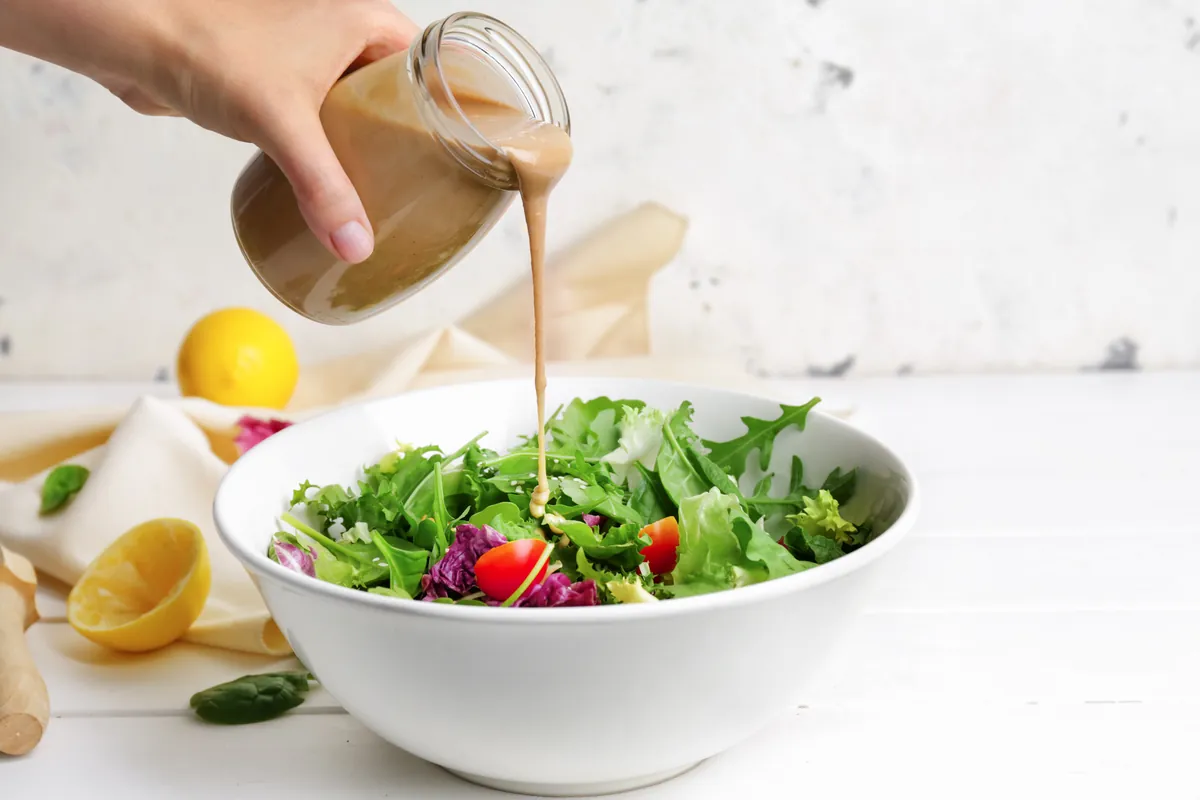 Tate & Lyle combines starch and citrus fiber with its Sensation tool, producing a salad dressing containing 10% oil and no egg.The global F&B ingredients provider says its Sensation research in the UK and Germany linked mayonnaise preference to moderate viscosity and a stronger elastic structure, rather than viscosity alone.
The findings build on the company’s wider emphasis on sensory-led reformulation. Last year, Tate & Lyle outlined how mapping consumer preferences can help formulators preserve mouthfeel when reducing fat, sugar, or additives.
Within the new toolkit, Claria starch supports viscosity and structure. Nutrava citrus fiber, a certified upcycled ingredient derived from citrus peels, helps bind water and maintain emulsion stability during high-shear processing, according to the company.
Testing lower-oil formulations
In one customer project, a regional food manufacturer sought a vegan, clean label salad dressing with substantially less oil and no egg. Early prototypes fell short on structure, creaminess, and eating quality.
Tate & Lyle says combining the starch and citrus fiber with its Sensation tool produced a dressing containing 10% oil and no egg, while delivering the required stability, texture, and flow. The formulation also offered the potential to replace up to three traditional texturizers.
The project is part of the company’s wider validation work across systems containing 50%, 30%, and 10% oil. Ingredient selection and processing vary with oil content, egg reduction targets, and customers’ manufacturing conditions.
Previous demonstrations have also explored how reduced-fat formulations can retain consumer appeal. At Food Matters Live Rotterdam 2025, participants in a Tate & Lyle tasting preferred a reduced-fat mayonnaise containing xanthan gum over a full-fat version in a blind vote.
For the latest toolkit, Tate & Lyle positions affordability beyond the recipe’s ingredient cost: savings must be weighed against processing demands and whether the finished product delivers an eating experience that encourages repeat purchases.