



When cheaper protein costs more: The hidden economics of food fortification
Key takeaways
- A lower-priced protein ingredient can cost more per gram of protein, even before manufacturing costs are factored in.
- Flavor masking, stabilizers, and longer hydration can erode ingredient savings, while rework and rejected batches reduce saleable yield.
- SternMaid and Puris recommend comparing protein options in the finished formulation and testing how they perform under commercial processing conditions.

A protein ingredient priced at US$4 per kg can actually cost more per gram of protein than one priced at US$5.
In an example highlighted by SternMaid, the lower-priced ingredient contains 60% protein, putting its cost at US$6.67 per kg of protein. The US$5 ingredient contains 80% protein and delivers it at US$6.25 per kg. That comparison comes before either ingredient reaches the production line, where flavor masking, longer mixing, and rejected batches can change the economics again.
Speaking to Food Ingredients First, Prateek Jain, senior director, commercial at SternMaid, and Kushal Chandak, VP of R&D at Puris, explain how manufacturers can calculate what it costs to deliver each gram of protein in a product they can sell.
Start with the finished product
Jain explains that manufacturers should start with the finished-product requirements and work backward to the cost of meeting them consistently.
“Before comparing proteins, define the protein per serving, nutritional quality, taste, texture, shelf life, and production requirements,” he says.
The brief also determines which ingredients are viable. Jain points to wheat gluten, which is unsuitable for a gluten-free product regardless of its price or protein content. Once formulators have narrowed their options, they can calculate the required dose after accounting for the protein already supplied by the rest of the recipe.
We previously explored how protein quality, taste, and texture shape ingredient selection.
“The overlooked costs often sit between the formulation spreadsheet and the factory floor,” Jain says.
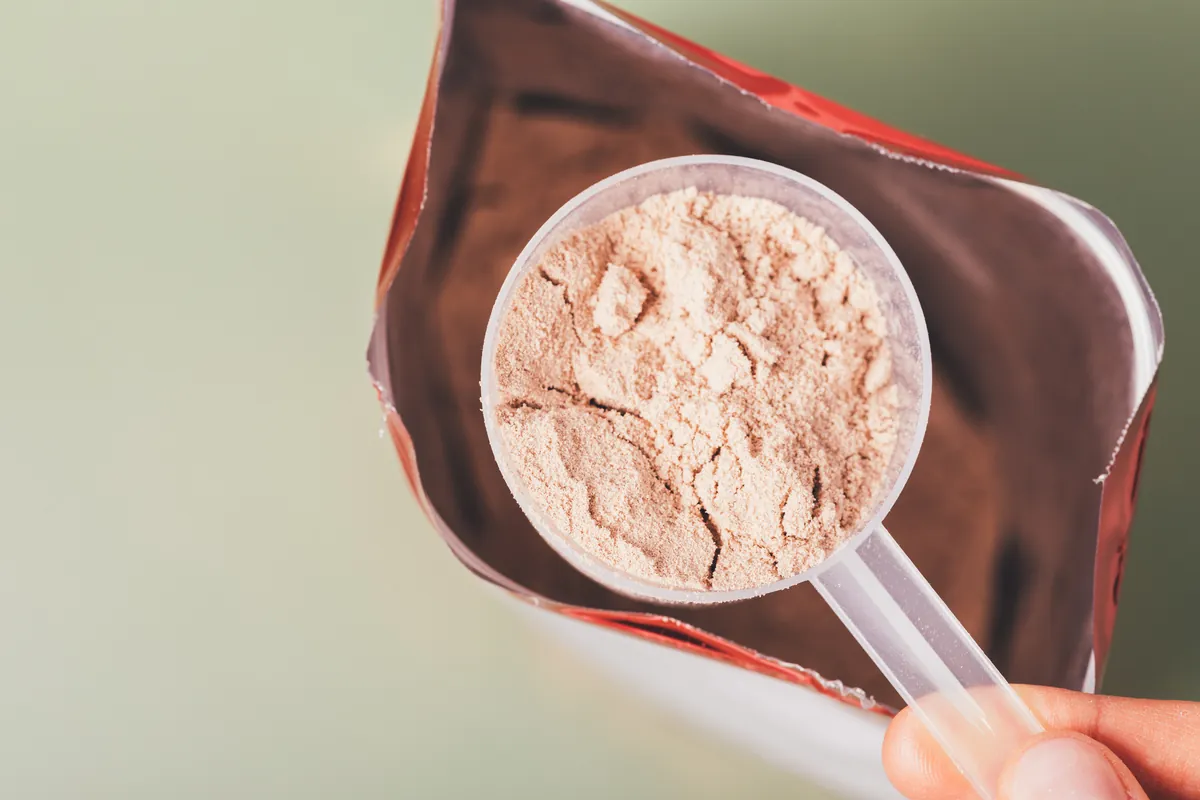 A lower-priced protein powder can cost more per gram of protein if it contains less protein by weight.“Masking, sweeteners, and stabilization add to formulation cost. Longer hydration and mixing, slower throughput, and more frequent cleaning add to production cost. Equipment retention, rejects, and rework reduce saleable yield, while variability may require extra protein to consistently meet the declared amount. Performance must also hold through shelf life.”
“Bring those costs together and divide the total manufacturing cost of the production run by the total grams of protein in saleable finished product that meets specification. Use actual production yields rather than theoretical batch output.”
Flavor masking can change the cost of the recipe
Chandak says that in SternMaid’s experience, flavor can be one of the biggest hidden cost drivers.
“Proteins with strong off-notes often require multiple ingredients and iterations to achieve the desired taste profile.”
The cost rises when extra ingredients are needed to mask bitterness or beany notes, maintain suspension, or deliver the intended mouthfeel. Higher inclusion rates also leave formulators less room to adjust sweetness, texture, and viscosity.
At Fi Europe 2026, Food Ingredients First reported on how whole-recipe reformulation can help manufacturers manage the cost of adding protein and fiber.
Jain says the choice of supporting ingredients can also affect what appears on the label. “A well-chosen system can make the difference between an acceptable prototype and a product that holds up through production and shelf life. But it must fit the product’s positioning — sugar used to balance flavor increases added sugars, while a gum-based stabilizer conflicts with a gum-free brief.”
Chandak traces some of the work on flavor back to pea breeding. “The genetics and breeding of the pea can have a meaningful impact on flavor and functionality, which is one reason Puris has invested heavily in developing pea varieties that deliver a cleaner taste profile from the start.”
He cites Puris 2.0 as an option for ready-to-mix products where manufacturers want to limit masking. The company developed H2-IZO for high-protein beverages with a cleaner flavor profile and ClearP to address clarity and processability in clear, high-protein drinks.
Hydration and yield put savings to the test
Meanwhile, Jain at SternMaid notes that hydration affects how much saleable product you make and how that product eats.
“Good moisture retention can protect yield, but the water balance must deliver the intended texture: too little retained moisture can leave a product dry or crumbly, while too much water for its structure can make it soft or mushy.” When a high-protein drink separates, fixing or discarding the batch can erase savings on ingredients.
“At a fixed protein dose, retaining additional water dilutes protein concentration, so the per-serving target must be checked. Longer hydration and mixing consume energy and tank time. Where moisture must subsequently be removed, additional water can also increase drying costs and limit production throughput.”
Chandak says dispersibility, foaming, and viscosity changes can surface during scale-up, slowing production or making batches less consistent.
“If a protein contributes to sedimentation, separation, inconsistent texture or off-flavors, manufacturers may see increased rework, downgraded product or batches that fail to meet specifications,” says Chandak.
“Even small reductions in yield can quickly outweigh any savings realized from choosing a lower-cost ingredient.”
“The best way to anticipate these challenges is through application-specific testing under real processing conditions,” he adds.
For Chandak at Puris, the final test comes after the product reaches the shelf.
“When consumers reject a product because of taste, texture, or overall drinking experience, that cost rarely shows up in an ingredient comparison. From an R&D perspective, sensory acceptance is part of the equation.”