



Nestlé targets ingredient variability with self-adjusting AI production lines
Key takeaways
- Nestlé is developing self-adjusting production lines that use AI and sensors to respond to natural variations in F&B ingredients.
- Its new Deep Tech Center will assess whether AI and sensors can reduce physical trials and shorten development cycles while maintaining quality and safety.
- Other factory applications include AI-assisted quality control and robotics for inspection, cleaning, and maintenance.

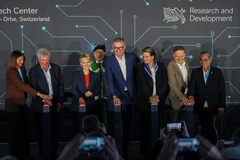 Opening of Nestlé’s Deep Tech Center in Orbe (All image credits: Nestlé).
Nestlé is developing production lines that use AI and sensors to adjust to natural variations in ingredients such as milk, coffee, and cocoa. The work is part of the company’s new Deep Tech Center in Orbe, Switzerland, which opened on November 20 to develop and test technologies for food R&D and manufacturing.
For manufacturers, the aim is to keep finished products consistent as raw materials vary. The center has dedicated facilities for prototyping and pilot-scale testing, where Nestlé can validate applications before deploying them across the company.
“We are focusing on areas where technology can improve efficiency, quality, and safety. One example is self-adjusting production lines that use sensors and AI to adapt to the natural variability of ingredients,” a Nestlé spokesperson tells Food Ingredients First.
“Other applications include AI-supported quality control and robotics for inspection, cleaning, and maintenance. The solutions are tested and validated before deployment, so timelines depend on the application.”
Nestlé has separately announced plans for an AI-enabled Nescafé production and distribution hub in Thailand. The facility, expected to open in late 2028, will use automation and robotics to produce soluble coffee, coffee mixes, and ready-to-drink beverages.
Measuring AI’s impact on recipe development
Nestlé says the Orbe center brings existing technical capabilities together so teams can use them across product categories. Asked which food or beverage R&D project the center would tackle first, the spokesperson outlined work already underway.
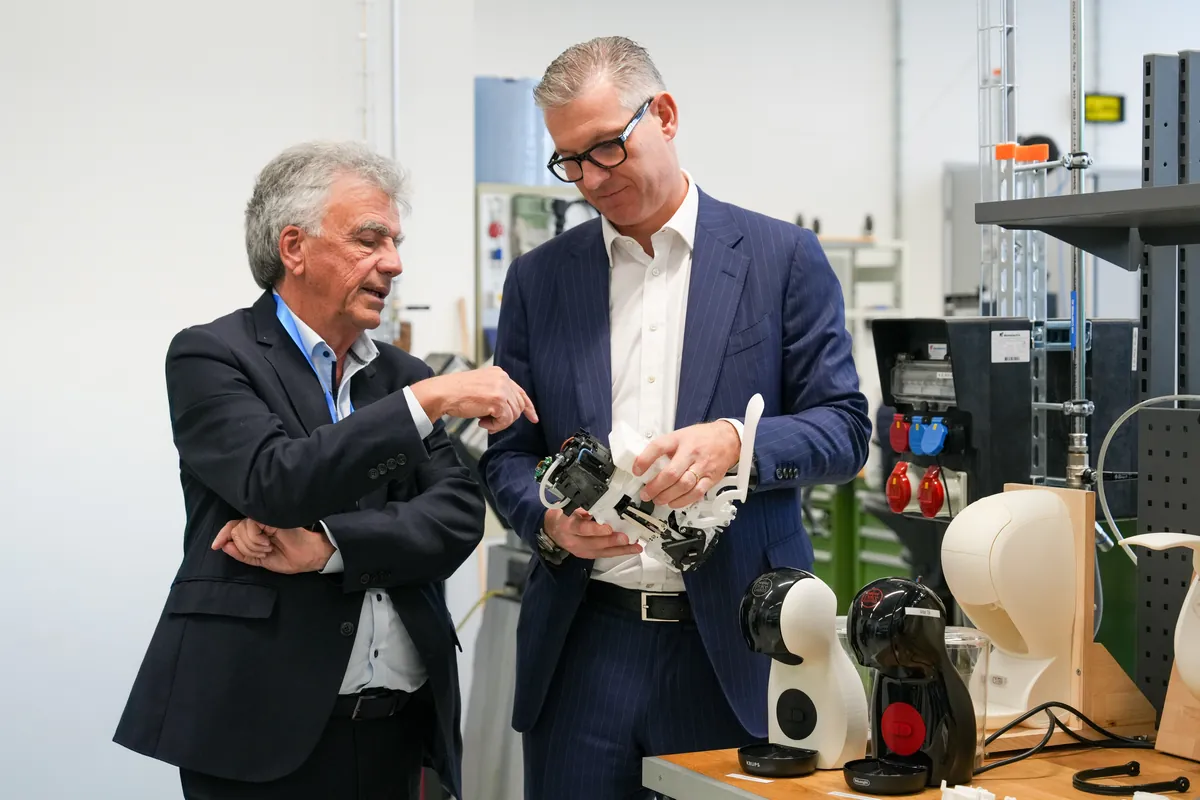 Nestlé uses AI to develop AI-supported quality control and robotics for inspection, cleaning, and maintenance.“The center centralizes deep-tech capabilities that already existed across Nestlé and helps accelerate their application across different product categories. Current R&D projects include using AI to speed up scientific discovery and recipe development, designing autonomous factory lines, as well as using AI and data to create more personalized consumer experiences,” says the spokesperson.
Nestlé previously told Food Ingredients First that its recipe optimization tools help developers weigh taste, nutrition, cost, and sustainability when deciding which formulations to test. Scientists and product developers make the final decisions.
At Orbe, Nestlé will look at whether AI and sensors improve those decisions and reduce the number of trials needed to develop a product.
“We assess this project by project, looking at whether these tools enable faster and more informed decisions, fewer physical trials, and shorter development cycles, while maintaining quality, safety, and consumer relevance,” the spokesperson explains.
Nestlé plans to complement the Swiss center with a hub in Shenzhen, China, to connect its teams with local technology developers.
“Technology is an enabler, not an end in itself. The center combines Nestlé’s expertise in food manufacturing and innovation with external expertise of leading technology partners — developing technologies that fit Nestlé’s specific needs. The goal is always to create value for consumers and the business.”