




Plant-adapted microbial strains could unlock next-gen dairy-free yogurt


Key takeaways
- Research suggests plant-adapted lactic acid bacteria may improve fermentation efficiency in soy and other plant-based yogurts.
- These strains improve digestion, nutrient availability, flavor development, and show antimicrobial effects against harmful bacteria.
- The approach could reduce the need for added sugars and stabilizers, but further testing and EFSA approval are still required before commercial use.

Plant-based yogurt still struggles to match dairy on taste, texture, and nutrition, but a research project in Denmark has come up with a potential solution to solve these long-standing challenges and boost dairy-free alternatives.
The findings could help manufacturers tackle persistent challenges around taste, texture, and digestibility in plant-based yogurt, and improve flavor.
The study points to a potential step-change — replacing conventional dairy-derived starter cultures with strains of lactic acid bacteria, specifically adapted to plant substrates.
Efficient fermentation
Published in the Journal of Food Protection, the research was conducted by the Technical University of Denmark (DTU) in collaboration with Chalmers University of Technology, Sweden, and the University of Cambridge, UK.
Three strains improved digestibility and nutrient availability in plant-based yogurt. Plant-isolated enterococci (a type of lactic acid bacteria) were found to be the most promising and showed a broad antimicrobial effect against pathogenic bacteria, including listeria and E. coli.
Since the identified strains of lactic acid bacteria originate from plant environments, they are capable of fermenting substrates, such as soy, more efficiently. The result is improved acidification without the need for added sugars — an important consideration as manufacturers face increasing pressure to reduce sugar content and simplify ingredient lists.
For product developers, this signals a shift from treating fermentation as a fixed input to viewing it as a tunable ingredient system, tailored to specific raw materials, such as soy, oat, or almond.
Stronger fermentation performance enables better texture and flavor development, potentially reducing reliance on stabilizers, texturizers, and flavor-masking additives.
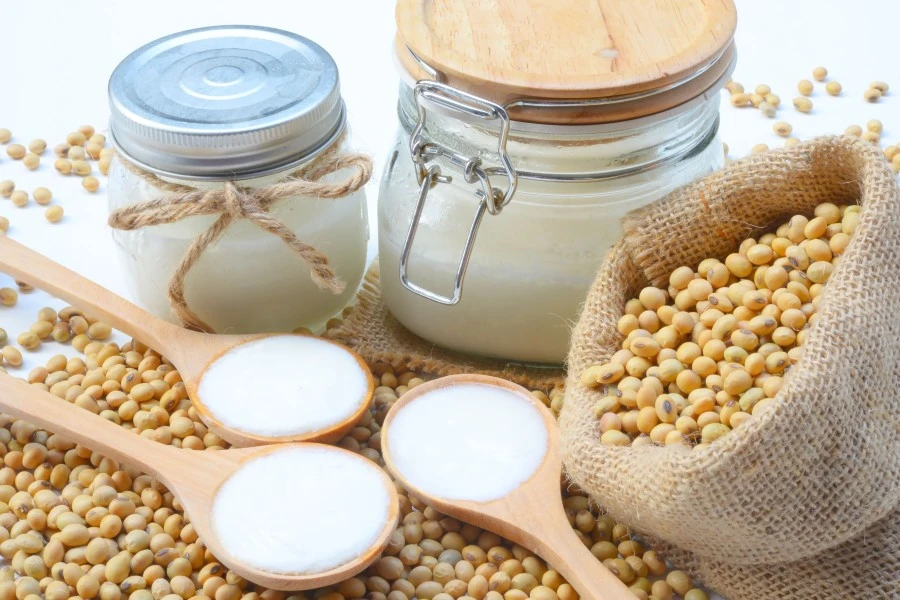 Plant-adapted lactic acid bacteria may improve fermentation in plant-based yogurts, while supporting digestive health trends and product differentiation.
Digestibility and nutritional positioning
Another notable finding was the ability of these strains to break down certain plant compounds during fermentation. This could help reduce components that are harder to digest, while potentially improving nutrient availability.
As digestive comfort and gut health continue to shape consumer preferences, this adds a further layer of differentiation for fermented plant-based products.
“We have shown that the lactic acid bacteria tested are safe. However, further research is needed, for example, to determine how flavor is affected and whether plant raw materials other than soy can be used. Also, before they can be used in Europe, they must be approved by the European Food Safety Authority (EFSA),” says associate professor Christian Solem of the DTU National Food Institute.
Food safety
The plant-adapted strains were shown to perform effectively at higher temperatures than conventional cultures, potentially reducing contamination risks during production. In addition, their ability to inhibit unwanted microorganisms could contribute to improved food safety and extended shelf life.
“The bacteria did more than simply ferment the soy drink. They were also able to suppress undesirable bacteria, break down unwanted sugars, and reduce phytic acid, which makes it difficult for the body to absorb minerals, such as iron, zinc, magnesium, and calcium,” says postdoctoral researcher, Belay Tilahun Tadesse, of the DTU National Food Institute.
What comes next?
While further work is needed to scale and commercialize these strains, the direction of travel is clear. For manufacturers struggling to close the gap between plant-based and dairy yogurt, the answer may lie not in additional ingredients, but in rethinking fermentation itself.
If adopted at scale, plant-adapted cultures could help move the category beyond compromise, delivering products that compete on taste, texture, and functionality, while supporting cleaner labels and more efficient production.
However, associate professor at the DTU National Food Institute, Christian Solem, says that although the research shows that the lactic acid bacteria tested are safe, further studies are needed to determine how flavor is affected, and whether plant raw materials, other than soy, can be used.
The research was also supported by a DTU Alliance PhD/Research Fellowship, the Novo Nordisk Foundation, and a Shuttleworth Foundation Fellowship.