



Coalition urges Japan to rethink octopus farming research support


Key takeaways
- A coalition of 182 organizations urges Japan’s government to reconsider public funding for octopus farming research, citing concerns over welfare, environmental impact, and scientific viability.
- Global momentum against octopus farming is growing, with bans or proposed legislation emerging in the US, Mexico, Chile, and parts of Europe.
- Critics argue that octopus farming is fundamentally incompatible with animal welfare and sustainability goals due to high intelligence, carnivorous diets, and environmental risks linked to production.
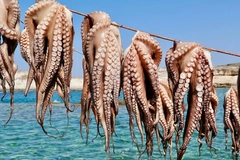
Japan’s ambitions in next-generation aquaculture are facing mounting scrutiny as global advocacy groups push the country to pull back public support for octopus farming research. The move comes as lawmakers in several markets advance bans on farmed octopus, raising questions about the commercial future of the sector before it has fully emerged.
A coalition of 182 animal welfare and environmental groups have urged Japan’s government to reconsider public funding tied to cephalopod aquaculture.
The Aquatic Animal Alliance (AAA), made up of organizations from 75 countries, and scientists and veterinarians, submitted an official correspondence to the Japan Science and Technology Agency recently.
It calls on the Japan Science and Technology Agency to review the allocation of public research funding aimed at enabling industrialized octopus farming, a practice which the AAA claims “has dangerous implications for animal welfare, ecosystem integrity, and public health.”

The coalition argues that existing scientific evidence offers little indication that octopus farming can be developed in a way that safeguards animal welfare or avoids significant environmental harm.
Global bans expand
Momentum against commercial octopus farming has accelerated globally over the past two years, particularly in the US, where lawmakers are increasingly moving to block the industry before it becomes established.
Washington state became the first jurisdiction in the world to ban octopus farming in 2024, while California later expanded restrictions by prohibiting both the farming and sale of farmed octopus products.
Since then, similar bills have been introduced in several other US states, including Hawaii, Oregon, New York, Massachusetts, Connecticut, North Carolina, and New Jersey, alongside a proposed federal measure known as the Octopus Act (Opposing the Cultivation and Trade of Octopus Produced through Unethical Strategies). This measure is a proposed bipartisan federal bill in the US Congress aimed at prohibiting commercial octopus farming domestically and banning the import of farmed octopus products.
In March, Mexico introduced legislation to ban all cephalopod farming nationwide, making it the second Latin American country to propose such a prohibition after Chile’s federal bill in 2025.
Spain’s octopus project scrutinized
In Europe, campaign groups are also raising concerns over animal welfare, environmental sustainability, and public health. In Spain — home to one of the world’s most closely watched octopus farming proposals — activists and some lawmakers have pushed for preventative legislation amid scrutiny of plans by seafood company Nueva Pescanova to develop a commercial-scale operation in the Canary Islands.
The company first announced plans several years ago to build what would be the world’s first commercial-scale octopus farm, but the timeline has repeatedly slipped amid growing political and scientific opposition.
“At a time when governments around the world are moving to prohibit octopus farming due to serious welfare, environmental, and public health concerns, we urge Japan to show similar leadership by redirecting public investment toward food system innovations that do not depend on the intensive confinement of highly intelligent and sentient animals,” says Catalina Lopez Salazar, director of the AAA.
“Public research funding should advance solutions that align with long-term sustainability, scientific responsibility, and ethical progress.”
Coalition pressure grows
The AAA also says that efforts are underway within other institutions in Japan, such as research initiatives connected with AiCephLab LLC and academic partners that examine the technological and feed requirements necessary to develop commercial production of various cephalopod species, making it clear that cephalopod aquaculture has become an active field of investigation across several research institutions in Japan.
The coalition argues that a growing body of research shows octopus farming is neither ethically nor environmentally sustainable. Concerns raised include animal welfare, pressure on wild fish stocks from feed demand, public health risks linked to antibiotic use, and the lack of humane slaughter methods.
Scientists have also warned that octopuses — highly intelligent and naturally solitary animals — are poorly suited to intensive farming conditions, where confinement can trigger stress, aggression, and cannibalism.



Upcoming webinars

Oat-Standing Ingredients - Showcasing Irish Grain Through Innovation
Tirlán Ingredients

2027 Food Safety Risks for Quality & Compliance Leaders
FoodChain ID

Formulating for function: Developing benefit-led beverages with natural colours, botanicals, and flavours
Givaudan Sense Colour