

EU Council backs new no-alcohol wine definitions and updated labeling

Key takeaways
- Harmonized terms such as “alcohol-free,” “0.0%,” and “reduced-alcohol” improve transparency and consumer trust.
- EU-backed grubbing-up support aims to prevent chronic oversupply and reduce boom-and-bust pricing cycles.
- Measures promote climate adaptation in vineyards and encourage wine tourism to strengthen rural economies.

The European Council has adopted a set of measures to boost the EU’s wine sector, backing a modernized policy framework that aims to enhance innovation, better balance supply and demand, simplify labeling practices, and reinforce climate adaptation.
The council says the new measures will allow the EU wine sector — one of the largest agricultural sectors in the bloc, producing around 60% of the world’s wine and representing a significant part of EU exports — to seize emerging market opportunities and better respond to evolving consumer preferences.
The new measures are also designed to ease a myriad of pressures that have been facing Europe’s wine sector for some time.

Under the new shift in policy, wine producers are expected to have better tools to manage production more effectively, avoid chronic oversupply, and plan future plantings strategically. They will also be helped to develop wine tourism initiatives that aim to drive economic growth in rural regions.
“The speed at which the EU policymakers have proposed, negotiated, and adopted the Wine Package, shows they have heard our concerns and are conscious of the difficult times the EU wine sector is going through. It is a good legal package that introduces several meaningful improvements identified in the conclusions of the High Level Meeting on the future of Wine Policy,” Ignacio Sánchez Recarte, secretary general of the European Committee of Wine Companies, tells Food Ingredients First.
Clearer wine labeling
EU rules being updated means better access to information on wine bottles, including ingredients and new digital label options, which makes it easier for consumers to choose products based on taste, nutrition, or personal preferences.
The new rules will lead to clearer and harmonized terms like “alcohol-free,” “0.0 %,” and “reduced-alcohol,”, to better inform consumers about what is in the product. The term “alcohol-free” will apply to products below 0.5% alcohol, with “0.0%” used for those below 0.05%.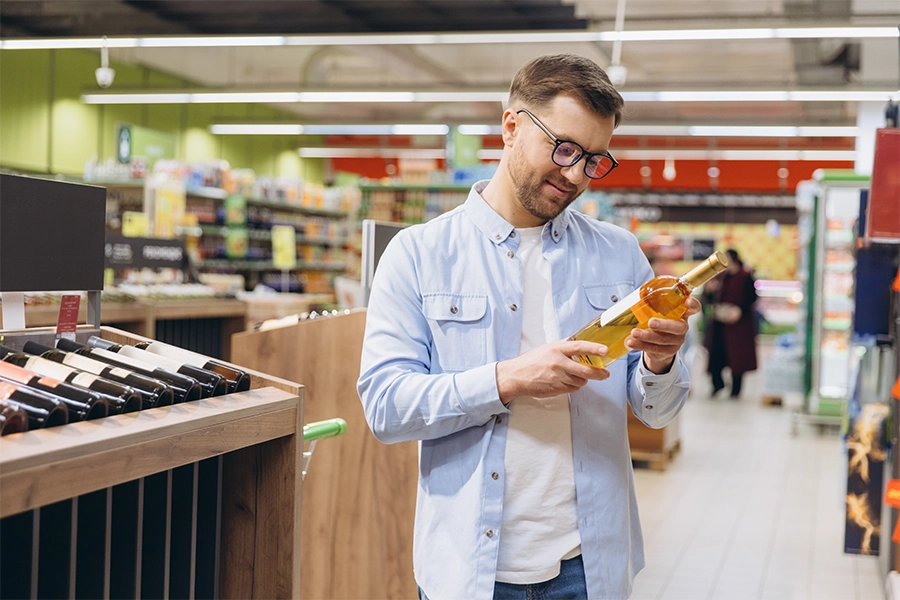 New labeling rules will make it easier for consumers to select wines based on taste and nutrition.
For reduced-alcohol wines (above 0.5% but at least 30% lower than the standard strength), there will be the clearer designation “reduced-alcohol,” replacing the previously suggested “alcohol-light.”
“By adopting the regulation on the wine sector, less than a year after it was proposed by the commission, the council and the member states once again demonstrate that they listen carefully to farmers’ and the agricultural sector’s concerns and are ready to take effective action to address them,” says Maria Panayiotou, minister of Agriculture, Rural Development and Environment of the Republic of Cyprus.
“First, by providing clear and targeted political guidance to the commission on the measures required, and second, by adopting those measures swiftly in cooperation with the European Parliament. This ensures that the sector can already benefit from them this year.”
Avoiding boom & bust cycles
Another key part of the measures concerns EU financial support for grubbing-up. This is the permanent removal of vineyards to better control oversupply, a long-standing issue in the EU wine sector.
Too much grape production can lead to surplus supplies, push down prices, squeeze producers’ incomes, and destabilize the market.
The idea is to reduce the threat of oversupply and market distortion so producers are not forced to sell large volumes at rock-bottom prices.
“By reinforcing climate-related investments, promotion programs, or wine tourism measures, the EU improves the toolbox of support available for EU wine companies to better connect with consumer demands. Despite these important advances, concerns remain regarding the use of EU funds for grubbing-up measures,” Recarte tells us.
“However, we need to be conscious that EU law cannot resolve all the challenges we face. There is a limit to what legislation can do.”
Encouraging wine NPD
In terms of widening the scope for diverse product development, the agreement allows rosé wine to be used as a base for additional regional aromatized wine products.
“This will encourage innovation in emerging product styles and support producers responding to new consumer tastes,” says the EC.



Upcoming webinars

2027 Food Safety Risks for Quality & Compliance Leaders
FoodChain ID
Formulating for function: Developing benefit-led beverages with natural colours, botanicals, and flavours
Givaudan Sense Colour
Let's reveal the grain potential: Innovate
Meurens Natural