
US Supreme Court strikes down Trump tariffs amid fresh uncertainty for F&B trade

Key takeaways
- The US Supreme Court has ruled that Trump’s tariffs are illegal, as Trump signs a replacement 15% tariff using other legal mechanisms.
- European Parliament freezes ratification of EU-US trade deal, citing “pure tariff chaos.”
- The new tariffs expire in 150 days, creating a mid-July deadline for transatlantic trade.
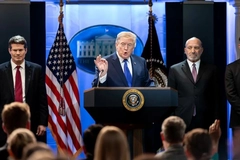
The US Supreme Court has ruled that President Trump’s sweeping global tariffs are illegal, striking down import duties that had collected more than US$130 billion and reshaped transatlantic trade over the past year.
The 6–3 decision invalidates tariffs Trump imposed under the International Emergency Economic Powers Act (IEEPA), a 1977 emergency powers law that the court ruled does not authorize the president to impose import taxes.
But within hours, the president signed a replacement 15% global tariff under Section 122 of the Trade Act of 1974 — a different legal avenue with tighter constraints. These tariffs are capped at 15% and expire after 150 days, placing a mid-July inflection point on transatlantic trade.
In response, the main political groups in the European Parliament froze ratification of the EU-US trade deal yesterday, according to Bloomberg.

“Pure tariff chaos on the part of the US administration,” Bernd Lange, chair of the parliament’s International Trade Committee, writes on social media. “No one can make sense of it anymore — only open questions and growing uncertainty for the EU and other US trading partners.”
Lange has proposed suspending parliamentary work “until we have a comprehensive legal assessment and clear commitments from the US.”
The ruling raises unresolved questions: are IEEPA tariffs already collected now eligible for refunds? Does the new Section 122 tariff supersede or stack on the August 2025 EU-US deal? And what happens when Section 122 expires?
The Trump administration says it will find new legal grounds for tariffs, but the available options require lengthy agency investigations — meaning the current 15% rate could be the ceiling until well after the July expiry.
According to Yale Budget Lab, a non-partisan fiscal policy research center, the post-ruling effective US tariff rate drops from 16.9% to 9.1% — still the highest since 1946, excluding 2025. Food products, which would have faced a heavier burden under IEEPA, are now relatively less exposed than metals and electronics.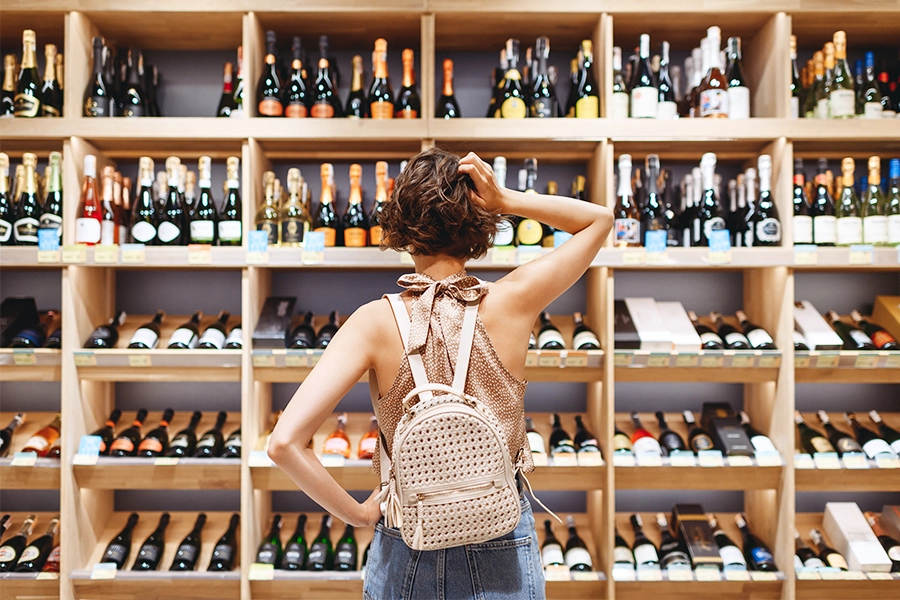 The ruling creates renewed uncertainty for EU wine and spirits exporters.
“A deal is a deal”
The August 2025 EU-US joint statement set a 15% tariff on 70% of European goods — a compromise wine and spirits producers accepted despite lobbying for zero-for-zero exemptions.
The European Commission has demanded that the US honor that agreement. “A deal is a deal,” the commission stated. “EU products must continue to benefit from the most competitive treatment, with no increases in tariffs beyond the clear and all-inclusive ceiling previously agreed.”
For European exporters, the question is whether the August deal holds — or whether fresh negotiations will be required under whatever regime emerges.
A year of whiplash for wine
For European wine and spirits exporters, the ruling marks the latest turn in 12 months of instability.
In March 2025, Trump threatened a 200% tariff on EU wines in response to planned EU counter-tariffs on American whisky. The Comité Européen des Entreprises Vins (CEEV) warned it would “effectively shut down the US market.”
By August, a 15% tariff was locked in, with wine excluded from zero-for-zero exemptions. CEEV estimated the combined impact of currency pressures could reach 30% of turnover.
In January 2026, wine was weaponized twice in a single week: first over Greenland, when Trump threatened 25% tariffs on eight EU countries unless the territory was transferred to US control; then, when Trump threatened 200% tariffs on French wine over President Macron’s refusal to join the US-led “Board of Peace” initiative on Gaza.
“We are suffering from international trade tensions in our first export market, the US,” CEEV secretary general Ignacio Sánchez Recarte told Food Ingredients First.
The US remains the single largest destination for EU alcoholic beverages — €8.9 billion (US$9.8 billion) in 2024, of which €4.9 billion (US$5.4 billion) was wine, according to Eurostat.
US industry calls for clarity
The US Food Industry Association has urged the Trump administration to “preserve exemptions for agricultural goods not produced in the US and those not grown domestically in sufficient quantities to meet consumer demand.”
The Distilled Spirits Council called for a “permanent return to zero-for-zero tariffs” with top trade partners, which would provide “much-needed certainty for American spirits exporters while helping ease financial pressures on bars, restaurants, and retailers,” says president and CEO Chris Swonger.



Upcoming webinars

2027 Food Safety Risks for Quality & Compliance Leaders
FoodChain ID

Formulating for function: Developing benefit-led beverages with natural colours, botanicals, and flavours
Givaudan Sense Colour

Let's reveal the grain potential: Innovate
Meurens Natural