


Elian secures €40M to scale EU plant protein production and supply resilience


Key takeaways
- Elian expands its Barcelona plant into a larger European hub for plant-based protein ingredients, supported by a €40 million investment.
- The project aims to strengthen local protein supply chains by reducing reliance on imported ingredients.
- The expansion reflects growing industry demand for traceable and sustainable protein sources as manufacturers diversify protein solutions.
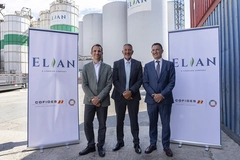 Miguel Tiana, CEO of COFIDES; Miquel Sàmper, Minister of Enterprise and Labor of the Government of Catalonia; Andres Martin, CEO and founder of Elian.
Agribusiness company Elian has secured €40 million (~US$46 million) in investment to expand its plant-based protein production project in Spain. The move supports the growth of its Port of Barcelona facility and aims to strengthen Europe’s supply of locally produced protein derivatives for human food and animal feed.
The expansion forms part of a more than €300 million (~US$344.5 million) investment in Elian’s plant-based protein production facility at the Port of Barcelona. Once completed in early 2028, the site will add more than 100,000 tons of annual production capacity for protein derivatives, alongside its existing operations.
The Spanish Development Financing Company (COFIDES) has facilitated the funds and is now a minority shareholder through the Co-investment Fund (FOCO). Elian plans to use the cash injection to consolidate its plant protein ingredient hub project and support its future growth.
Andrés Martín, CEO and founder of Elian, says the COFIDES alliance allows the company to accelerate its roadmap to “lead Europe in plant-based protein sovereignty.” It ensures that the food industry has access to a “local, traceable, highly sustainable supply that is protected from volatility in global supply markets.”
Elian Barcelona, a subsidiary of Viserion International, acquired the soybean crushing facility at the Port of Barcelona from Cargill in 2023. Through its Barcelona plant, Elian plans to strengthen the European protein supply resilience by reducing reliance on imported ingredients, while also making the European market “more resilient to potential disruptions in global supply chains.”
Enhancing European protein processing
Elian was founded in 2021 and develops plant-based protein infrastructure in Europe. The soybean processor combines local processing capabilities with access to global raw material networks and expertise in grains and feed ingredients. Its product portfolio includes soy flour, soybean oil, soy protein concentrate, and soy lecithin, among others.
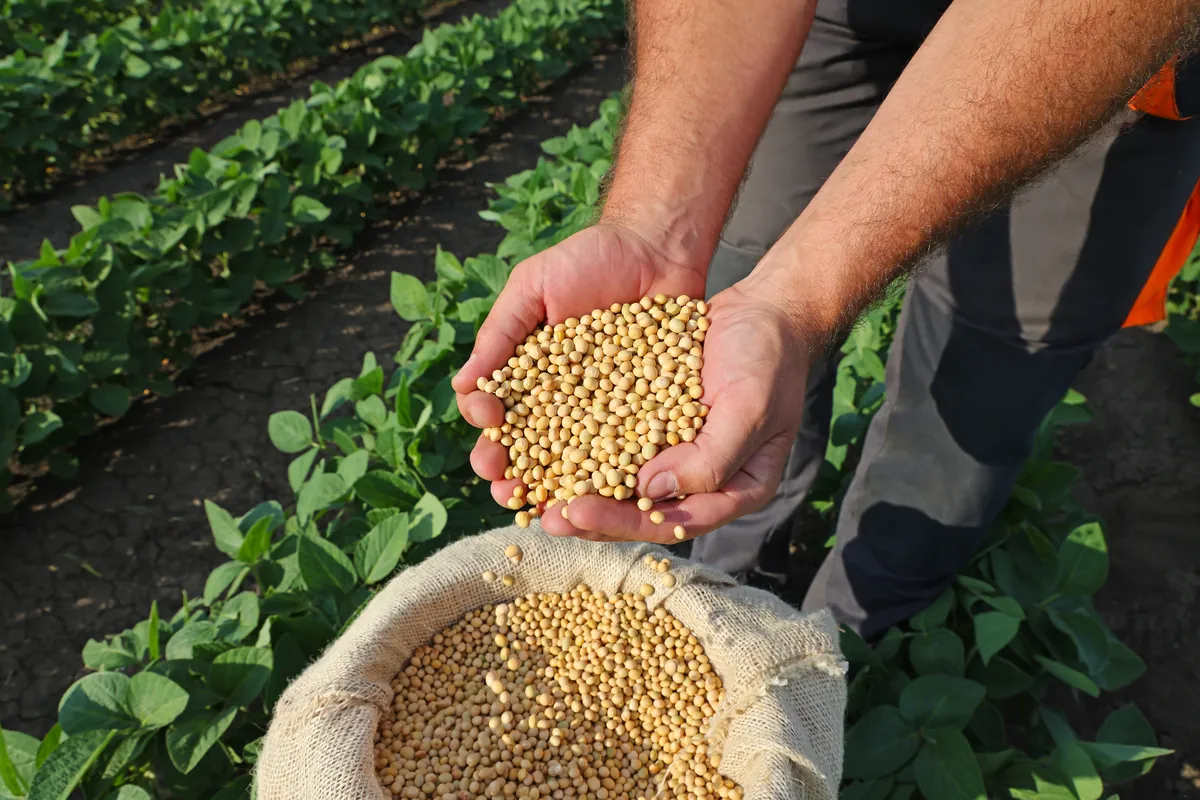 Soybean cultivation and processing are key parts of Elian’s European protein strategy.The company is driving the Barcelona plant’s growth by promoting non-GMO soybean cultivation in Catalonia and Aragon, targeting 3,000 hectares by 2026.
Miguel Tiana, director general of COFIDES, says: “With FOCO, we are contributing to the growth of a company that combines sustainability, technology, and long-term vision, while strengthening the competitiveness of the Spanish economy.”
Building resilient plant protein supply chains
Elian’s protein production expansion comes amid the EU’s increased focus on the need to strengthen protein supply chains through its Action Plan for the resilience, strategic autonomy, and sustainability of protein.
The region currently imports nearly 94% of the soy used for animal feed — pointing toward Europe’s reliance on external supplies as what Elian describes as a “high vulnerability.” To strengthen resilience, the EU aims to increase domestic oilseed and protein crop production for feed from 25.8% in 2025 to 35% by 2035.
However, COFIDES maintains that meeting this challenge will need expansion of cultivation, building processing capacity, and strengthening traceable local supply chains.
In July, the EU’s new Protein Plan was criticized by plant-based organizations for prioritizing animal feed over plant-based foods. They argued that the move reinforces livestock production instead of reducing Europe’s dependence on feed-intensive farming.
Meanwhile, protein diversification continues to grow globally, with consumers increasingly seeking higher-protein foods and manufacturers exploring a wider range of protein sources.
Innova Market Insights identified “Powerhouse Protein” as the top global F&B trend for 2026, with nearly 60% of consumers worldwide actively trying to add more protein to their diets.