

Cocoa-free Easter eggs? How ChoViva meets rising demand for indulgent chocolate alternatives


Key takeaways
- Planet A Foods’ ChoViva offers a sustainable, cocoa-free alternative, addressing rising cocoa supply volatility and consumer health demands.
- ChoViva is now featured in over 125 products across 11 countries, with key partnerships including Nestlé and Barry Callebaut, driving its international growth.
- Sourced from European sunflower seeds, ChoViva provides a CO2-reduced alternative to cocoa, supporting shorter supply chains and reducing deforestation.
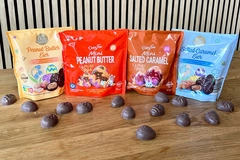
Chocolate has long been a symbol of luxury and enjoyment at Easter, but cocoa supply volatility and consumer health demands are creating new opportunities for cocoa-free alternatives this year. Innovators like Planet A Foods, with its roasted sunflower seed and oat ingredient, are combining cost-effective and health-conscious indulgence, and expanding globally.
Germany-based Planet A Foods aims to prove that “chocolatey indulgence does not have to be tied to the cocoa bean” with its ChoViva ingredient, as it spotlights its international Easter assortment. In the UK, Germany, and Australia, brands have launched Easter eggs with ChoViva. In France, Abtey Confiserie has also developed Easter eggs and hollow figures, such as Easter bunnies, with the ingredient.

ChoViva is now a permanent ingredient in over 125 products across 11 countries worldwide. Nestlé Germany recently revealed it will expand its Choco Crossies Snack Vibes line using ChoViva.
Despite ChoViva’s proliferation across confectionery and snacks, Planet A Foods tells Food Ingredients First that it doesn’t aim to replace chocolate, but rather to coexist as a chocolate alternative that fills the growing gap in the global cocoa supply chain.
“Our expansion focuses on providing the industry with a resilient, cocoa-free option that alleviates pressure on supply chains, while offering consumers a high-quality, affordable addition to their favorite treats,” says Jessica Karch, senior marketing manager.
Decoding chocolate flavor DNA
Consumers globally are increasingly demanding healthy indulgence and affordability, but many are not willing to sacrifice taste and texture, especially in chocolate products, and especially during holidays like Easter. For cocoa-free alternatives, the challenge is to maintain the chocolaty experience while delivering added-value benefits.
“We have decoded the DNA of chocolate flavor,” explains Dr. Sara Marquart, CTO and co-founder at Planet A Foods. “Around 80% of the typical flavor profile is created through fermentation and roasting processes, and we apply this knowledge to high-quality, European sunflower seeds.” Easter 2026 brings a fresh twist on tradition with cocoa-free Easter eggs.
“The result is a chocolatey sensory experience. ChoViva offers the full flavor profile of chocolate — melt-in-the-mouth and full-bodied — yet remains independent of the finite resource of cocoa.”
The fermentation and roasting process closely mirrors traditional cocoa processing, creating a natural, clean label, chocolatey taste without any added aromas.
ChoViva: Scalability and sustainability
Planet A Foods has expanded its Pilsen facility to around 5,000–10,000 tons annually, while targeting global markets like the US and Asia through strategic partnerships.
Last year, the company secured a long-term commercial partnership with chocolate industry leader Barry Callebaut to help scale ChoViva internationally.
“After successfully scaling ChoViva from the lab to our production facility, we are now expanding our industrial lines to guarantee high-volume consistency and build production redundancy to meet rising global demand,” Marquart tells us.
Planet A Foods suggests that climate change is increasingly turning cocoa into a luxury good and that ChoViva provides a solution to this problem.
“Sustainability is rooted in sourcing sunflower seeds from Europe (primarily Bulgaria), which achieves up to 80% CO₂ savings through shorter supply chains and avoiding tropical deforestation,” says Karch.
“As we expand internationally, our platform is designed for regional resilience, allowing us to utilize high-availability local crops, such as soy in Asia, to maintain a low environmental footprint wherever we produce.”
Since ChoViva is based on European sunflower seeds, supply chains are shorter, and the rainforest deforestation often associated with cocoa cultivation is eliminated. This benefit is likely to become more attractive to chocolate manufacturers in light of the new EU Deforestation Regulation.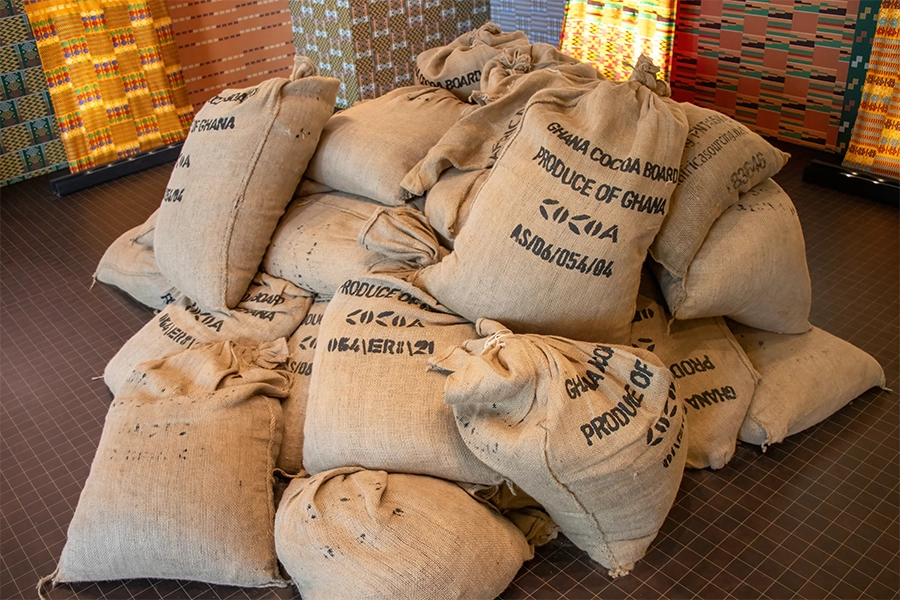 Cocoa supply pressures create demand for sustainable and innovative chocolate alternatives.
Easter chocolate innovation 2026
Easter chocolate trends are evolving. As Planet A Foods says, “the trend is moving away from ‘that’s how we’ve always done it’ toward solutions that put taste at the center while conserving resources.”
“In this way, Easter 2026 becomes the stage for an exciting journey: we preserve the rituals we love and enrich them with ideas that show what the taste of tomorrow looks like.”
Food Ingredients First explored how Easter chocolate trends are evolving in new and dynamic ways this year. The familiar hollow egg remains, but it now sits alongside a growing mix of filled, layered, and hybrid formats, as well as multipacks and cross-category creations.
Investment in conventional chocolate remains strong, as evidenced by Barry Callebaut’s €250 million (US$297 million) upgrade to the world’s largest chocolate factory and its AI innovation center opening in Singapore, but cocoa-free alternatives are likely to remain a permanent feature in confectionery amid long-term cocoa supply pressures.



Upcoming webinars

Oat-Standing Ingredients - Showcasing Irish Grain Through Innovation
Tirlán Ingredients

2027 Food Safety Risks for Quality & Compliance Leaders
FoodChain ID

Formulating for function: Developing benefit-led beverages with natural colours, botanicals, and flavours
Givaudan Sense Colour