
Bulking, modulation and mouthfeel: Why bakery sugar reduction needs more than a sweetener swap


Key takeaways
- Sugar reduction in bakery requires integrated systems combining bulking agents, enzymes, antimicrobials, flavor modulators, and high-intensity sweeteners.
- Yeast-raised bakery allows partial sugar reduction only, while chemically leavened sweet goods need full structural and sensory rebuilds.
- Allulose, agave, fiber, and tapioca starch rebuild bulk lost to sugar, supported by flavor masking and mouthfeel technologies.
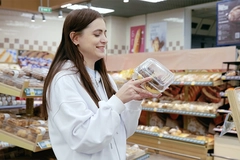
Industry experts say sugar in baked goods does more than sweeten. It builds crumb structure, holds moisture, browns the surface, and even helps extend shelf life. In yeast-raised products, it fuels fermentation itself. Remove sugar from the equation, and the consequences cascade across structure, texture, appearance, and stability. Bakery has been one of the slowest categories to move in sugar reduction for that reason.
At the same time, ingredient suppliers say this cannot be solved by sweetener substitution alone — modern bakery reformulation runs on integrated systems. Bulking agents to rebuild what sugar does, enzyme systems to manage moisture and texture, and naturally-fermented antimicrobials to boost shelf life.
The latest precision flavor technologies do more than put sweetness back in bakery products.

Food Ingredients First sits down with experts from Kerry, ADM, and Samyang to understand how bakery reformulation is being solved, where the technical limits sit, and which subcategories within bakery are proving most tractable.
Enzymes, antimicrobials and sweeteners
According to Guillaume Blancher, global portfolio director for Tastesense at Kerry, the most important distinction in bakery sugar reduction is not on the package — it is the leavening method. Blancher says this difference reshapes which ingredients are even available to formulators.
“In yeast-raised bakeries, the structure of bakery items is primarily based on gluten development, so it is much easier to replace or reduce the sugar’s functionality,” he explains. Kerry’s Guillaume Blancher says yeast-raised bakery allows only partial sugar reduction due to fermentation needs.
“The moisture retention and texture can be addressed with Biobake enzymes, and the preservation aspect with naturally fermented antimicrobials, such as Upgrade. We will still need some sugar for fermentation and yeast activity.”
That residual sugar requirement matters. In breads, sweet doughs, brioche, and certain pastries, yeast metabolism depends on fermentable sugars. Complete sugar removal is not technically possible. Blancher says that, in these cases, only partial reduction works.
Chemically leavened sweet goods are a different problem. Since there is no yeast, sugar’s role becomes purely structural and sensory. Blancher says this is where the real difficulty lies.
“In chemically leavened sweet goods, all of these roles are difficult to replace, and usually it will take a combination of ingredients to cover all the aspects of functionality,” he says. “The taste is probably the easiest to overcome by using Tastesense for both sweetness and masking, or by improving how the characterizing flavor, such as cocoa and vanilla, will come through.”
Allulose, agave and fiber
Another problem in a chemically leavened bakery is bulk. Sugar physically occupies space in the formulation and contributes to crumb structure and tenderness. Take it out, and something has to fill the void. Blancher says the choice of bulking agent shapes everything downstream.
“The amount of sugar reduction is dependent on what you are allowed to use as a bulk substitute in sweet baked goods where sugar is required for the structure of the item,” he notes. “In sweet goods, you can achieve a no-sugar-added product if the bulking agents — such as fibers, allulose in the countries where it is allowed, or sugar alcohols — can be optimized for texture.”
“The flavor then needs to help with adjusting the sweetness level as well as masking any off-notes from the ingredients that were used to add the bulk back to the finished product.”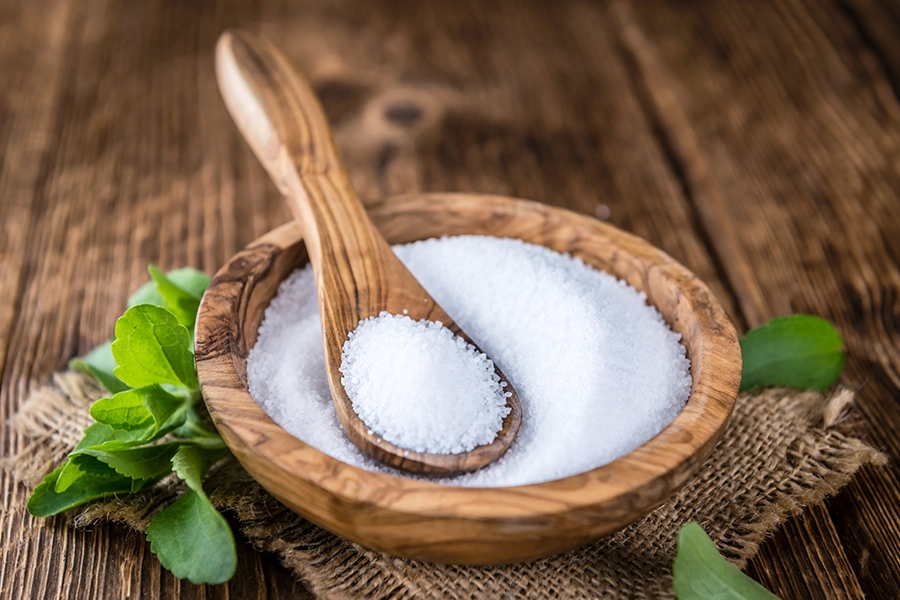 ADM’s Sarah Diedrich describes a systems approach combining stevia, allulose, agave, and TasteSpark flavor modulation.
Sarah Diedrich, ADM’s senior product marketing director for global sweetening and texturizing solutions, says rebuilding bulk and texture is the most complex challenge ADM faces across reformulation projects, including baked goods, dairy, and frozen desserts.
“We address this through our systems approach, combining stevia, allulose, and agave together with our broader ingredients pantry,” she says. “Texperien tapioca starch is a complementary ingredient used in combination with sugar reduction to maintain functionality in applications like baked goods and snacks.”
“Fibersol can also build back integrity through structural and binding qualities that may be lost when sugar is reduced.”
Diedrich also points to USDA-certified Organic SweetRight agave syrup as a useful tool. Agave is a caloric source like sugar but carries a sweetening potency 25% to 30% higher than sucrose. Less of it goes further. This lets formulators reduce total added sugar while keeping sweetness, browning, binding, solubility, moisture retention, and humectancy — the bakery functions that experts say suffer most when sugar is cut.
Samyang takes a related approach centered on allulose. The company packages its solutions into ready-to-use blends designed to compress reformulation timelines. Douglas Lim, VP and head of North America business at Samyang, says the pre-blended approach targets manufacturers without deep in-house formulation capacity.
“Nexweet Blend CS 42 is a ready-to-use blended solution designed for manufacturers with limited in-house R&D capabilities,” Lim says. The company pairs the blend with technical support and AI-accelerated recipe design, sensory optimization, and application data.
For bakery specifically, Samyang combines allulose with flavor modulators to address off-notes and sweetness perception. Lim says Fiberest aids in binding and texture in reduced-sugar baked goods.
Flavor modulation and off-note masking
Once bulk and structure are rebuilt, the next challenge is sensory. Reduced-sugar baked goods often come with bitterness, lingering sweetness, and a duller flavor profile, according to Blancher. He states that the underlying chemistry of these off-notes only intensifies as reduction targets get more aggressive.
In bakery, the holistic approach means addressing cocoa intensity in chocolate cakes, vanilla character in sponges, and butter notes in cookies. These are the flavor cues that quietly disappear when sugar comes out. Consumers register the loss as a drop in quality even if they cannot say why. ADM positions its TasteSpark portfolio as a solution. Samyang’s Douglas Lim says Nexweet Blend CS 42 helps manufacturers with limited R&D capacity.
“Our sweetening experts work alongside our flavorists for superb synchronicity of high-potency sweeteners and TasteSpark flavor modulation,” Diedrich says. “TasteSpark Masking neutralizes off-notes and astringency associated with functional ingredients or certain sweeteners, whereas TasteSpark Mouthfeel rebuilds body and richness in low-sugar applications.”
She adds that the distinction between masking and mouthfeel is increasingly how the industry differentiates flavor modulation tiers. Off-note neutralization and body restoration are separate technical jobs. Treating them as such, rather than expecting a single masker to solve both, is becoming standard practice in serious bakery reformulation programs.
An integrated system approach
The last piece of the bakery puzzle is the one that experts say most often gets overlooked — shelf life.
Sugar contributes to water activity reduction. That slows microbial growth and extends stability. Remove it without compensating, and shelf lives shrink, something that consumers notice immediately.
Blancher says the preservation question is increasingly being addressed through naturally fermented antimicrobials like Kerry’s Upgrade range. The fit is particularly clean in yeast-raised products where conventional shelf life chemistry runs against clean label expectations.
The companies agree that successful bakery reformulation requires a holistic approach with an integrated system rather than a sequence of patches. The era of swapping sugar for an alternative sweetener and shipping the product is over for most bakery applications. What replaces it is harder, slower, and more technically demanding, but it is also where the industry says real reduction targets are being met.




Upcoming webinars

Oat-Standing Ingredients - Showcasing Irish Grain Through Innovation
Tirlán Ingredients

2027 Food Safety Risks for Quality & Compliance Leaders
FoodChain ID

Formulating for function: Developing benefit-led beverages with natural colours, botanicals, and flavours
Givaudan Sense Colour