



Report flags gap between animal welfare pledges and action


Key takeaways
- Global food companies show high commitment to animal welfare policies, but nearly 90% still receive the lowest ratings for actual implementation.
- Implementation is hindered by the high cost of higher welfare systems and the long timeframe required to transform existing supply chains.
- Performance varies significantly by region, with UK and Latin American companies leading while North American and Asia-Pacific firms lag.
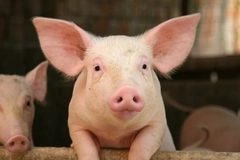
Public commitments to higher farm animal welfare standards are high across the world’s largest food companies, but the pace of implementation remains slow across global supply chains, according to a new assessment of 149 global food companies.
Moreover, only 40% of companies (60 companies) have made commitments to end prophylactic and routine metaphylactic antibiotic use, despite the global threat of surging antibiotic resistance.
These findings were recently unveiled in the latest Business Benchmark on Farm Animal Welfare (BBFAW), an annual assessment of the food industry’s farm animal welfare policies, practices, and performance.
Food Ingredients First speaks with Nicky Amos, executive director of the BBFAW, about the industry’s key benchmarks of progress and critical limitations observed within the report’s broad scope.
“We have seen and continue to see real progress in policies and processes and in performance,” she tells us. “But we need to acknowledge that improvements in performance have not been as rapid as we would like to see.”
“There are various factors, but the most significant appear to be the time required to change or transform existing systems, and the economics of higher welfare systems, which is shaped by the volatility in input costs and the difficulties in achieving and sustaining a price premium for higher welfare products.”
“These, in turn, reflect differences in the rate of adoption and implementation of higher animal welfare standards in different countries,” she notes.
Barriers to welfare
Particular areas of animal welfare have faced specific barriers, Amos adds. In the case of the Better Chicken Commitment — where only four companies report implementation across a substantial portion of their supply chains — a key challenge is the availability of slower-growing breeds.
One of the primary pillars of the Better Chicken Commitment is transitioning away from “fast-growing” chickens, which are genetically selected to reach market weight in as little as six weeks. Skeletal failure, organ stress, and reduced mobility are some of the critical health failures among these breeds.
“It’s clear that there are significant challenges, but the leaders in the benchmark show that deeper and faster implementation for many animal welfare commitments is possible,” stresses Amos.
Commitments rise
This is only the third year of results since BBFAW introduced more stringent criteria, introducing its Impact Rating (from “A” to “F”) system that assesses whether the company is delivering meaningful welfare improvements on the ground, such as using cage-free or lower stocking density systems.
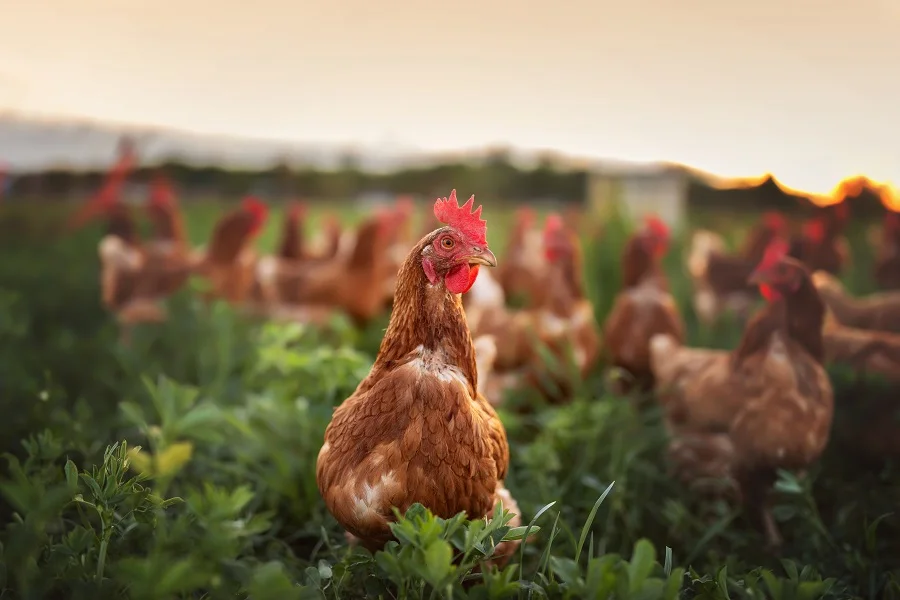 Chicken producers aligning with the Better Chicken Committment have faced the challenge of limited availability of slower-growing breeds.This year’s benchmark results demonstrate significant levels of commitment to farm animal welfare and some encouraging progress, including the fact that 69% of companies with eggs in their supply chains (96 of 139 companies) have targets to eliminate cages for laying hens.
The food companies with the highest overall ranking this year (achieving “Tier 2”) are Marks & Spencer, Premier Foods, Waitrose, and Greggs. And the three companies with the highest Impact Rating (“B”) this year were Fonterra, Marks & Spencer, and Premier Foods.
In total, eight companies moved up one tier this year: Amazon/Whole Foods Market, Asda (Bellis Topco), Groupe Casino, Hilton Food Group, Maple Leaf Foods, MBRF, New Hope Liuhe, and WH Group.
Notably, 71% of companies with eggs in their supply chains (98 of 139) are reporting progress toward cage-free eggs, up from 67% in 2024. And up from 9% last year, 15% of companies with eggs in their supply chains (21 of 139) now source at least some eggs from supply chains where male chicks are not culled at one day old.
Slow pace of implementation
For a second consecutive year, almost 90% of companies (135 companies) received the lowest Impact Ratings of “E” or “F” — indicating limited or no evidence of putting higher welfare commitments in place for farm animals on the ground in their operations and/or supply chains.
The benchmark also shows where companies are slow to implement animal welfare commitments. For instance, of the 96 companies that have set a cage-free target for laying hens, only 33 of these targets are universal in scope, covering all products and geographies; and only 17 of these 96 companies have succeeded in eliminating cages from 100% of their supply chains.
For pork producers, 13% of companies (17 of 136) have targets to phase out farrowing crates (metal enclosures that prevent sows from turning around), up from 9% last year.
Regional specifics
According to the report’s regional breakdown, French and Brazilian companies demonstrated the strongest improvement in 2025. In particular, French companies advanced broiler welfare commitments, while UK companies were the best overall country performers.
For the first time, Latin American companies outperformed Asian, European, and North American companies on farm animal welfare performance. The region includes some of the world’s largest meat producers like MBRF, Minerva, and JBS.
Asia-Pacific was flagged as the poorest performing region, with nearly all companies in the bottom two tiers. Critically, 43% (nine companies) of Asia-Pacific companies have not published an overarching animal welfare policy (15% globally).
North American companies were named the second poorest performers overall and have the lowest scores of all the regions on Farm Animal Welfare Performance Impact.
“Regulation and technology, together, are key drivers of change,” says Amos. “To take one example, legislative changes in Germany, France, Italy, Austria, and Luxembourg, and the EU’s review of its animal welfare legislation, combined with technological innovations such as in-ovo sexing, which can detect the sex of a chick before hatching, are enabling companies to move toward eliminating the inhumane practice of culling day-old male chicks.”