


AI tools hold potential to enhance soil science for climate-resilient agriculture


Key takeaways
- Multi-agent AI systems can accelerate soil science by mimicking human scientific reasoning, planning, and interdisciplinary collaboration, improving research efficiency.
- AI applications support climate-resilient agriculture through digital soil twins, nutrient optimization, microbiome monitoring, and soil carbon management.
- Effective AI integration requires data quality, ethical oversight, human expertise, and interdisciplinary collaboration to maximize sustainable land use and soil stewardship.
A new study has outlined how AI tools can accelerate soil science by speeding up work in its early stages. Soil systems are challenging to predict and are affected by climate, weather patterns, and agricultural practices. Yet, it impacts how we respond to food security and climate change — “the world’s most urgent challenges,” stresses the authors.
By using these tools, AI holds the potential to accelerate soil research and the understanding of how it can benefit food and climate systems, and address the global changes of soil security, climate resilience, and sustainable land use.
“Improving our understanding of soils could support more sustainable agriculture, better soil management, and stronger climate adaptation by helping land managers detect nutrient loss, water stress, compaction, and erosion earlier,” says the study’s lead author, Budiman Minasny, professor in soil-landscape modeling at The University of Sydney, Australia.

“We assessed the system’s ability to perform perceptual processing, strategic planning, and scientific reasoning. Our findings highlight the promise that multi-agent AI systems hold, with important global implications for soil — a precious but perhaps undervalued resource.”
AI boosts soil science
The study, published in Frontiers in Science, notes that current AI systems generally lack the integration, adaptability, and reasoning capabilities that are necessary to face the multifaceted and interconnected nature of soil systems.
“In partnership with experts, AI could help us better match the complexity and ever-changing nature of soil ecosystems,” says the senior author of the paper, Alex McBratney, professor of digital agriculture and soil science at The University of Sydney, Australia.
“Unlike current machine learning tools that focus on isolated tasks, these systems can mimic scientific collaboration to a highly sophisticated degree — combining reasoning, planning, and interdisciplinary insight to support researchers and drive significant progress.”
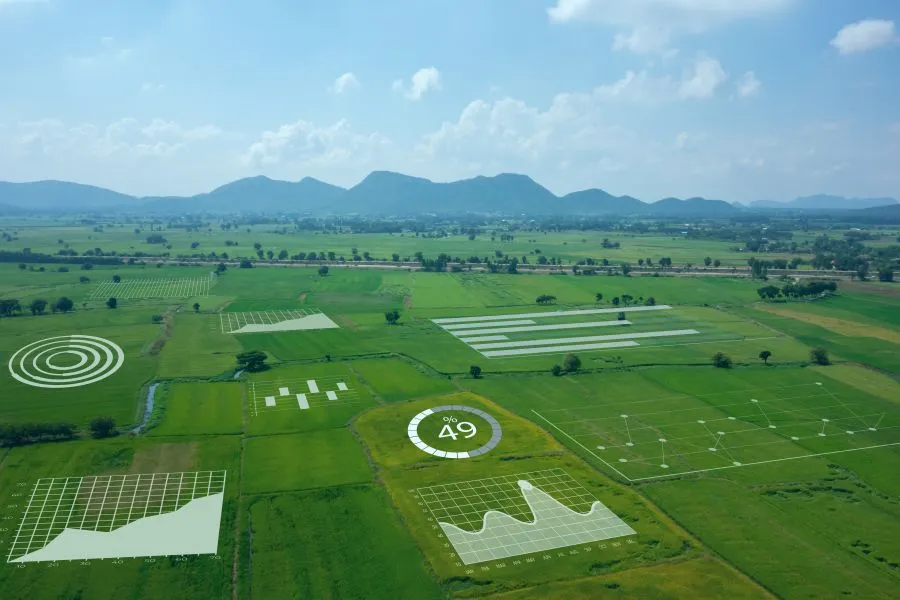 AI has the potential to enhance areas beyond mapping, argue the authors.He says the perception of the vital importance of soil in planetary functioning is increasing, and soil science will continue to grow and flourish under scientist-led AI.
Machine learning is currently used for soil science approaches, including digital soil mapping and spectroscopy. However, using AI has the potential to enhance these areas beyond mapping, argue the authors.
“Unlike traditional machine learning, these intelligent systems mimic scientific collaboration and combine reasoning, planning, and interdisciplinary insight to support human researchers.”
The study explains that AI applications range from digital soil twins and microbiome monitoring to climate adaptation modeling, promising major advances in sustainable land use and soil carbon management.
Mimicking scientific process
AI-designed soil strategies could transform nutrient applications by optimizing fertilization rates. The researchers provided scientific literature for review to a multi-agent AI system to generate ideas on how soils store carbon and what controls how much carbon they can store.
The AI agents then provided five hypotheses, including climate influence, biological and chemical controls, saturation thresholds, interdisciplinary feedback, and management strategies.
The study notes that the AI systems successfully mimicked the scientific process of humans, and provided outputs “beyond” what is currently being used, while aligning with expert research.
Notably, AI is also facing challenges around data quality, creativity, interpretability, and the risk of errors when there is no human supervision.
The study argues that AI could enhance human expertise rather than replacing it, as it would allow scientists more time to focus on the questions that require expert judgment.
“To fully realize this promising future, we need to foster interdisciplinary collaboration, ensure equitable access to AI tools, and thoughtfully address ethical challenges. By bridging digital innovation with real-world application, we can unlock new levels of understanding, stewardship, and security for our soils, one of the planet’s most vital and existential resources,” the study concludes.



Upcoming webinars

Oat-Standing Ingredients - Showcasing Irish Grain Through Innovation
Tirlán Ingredients

2027 Food Safety Risks for Quality & Compliance Leaders
FoodChain ID

Formulating for function: Developing benefit-led beverages with natural colours, botanicals, and flavours
Givaudan Sense Colour