



How Bel Group’s digital twin aims to predict cheese taste and texture

Key takeaways
- Bel Group and Dassault Systèmes are developing a digital twin of cheese to predict taste, texture, and nutritional properties before physical trials.
- The Laughing Cow is serving as the pilot for Bel’s digital twin technology, which is targeted for operational implementation in 2028.
- Digital simulations could accelerate food R&D and help scientists develop recipes tailored to consumer preferences.
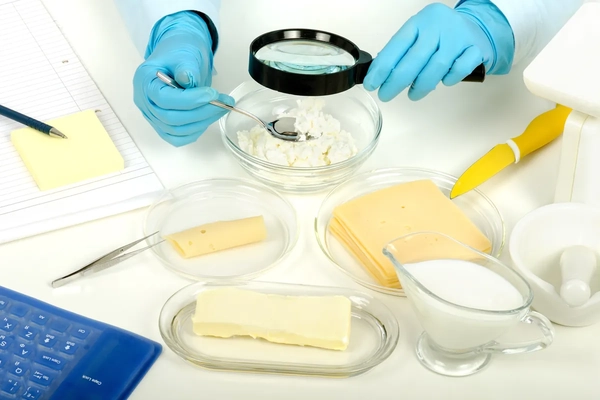
Bel Group is developing what it calls the world’s first “digital twin of a cheese” in partnership with Dassault Systèmes. The companies aim to predict how ingredient formulations influence creaminess, flavor intensity, nutritional characteristics, and consumer preferences before physical trials begin. Bel is using its iconic The Laughing Cow brand as a testing ground, with operational implementation targeted for 2028.
The project builds on the companies’ strategic partnership from 2024 and brings 3D modeling and digital twin technologies already used in aerospace, automotive, and life sciences into food innovation.
Recent digital twin advancements in the F&B industry include virtual simulations of production lines to optimize manufacturing processes, digital bioreactor models to improve alternative protein production, and supply chain simulations to anticipate ingredient shortages.
Bel’s project takes a different approach by modeling the food product (cheese) itself to accelerate innovation cycles and optimize formulations.
Food Ingredients First speaks with Anne Pitkowski, research and application director at Bel Group, about how digital twins can help R&D teams translate complex ingredient interactions into the sensory experiences consumers expect.
What distinguishes Bel’s digital twin from conventional recipe simulation?
Pitkowski: What makes our approach distinctive is that we are going beyond simply simulating recipes. We are developing a predictive tool that anticipates a cheese’s taste and texture from the ingredients in its recipe. Our ambition is to connect ingredients, formulation, manufacturing conditions, and physicochemical properties with how the cheese is perceived and enjoyed by consumers.
Working with Dassault Systèmes, we are developing a model capable of bringing these dimensions together, exploring thousands of potential combinations virtually, and progressively improving its predictions through comparisons with physical trials. The critical next step in our digital twin ambition is to move beyond prediction toward a generative tool. Rather than starting with a recipe and predicting the resulting taste and texture, we aim to start with consumer expectations and work backward to generate the ideal cheese recipe to meet them.
 Anne Pitkowski says Bel Group aims to work backward from consumer expectations to develop the ideal cheese recipe using digital twin technology.
How can virtual simulation change food R&D?
Pitkowski: Today, food innovation relies heavily on physical experimentation. At Bel, our RID teams test approximately 3,000 recipes every year across some 150 innovation projects. Each formulation requires time, ingredients, equipment, and expert evaluation.
Instead of physically producing every potential formulation, our teams could explore thousands of scenarios virtually, assess how different ingredients and manufacturing parameters interact, and identify the most promising combinations before moving to pilot-scale trials. That would allow us to focus our physical testing on formulations with the strongest potential to meet our objectives for nutritional quality, taste, texture, and environmental performance.
Importantly, we are not seeking to eliminate physical trials or consumer testing. Those remain essential to validating a product before launch.
Could digital twins improve The Laughing Cow’s nutritional profile without compromising its taste and texture?
Pitkowski: That is precisely one of the ambitions behind this research project — to give our RID teams new capabilities to continuously improve our recipes, particularly their nutritional profiles, while preserving the taste, texture, and quality consumers know and love.
Continuous recipe improvement has been part of Bel’s innovation approach for decades. Since 2012, we have made more than 350 recipe improvements across our portfolio. By allowing our scientists to explore thousands of potential formulations virtually, the digital twin could help us identify new opportunities for improvement and better anticipate how changes in ingredients might influence a product’s nutritional and sensory characteristics.
Ultimately, our ambition is not to reinvent The Laughing Cow, but to keep making it better while preserving the experience that generations of consumers around the world have come to know and trust.
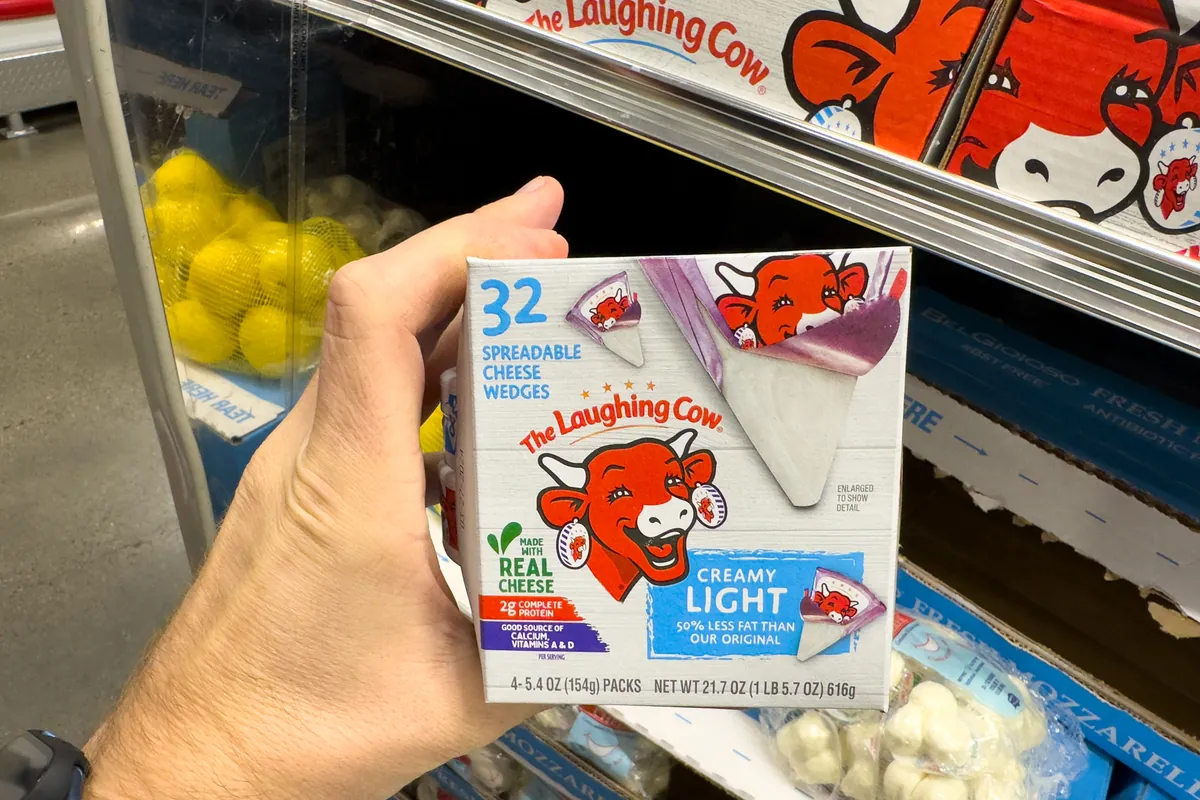 Bel Group aims to improve The Laughing Cow’s nutritional profile while preserving its familiar taste and texture.
What makes cheese particularly difficult to model digitally, and what have you learned so far that surprised you?
Pitkowski: Cheese is an exceptionally complex product to model because it brings together biological, physicochemical, nutritional, and sensory dimensions that are closely interconnected. A change in one ingredient or manufacturing parameter can influence several characteristics simultaneously, from the stability of the formulation to its texture, creaminess, and flavor perception.
What is particularly striking is the complexity of connecting two very different worlds — what we can measure objectively in a laboratory and what a consumer actually experiences when eating a product. Two formulations can have measurable physicochemical differences, but understanding how those differences translate into sensory perception and consumer preference is a much more complex challenge.
One of the most important lessons is that modeling food requires us to bring together material science, data science, and human sensory expertise rather than treating them as separate disciplines.
What can the digital twin currently predict accurately, and where does the technology still fall short?
Pitkowski: Our research is focused on developing models that can anticipate how changes in ingredients, formulation, and manufacturing conditions may affect the characteristics of cheese. However, it is important to distinguish between the ability to generate predictions and the degree to which those predictions have been validated. We are still in the research phase. While significant technological challenges have already been overcome, we need to continue expanding our databases, refining our models, and comparing their predictions with the results of physical trials and sensory evaluations.
There are also inherent limits when it comes to consumer preferences. Preferences vary widely between individuals and depend on context, not just the product itself. Predicting individual liking from sensory characteristics is particularly complex. That is why we work with a large consumer panel across multiple geographies, taking into account the important influence of culture on food preferences.
How are consumer preferences incorporated across different markets?
Pitkowski: Our approach brings together several types of information, including ingredient composition, formulation parameters, manufacturing conditions, sensory evaluation results, and consumer preferences. By analyzing relationships between these different datasets, the model aims to estimate how certain product characteristics may influence sensory perception and consumer appreciation. However, consumer preference is not universal. The Laughing Cow is available in approximately 120 countries, with more than one hundred recipes adapted to different tastes, consumption habits, and nutritional needs. That diversity is central to our innovation model.
For that reason, the digital twin cannot be treated as a universal predictor of consumer taste. Its predictions need to be assessed within the relevant product and consumer context and validated through sensory evaluations and real consumer testing. As we continue developing the technology, expanding the underlying databases and strengthening the models’ validation will remain essential before any broader application.
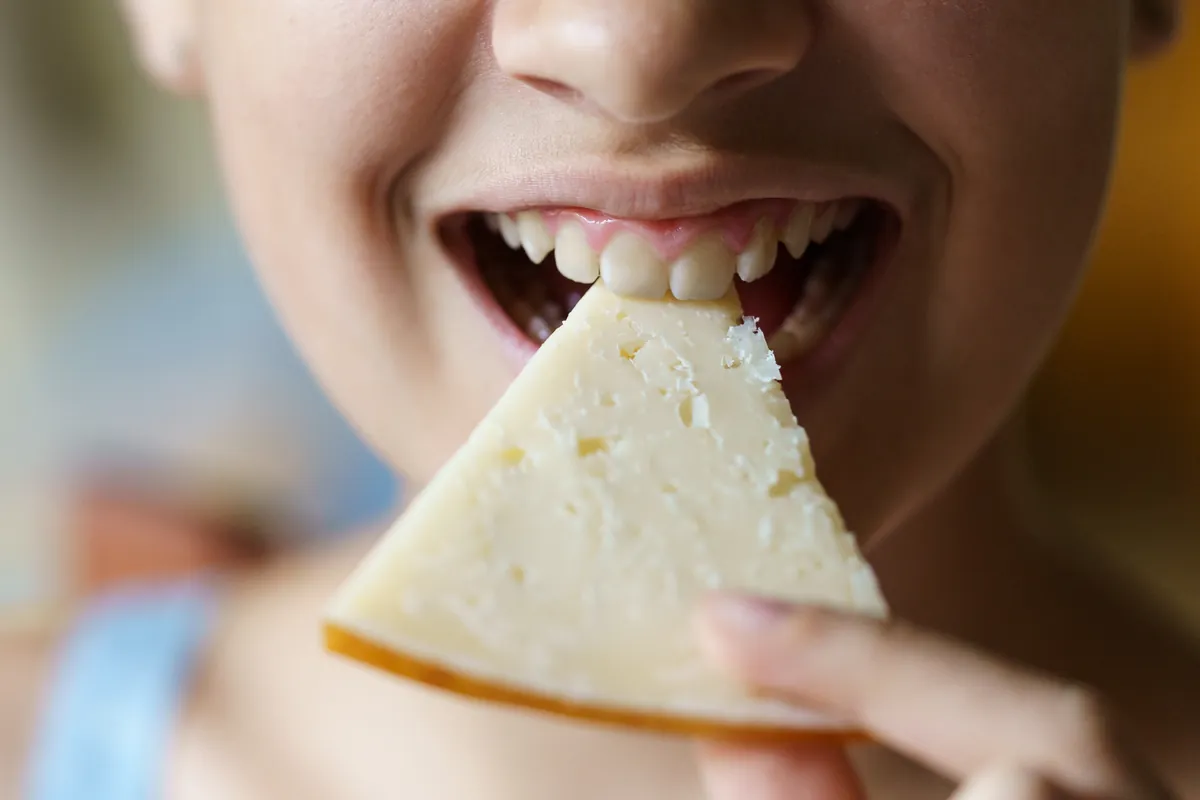 Sensory testing remains essential to understanding how consumers experience cheese.
Which R&D tasks could become automated by using AI and digital twins and how might food scientists’ roles change?
Pitkowski: We see AI as a way to augment human expertise, not replace it. In RID, some of the most time-consuming activities involve analyzing large volumes of experimental data, comparing formulations, identifying relationships between variables, and screening potential recipes. These are precisely the areas where AI and digital simulation could make a significant difference, helping our scientists explore a much broader range of possibilities and focus their efforts on the most promising formulations.
But the essential decisions remain human. Our scientists define the objectives, establish the formulation constraints, interpret the results, conduct physical and sensory evaluations, and ultimately validate the products.
The role of food scientists will increasingly combine deep product expertise with the ability to interpret data, work with predictive models, and make informed scientific decisions.
How could digital twins reshape food innovation over the next decade?
Pitkowski: We believe digital simulation has the potential to become a major enabler of the food industry’s transformation. If digital twins can reliably simulate the interactions between ingredients, processes, and sensory characteristics, they could allow the industry to explore significantly more innovation possibilities while making more efficient use of time and resources.
This could also contribute to more responsible innovation by reducing unnecessary physical trials, raw material consumption, and energy use during product development. Our longer-term ambition is to build on the learnings from this first application and explore how the technology could eventually support innovation across other products and categories.
But this transformation will be progressive. The scientific complexity of food means that predictive models will need continuous refinement and real-world validation.