


Tetra Pak VP Automation & Solutions: How digitalization is transforming F&B supply chains

Key takeaways
- F&B companies are facing rising costs, volatile demand, sustainability pressures, and outdated manual systems.
- Tetra Pak emphasizes automation and digitalization to integrate processes and teams into intelligent, data-driven ecosystems that can respond faster to market changes.
- The benefits of automation include not just efficiency, but also improved speed, reliability, and the ability to pivot quickly in case of supply chain disruptions.
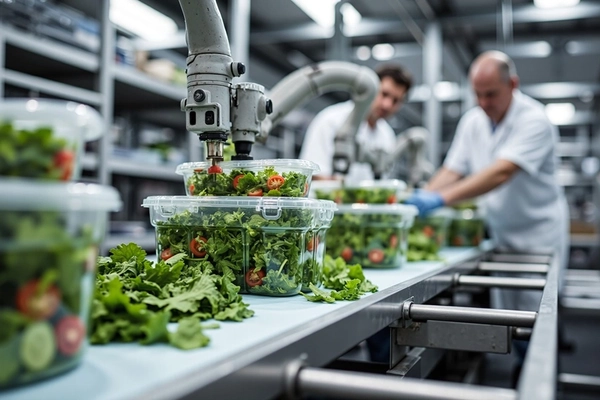
F&B companies today are navigating a “perfect storm” of rising input costs, unpredictable consumer demand, and pressure to meet sustainability goals. In such a high-pressure environment, speed and precision in decision-making are critical, which Tetra Pak says companies can achieve through automation and digitalization.
The processing and packaging leader says integrating processes, equipment, and teams into intelligent, data-driven ecosystems can drive efficiency, resilience, and competitive advantage for businesses.
As the sector grapples with technology gaps and outdated systems, studies show that nearly 77% of F&B manufacturers are accelerating digitalization to boost efficiency and resilience. In an industry where product shelf life is critical, companies are shifting from retrospective analysis to predictive, forward-looking insights.

Consumers are responding well to this transition, with nearly 41% seeing potential in using technologies like AI in F&B production, according to Innova Market Insights. Health benefits, improved cost effectiveness, and enhanced flavors are behind this heightened interest in digitalization.
Food Ingredients First sits down with Sean Sims, VP Automation & Solutions at Tetra Pak, to explore how digital technologies are reshaping F&B manufacturing and how companies are implementing these changes in practice.
How is automation helping F&B companies manage and optimize their supply chains in the face of increasing complexity and cost pressures?
Sims: F&B manufacturers are navigating an increasingly complex operating environment, often described as a “perfect storm” of rising input costs, volatile demand patterns, persistent labor shortages, and growing sustainability expectations. In this context, the ability to make faster, better-informed decisions across the value chain has become a competitive necessity. Automation is emerging as a critical enabler, introducing stability by replacing fragmented, reactive decision-making with integrated, data-driven control. Sean Sims, VP Automation & Solutions at Tetra Pak.
Modern automation extends well beyond the optimization of individual tasks. It is defined by the integration of digital systems that connect equipment, processes, and people into a unified, intelligent production ecosystem. This interconnected approach allows manufacturers to gain real-time visibility and control over core operations (from material flow and in-process quality assurance to packaging and end-of-line logistics), creating a more agile and responsive manufacturing environment.
A key benefit of this transformation is improved operational consistency. Many facilities continue to rely on manual processes or tacit, experience-based knowledge that is not formally codified. Automation reduces this dependency by standardizing decisions through real-time insights, guided workflows, and data-driven recommendations. As a result, manufacturers can significantly reduce variability, improve yield, and minimize waste — outcomes that are especially critical in a margin-constrained environment.
Importantly, automation also reframes how manufacturers evaluate cost. Rather than focusing solely on short-term cost reduction, leading organizations are adopting a Total Cost of Ownership perspective. Digitally enabled, automated operations enhance uptime, optimize energy usage, and drive process consistency, helping to eliminate the hidden inefficiencies that accumulate over a facility’s lifecycle. In doing so, automation not only improves operational performance but also strengthens margin resilience in the face of ongoing external pressures.
What are the key drivers pushing manufacturers to adopt digitalization and automation on a larger scale?
Sims: The first is economic pressure. Manufacturers are contending with sustained increases in raw materials, energy, and labor costs, while competitive markets limit their ability to pass these increases on to customers. In this environment, improving asset utilization has become critical. Automation and digital technologies enable manufacturers to unlock greater efficiency from existing infrastructure, reducing waste, improving throughput, and stabilizing operational performance without significant increases in footprint.
The second driver is workforce dynamics. Across many markets, the industry is experiencing a widening skills gap as experienced operators retire and fewer new entrants bring deep process expertise. Automation, combined with digital decision-support systems, helps address this challenge by embedding operational knowledge directly into production environments. Through intuitive interfaces, guided workflows, and data-driven recommendations, manufacturers can support less-experienced teams in maintaining safe, consistent, and high-quality operations.
The third factor is the increasing importance of sustainability and regulatory compliance. Resource efficiency is no longer a discretionary objective — it is a core business requirement. Reducing consumption of water, energy, and chemicals is essential for meeting both regulatory standards and customer expectations. Digitally enabled operations provide the visibility and control needed to measure, manage, and continuously optimize resource use, positioning sustainability as a driver of long-term competitiveness rather than a cost center.
However, the transition to more automated and digitalized operations is not driven by technology alone. Leading manufacturers recognize that success depends on a clear transformation strategy, strong ecosystem partnerships, and the ability to scale investments over time.
A case in point is Tetra Pak’s collaboration with Greek dairy producer Delta, which undertook a major modernization initiative to replace a 30-year-old automation system. The upgrade introduced a fully integrated solution designed to support long-term operational continuity and enhanced process control. The scope included automation of critical upstream processes, such as milk reception, pasteurization, and cleaning-in-place, alongside integration with downstream yogurt production.
Beyond improving system reliability, the modernized solution redu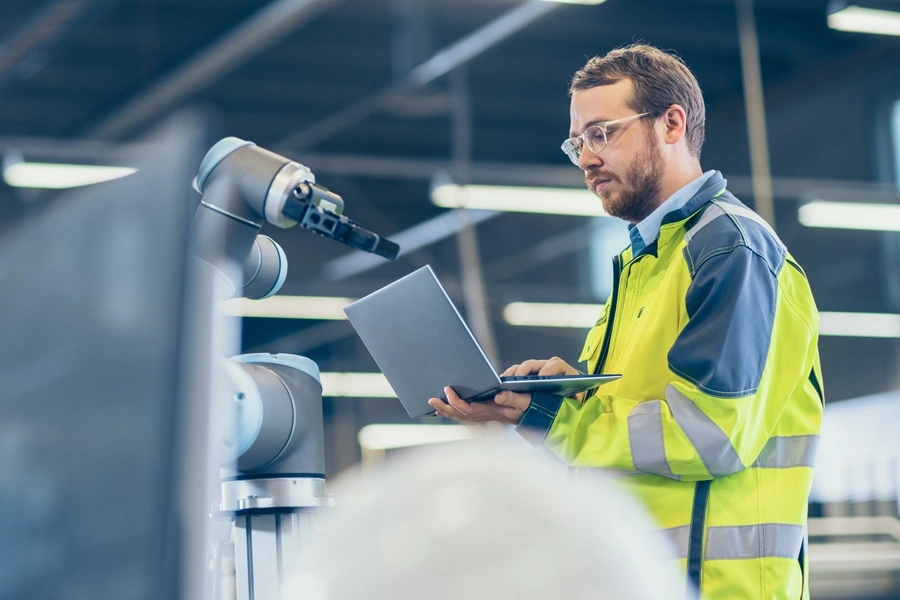 Automation lets operators move from routine tasks to higher-value work, boosting efficiency and workforce effectiveness.ced manual intervention, minimized the risk of human error, and improved product consistency. It also enabled operators to shift their focus from routine tasks to higher-value activities, reinforcing both operational efficiency and workforce effectiveness.
As manufacturers modernize their operations, how critical is the ability to implement modular and scalable solutions?
Sims: It is absolutely critical. Most manufacturers are not starting from a blank sheet of paper — they are modernizing complex environments that have evolved over decades. Modular, scalable solutions allow them to begin where they are, tackle their most pressing challenges first, and expand capabilities over time without disrupting operations.
A modular approach reduces the risks associated with large, one-off transformation programs, which are often costly, slow to deliver value, and difficult to adapt as conditions change. Instead, manufacturers can prioritize high-impact areas, whether automation, AI-driven analytics, supply chain visibility, or energy management, and build incrementally. This not only lowers risk but also accelerates time to value.
Scalability is equally important. Solutions must be able to grow alongside the business, supporting expansion across sites, regions, and production lines. Investments made today need to remain relevant as customer expectations evolve, production models shift, and new capabilities are introduced.
This is particularly true in the F&B sector, where requirements can change rapidly. New formats, evolving recipes, increasing traceability demands, and tightening cost pressures all require systems that can adapt without becoming obsolete. The most effective digital strategies are therefore built on open, practical foundations (not isolated tools), enabling continuous evolution as the business grows.
Can you explain how real-time data enables manufacturers to make more cost-efficient decisions?
Sims: Real-time data only becomes valuable when it is delivered with context. Raw numbers alone do not drive better decisions — understanding why something is happening and what action to take does. When production data is combined with insight into the product, recipe, equipment condition, and operating environment, it begins to tell a clear, actionable story.
Achieving that level of context requires a unified digital foundation that connects machines, processes, and people. Tetra Pak Factory OS is designed to provide that foundation for F&B manufacturers, bringing fragmented operational data together into a single, real-time view of factory performance. With this visibility, teams can make more informed trade-offs as issues arise, optimizing resources, reducing waste and downtime, and preventing costly disruptions. Over time, these everyday decisions compound, driving more efficient, resilient, and cost-effective operations. Innova Market Insights’ data suggests that 41% of consumers see potential in AI-driven food innovation.
What emerging trends in automation and digitalization do you see gaining traction over the next 3–5 years? How should manufacturers prepare for these changes?
Sims: One of the most significant shifts is the move from reactive to predictive operations. Advanced analytics and AI are increasingly being used to anticipate issues, from quality deviations to equipment failures, before they occur. This allows manufacturers to prevent losses rather than simply respond to them, improving both efficiency and reliability.
Another important development is the growing use of digital twins. By creating virtual representations of production lines or entire factories, manufacturers can simulate changes, optimize recipes, and test improvements without risking downtime or product waste. Digital twins are also becoming a valuable tool for workforce training, providing safe, scalable environments for upskilling operators.
At the same time, there is a clear recognition that fully “lights-out” factories are not the near-term objective for most food and beverage producers. The real value lies in augmenting people, not replacing them, and using automation and digital tools to enhance human decision-making and operational performance.
To prepare for this future, manufacturers should focus less on chasing individual technologies and more on building strong digital foundations. That means ensuring data is connected, clean, and contextualized — adopting open, secure architectures — and maintaining a clear focus on the business problems they want to solve.
Equally important is investing in workforce capability, so operators and engineers can confidently use data-driven tools as part of everyday decision-making. With these foundations in place, manufacturers can adopt new technologies at the right pace and turn innovation into measurable, sustainable value.