

Banner with cereal bars and Biospringer logo with a learn more button in the right bottom corner
Home
Videos
The Clean Label Tren...

The Clean Label Trend in Supplements

12 May 2015 | Capsugel

Market data suggests a strong preference for labels that include products that are as close to ‘nature’ as possible and have a short list of ingredients. This strong trend in the food industry is also translating into the fast-growing food supplement arena. According to Innova Market Insights, from 2009-2014 a total of 35 percent of dietary supplements launched in Western Europe had a clean label claim. Despite economic challenges in many European markets, consumers are showing a willingness to pay more for clean label food supplements. On average, products launched with a clean label claim achieved a 26 percent price premium versus non-clean label supplements


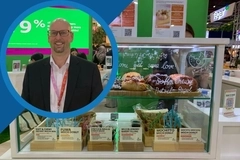
This is Rob Wires at the Vita Foods in Geneva, and I'm here with Pizza and Betty from Capsigel, and Capsuigel are really highlighting the clean label trend in the supplement industry.

Pete, can you give me a little bit of background to this and why you see this is happening?

Sure, I think it's really coming down to the consumer.

The consumer really wants to know what's in the products they're consuming, whether it's food, Robin, or is it supplements.

They want to know what's going in their bodies more than ever, and I like the term kitchen use.

If people can recognize it and see it in their kitchen.

It's acceptable as an ingredient or as an excipient in their supplements.

If it has a very long chemical sounding name, they don't want it in their products anymore.

And we find that when you're looking at different supplement products, you know, capsules have the least amount of excipients that can be used, or tablets can be as much as 60 to 70% excipients.

So having, having an encapsulated product, it gets you closer to a clean label easier than ever.

Do you find any differences between markets from?

And what's being demanded from whether to choose a capsule or a tablet.

Yeah, again, we have a tremendous amount of data around capsule versus tablet.

The consumers typically prefer capsules, but the CMOs that manufacture these products are typically looking for the cheapest alternative, and they're quite often choosing a tablet because that is a cheaper way to make products.

What about variations between the clean label adoption in supplements between markets?

I think we'd have to say that.

Started more in the United States related to clean label.

I think the movement in California was very provocative.

You know, they have a long standing history of, of kind of leading the US in terms of removing certain additives, and I think the clean label really started out out west, and now it's certainly all over the US and definitely in Europe as.

And I think the term clean label to clear label, which I think you folks have coined, is really where the trend is going.

And I see more and more people in the US using the term clear label, and it's again, it's all about transparency and being honest with the consumer about what's in the product.

And which type of claims do you really see on the rise?

What are your customers asking you for?

They want no, no allergens.

They want, they want nothing extra in the product, and that's, you know, for us it's an easy thing to do because capsules are typically polymer and water, and we use thermal gelation, especially for ours.

So that's something that, you know, it's very easy to get to a clean label with a capsule because you don't have to worry about disintegrants and binders like tablets do.

So we find that a lot of consumers, a lot of our CMO customers are coming to us saying, we have, we need to move towards a clean label for a lot of our products, and they're typically a more premium product, which is usually how these trends start, but it'll eventually become mainstream and you'll see these same types of products in the in the mass market.

OK, Pete, thank you very much.

Sure.

More videos

Image