
Banner with cereal bars and Biospringer logo with a learn more button in the right bottom corner
Home
Videos
The Challenges of Cr...

The Challenges of Creating an Allergen Free Spice Range

15 Dec 2014 | Dutch Spices

Dutch Spices utilizes a very clean and strict monitoring procedure in order to allergen-free products. The company’s products comply with the strict VITAL standard and this means no allergens or ingredients that could possibly cause cross-contamination.
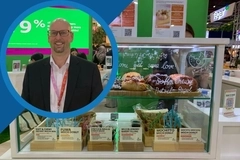
This is Rob Wires at the HIE in Amsterdam and I'm here with Hugh Holterman from Dutch Spices, and Dutch spices are highlighting the fact that they offer an extensive range of allergen-free spices.

Whoop, can you explain a bit about, about your, the issues around traceability and how it is in terms of sourcing allergy-free spices because it's presumably quite challenging.

It has been a real challenge really to organize the Allergen-free production.

By the way, it's not really allergen free, literally.

What we do is we make sure that of 24 allergens, of which 14 allergens are the legal EU allergens and another 10, that that these allergens are not present above a certain safe level expressed in PPM protein per PPM protein.

One of the main challenges really was, and this process is still going on, is to select the right suppliers and to monitor the raw materials when they come in.

A lot of raw, we made a risk analysis, finding out, finding out which are the risk factors we have to face and on basis.

This risk factor, we ask our suppliers to fill in questionnaires, and not only that, it's more than that.

We are in a constant discussion, interactive discussion with them to make sure they do the right things and they give us the right information and in many cases we do audits to visit the factory to be sure that what the supplier tells us is really true and correct.

And moreover, we monitor raw materials.

That means that if we have a risk allergen, then every batch that comes in, we check on this risk allergen.

Are there any particular spices that are very difficult to source from that are free to this extent from allergens?

Yes, there are a number of raw materials which are difficult in these respects, like for example, pepper.

It's grown in an area where peanut is grown as , so obviously peanut is a risk allergen for pepper.

That means that we monitor every batch that comes in on peanut, and peanut should not be detected.

If it is detected, then we reject the whole batch of pepper.

You're presenting quite a Extensive range of spices here.

Can you show us some of the ones that you're doing?

Yes, sure, we can.

We have singular, single spices, of course, but our main focus is on blends, dry blender products.

Here's an example of single spices, chili peppers, and here's a few examples of dry blends, like, for example, this, as we call it Green Meadow.

It's a nice Mediterranean blend.

And there is a Chinese roast steak blend, very sweet and tasty blend for meat mainly and pretty new, quite new actually is the sauces, allergen-free sauces, because we just opened a sauce factory as , a couple of months ago, allergen-free as , where we produce not only just this type of sauce.

This is like the Brazilian festival sauce and the mango chutney curry sauce, but we also produce, it's not here on display, but I can show you later if you want the medicine-free oil marinades, and we've been our team of product development people have been working very hard to launch many, many new products.

Thank you very much.

Welcome, Robert.

More videos

Image