


A banner featuring a sample box and dried vegetables
Home
Videos
IFE Manufacturing li...

IFE Manufacturing live: Healy Group tackles cleaning up labels and making food products more “consumer-friendly”

27 Mar 2024 | Healy Group

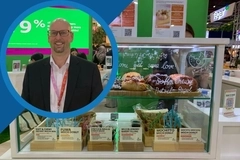
Healy Group is showcasing its ingredient solutions for various applications, including reductions for salt, fat and sugar. Paul Sheldrake, group application & technical director, tells us how key market trends are driven by legislation across the F&B industry, such as HFSS rules. The company presented bakery and snack concepts with reduced salt but enhanced flavor.
This is Liz Green.

I'm at the IFE manufacturing event in London.

I'm here today with Paul Sheldrake, who is the group application and technical director at the Healy Group.

So Paul, what can you tell us about how important it is for Healey Group to have a presence at?

It's really important for us to have a presence because it's an opportunity for us to meet with our existing customers and also the chance to come and meet new people who are interested in our range of products and solutions and a great place to meet many people.

We have good.

And what sort of ingredients solutions are you presenting here today at the show as a functional food solutions provider, we really are focusing on quite a wide range.

An area in particular of emphasis is salt reduction.

We are also demonstrating products on fat reduction and sugar reduction, and also another product that is on natural shelf extenders.

They're probably the core things that we're talking about today and listening to our customers' needs.

So are these some of the key trends that you're seeing across the market of food and beverage?

Definitely that's the case, driven by various pieces of legislation and various interests, for example, the HFS regulations all about reductions in fat, salt and sugar.

It's an area we're actively involved in with a very wide range of customers across the market segments, anywhere that's a manufactured approved food products relevant.

We're actually involved in doing that sort of work with them with again a lovely range of solutions and products.

So that's one area.

The other area we also find this particularly interesting is this whole conversation around.

Ultra processed foods and again understanding what that means to people, how are they going to reflect it in what they're doing.

I think in some ways the interpretation for us is all about cleaning up the label, making the product more consumer friendly, making customers understand that better.

That's an area of what we're dealing with.

Other key areas is in the rays of plant protein and fibers.

We know that we don't get enough fiber in our diet, so again, opportunities where we can use functional fibers to help improve the health of our diet is another we're actively looking at.

OK, fantastic.

So reformulation is kind of one area that you're working on now.

What concepts have you brought to I to kind of show to your potential customers what your solutions can be used across?

So again, a range of solutions and range of products.

So for example, in salt reduction, we're showing examples of how salt can work in reducing the salt content of bread, and many people do not realize how much salt we consume in bread.

It's an opportunity to lower the salt content in there.

Also, for example, in.

In butter, so again you can take regular salt out of the butter, replace it with salt, reduced sodium sea salt solution to do that.

So that's where you do salt reduction.

There's some examples where we're using the salt to enhance flavor.

So an example of a bar, a sweet bar, adding a little bit of salt enhances the flavor.

The company chose to use a reduced sodium sea salt to enhance the flavor without driving that salt content up.

Another area are actually in seasonings, so coatings of crisps.

That's some areas, for example, we're doing on salt reduction.

On fat reduction, we've got products based on oat fibers that allow us to do things like lower fat mayonnaises to improve the the fat content or reduce the fat content and make them more healthy.

So those are things on fat reduction.

On sugar reduction, we're doing things more about flavor masking.

So for example, in condiments where you've got a very sharp product where you've taken sugar out, you have things that help to flavor mask it and give you a nice rounded balanced flavor.

So those are some of the areas.

The further area we're demonstrate.

So a natural shelf life extender, a way to improve the shelf life of products, very much reflecting in having good quality products over life with as clean a decoration as possible.

OK, fantastic.

You mentioned ultra processed foods, and it's a discussion that we're having a lot in the food industry.

They do have a kind of a negative reputation, but some convenience foods are kind of necessary in certain situations.

How does the Healy Group kind of position themselves?

To offer ingredient solutions for maybe food manufacturers that are delivering ultra processed foods, I think in a presentation I've given and listening to some of the people, I talk about what I call ultra processed 4 plus, when we're taking products that may be defined as ultra processed, how can we improve them?

So that improvement can be through, for example, cleaner decoration.

So we have clean label functional starches rather than modified starches.

We have fibers that can give you thickening characteristics, but the consumer appears, looks.

As nice on the label, and again, say things like our salt reduction solutions, you can reduce the salt content, making the product still taste better but have lower salt content and shelf life extension.

All these areas are trying to make that product on the back of the pack look more healthy from a label point of view.

I think we should also remember that it's also about making sure the products are better from a dietary point of view, from a nutrition point of view.

So are we looking at the protein content?

Are we looking at the fiber content, these other elements which Really, really important to actually make sure that as we develop these products, we can make them better for us and more healthy and yet improve the labels too.

Definitely, that's great.

And I can see that on your stamp today you're kind of joined with Saltwell.

What's the partnership that you have with Saltwell?

So Saltwell, along with a number of our people, what we call trusted partners, we work incredibly closely with them.

So Saltwell are the manufacturer, and they're here supporting us on our stand with their team so that they can get.

Close to the customers.

Our customers who have asked questions specifically from Saltwell, can talk to people who actually make the product, and this is about an open, strong relationship we have, and we have this with many of our supplier partners.

It allows people from our customers to get close and understand the real specific technical needs that they might need from one of our function solutions to get the best out of it, to deliver the best products for themselves.

OK, fantastic.

And so what does the future look like for Healey Group?

At the moment incredibly busy, certainly listening to the conversations we've already had so far.

A lot of the ingredients and solutions we're talking about, it's very clear there's a real active interest in.

They are doing what people want them to do.

We are helping on HSS.

People are looking at the ingredients because they want to improve the labeling from an altered process point of view.

So actually at the moment, lots of really interesting stuff, lots of customers very engaged and wanting to do more with us.

Fantastic, Paul, thank you very much for speaking to me.

Thank you.

More videos

Image