


Banner featuring Angel Yeast logo with images of prepared savory meals
Home
Videos
FiE: Nexira's Acacia...

FiE: Nexira's Acacia Gum Program empowers female workers in Chad

18 Jan 2024 | Nexira

Nexira has entered the third phase of its Acacia Program, a project that began 15 years ago to reduce desertification and stimulate acacia gum production. Julie Imperato outlines Nexira’s expansion of the program into 200 villages in Chad. The program aims to empower female workers while imparting best practices to sustainably manage acacia gum forests and provide livelihoods for 28,000 producers.


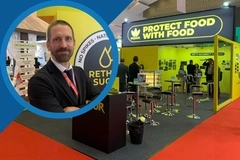
This is Missy Green at FIE 2023.

I'm here with Julie Emperrato, who's the marketing manager at Nexira.

Nexxira recently entered into a new phase of their sustainability program.

So Julie, can you tell us more about that?

Yes, sure.

So, Nexxera is involved.

In what we call the AA program, so Nexera has been involved for many years.

The program has started in 2009, so the two first phases were between 2009 and 2019.

So the objective of this program is to combine economic, social, and environmental approach.

So it's, it's a whole approach and regarding the environmental approach, it's the aim is to protect against the desertification.

So the first two phase.

We were working on, to give you some figures, but we were working on 10,000 hectares of acacia forest.

2 million trees were planted, and these phases involved 28,000 producers, so it's really a huge program.

We work with a French NGO called SOS Sahel, so they work locally with the population, and the aim is also to increase the acacia gum production so it will bring more revenue to these populations.

So the third phase of this Acacia program.

Is going to run between 2022 and 2030.

The aim is still the same, to increase the acacia production and to benefit to local populations, but it's going to be increased.

That we are going to work with 50,000 producers in 200 villages, so the program is located in Chad, and it will concern.

300,000 hectares of forest which will be sustainably managed.

Women will also have an important part in this program.

So among the producers we will have about 60% of women, and they will not be only harvesters.

30% of women will have also a role in the decision.

Process.

So it's also important so that women can contribute and participate in the decision process.

So again, it's a whole program.

We are training the harvesters, give them the best practices.

It's really a way to teach how to sustainably manage the acacia forest and how to sustainably assure.

Revenue for them.

So of those 2 million trees that were planted, what percentage was acacia?

So it's only acacia in this program, but you're right, this program is also a part of what we call the Great Green Wall.

So in this program you have also baobab and other species of trees, but for For us it's only acacia because it makes sense also and from these trees we know that the local populations can harvest the gum and can sell the gum and have a revenue through this tree.

And why is it important to empower women?

So we thought it was important also just because women are sometimes just left on the side.

So helping them to participate and to have a real role in the acacia supply is important, and they are not only harvesting, they are really contributing to the decision of the process, and by this way they are becoming independent.

And what are some of the best practices that Nex is helping to impart here?

So the, the, the NGO also works with the regenerative agriculture method, so they teach the producers how to use this method and for example, they help also to re-densify the forest so by planting trees in the same area and they protect the trees from the cattle.

Ah, from that protect the trees so they can grow and ah it's also a way to, ah, to develop the forest.

More videos

Image